Return to Coleoptera Index | Insect Index


Family Apionidae

Sometimes considered to be a subfamily within family Brentidae

Apion frumentarium (Linnaeus, 1758)

Apion frumentarium
  • Cambridge, Trumpington Meadows TL441548: 5 Oct 2018
  • Found on the leaves of Docks.
  • NBN Atlas

Aspidapion aeneum (Fabricius, 1775)

Aspidapion aeneum
  • Cambridge, Gwydir Street: 20 Feb 2021
  • Frequently found on Common Mallow (Malva sylvestris).
  • NBN Atlas

Aspidapion radiolus (Marsham, 1802)

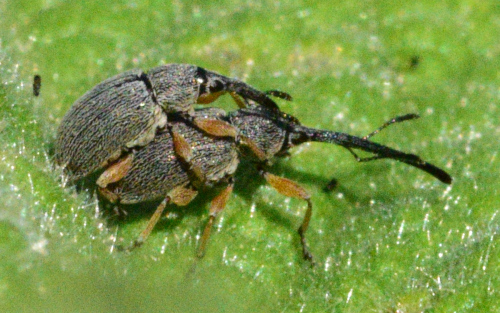
Aspidapion radiolus Aspidapion radiolus
  • Cambridge, Gwydir Street: 6 Jul 2016, 21 Sep 2020
  • Found on Mallow and other Malvaceae, often in large numbers. The pair were on hollyhock.
  • Southern & central Britain. NBN Atlas

Malvapion malvae (Fabricius, 1775)

Malvapion malvae
  • Gwydir Street: 28 Aug 2021
  • The mostly orange elytra, yellow legs and dense pubescence gives this species a unique appearance.
  • Usually found on Mallows and best searched for on Mallow plants that occur on waste ground or road verges.
  • NBN Atlas

Pseudapion rufirostre (Fabricius, 1775)

Pseudapion rufirostre
  • Gwydir Street: 27 May 2021
  • The orange tip to the rostrum - males only - is distinctive.
  • Host plants include various species of Malvaceae; in the UK mostly on Malva sylvestris (common mallow) and M. neglecta (dwarf mallow), and also Alcea rosea (hollyhock).
  • Typical habitats are field margins, roadsides and disturbed land where the host is common
  • NBN Atlas

Hollyhock Weevil Rhopalapion longirostre (Olivier, 1807)

Rhopalapion longirostre
  • Gwydir Street: 10 Jun 2023
  • The remarkably long rostrum of the female is needed to drill into hollyhock buds, which are wrapped in thick sepals.
  • Arrived in Britain since the millennium but already widely spread in southern England.
  • NBN Atlas

Family Curculionidae

Cabbage Seed Weevil Ceutorhynchus obstrictus (Marsham, 1802)

Ceutorhynchus obstrictus
  • Gwydir Street: 17 May 2021
  • Subfamily: Ceutorhynchinae.
  • Widely polyphagous but mostly on wild and cultivated Brassicas.
  • Larvae feed on developing seeds, and a wide range of crops may be damaged during heavy infestations.
  • NBN Atlas

Cabbage Stem Weevil Ceutorhynchus pallidactylus (Marsham, 1802)

Ceutorhynchus pallidactylus
  • Cambridge, Gwydir Street: 15 Jul 2015
  • Subfamily: Ceutorhynchinae.
  • Larvae bore in brassica stems. Can be a pest on oilseed rape crops; in our garden it is presumably feeding on Brussels Sprouts.
  • NBN Atlas

Ceutorhynchus picitarsis Gyllenhal, 1837

Ceutorhynchus picitarsis
  • Gwydir Street: 18 Nov 2020
  • Subfamily: Ceutorhynchinae.
  • Another weevil which feeds on brassicas.
  • NBN Atlas

Mogulones asperifoliarum (Gyllenhal, 1813)

Mogulones asperifoliarum
  • Gwydir Street: 21 Feb 2021
  • Usually encountered on plants in the Borage family such as Green Alkanet and Comfrey.
  • NBN Atlas

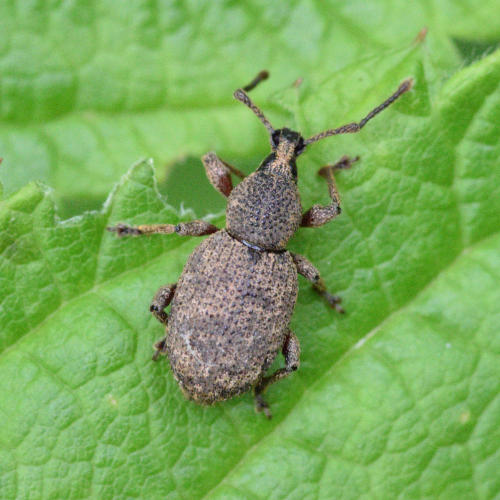
Parethelcus pollinarius (Forster, 1771)

Parethelcus pollinarius
  • Empty Common Community Garden TL454565: 22 Jun 2022
  • Subfamily: Ceutorhynchinae.
  • Monophagous on nettles, Urtica dioica, and generally occurs in damp and shaded habitats.
  • NBN Atlas

Stenocarus ruficornis (Stephens, 1831)

Stenocarus ruficornis
  • Cambridge, Gwydir Street: 5 Feb 2021
  • Subfamily: Ceutorhynchinae.
  • Larvae are leaf-miners on poppies.
  • NBN Atlas

Cossonus linearis (Fabricius, 1775)

Cossonus linearis
  • Cambridge, Adams Road Sanctuary TL436587: 30 Aug 2018
  • Subfamily: Cossoninae.
  • A wide variety of broadleaf trees have been recorded hosting the species.
  • NBN Atlas

Euophryum confine (Broun, 1881)

Euophryum confine
  • Cambridge, Gwydir Street: 19 Jun 2016
  • Subfamily: Cossoninae.
  • Indigenous to New Zealand, first recorded in Britain near London in 1937 but possibly present earlier. Now widespread in England and Northern Ireland.
  • A wood-borer in dead & decaying trees and structural timber.
  • NBN Atlas

Curculio salicivorus Paykull, 1792

Curculio salicivorus
  • Cambridge, Gwydir Street: 5 May 2001
  • Subfamily: Curculioninae.
  • Length (head + body, not rostrum): 2.5mm
  • On willow, using rostrum to lay eggs in sawfly galls.
  • Identified from Joy's Handbook on the following points: tapered body, long snout with antennae midway along, black rostrum and antennae, size, host.
  • Synonym: Balanobius salicivorus
  • NBN Atlas

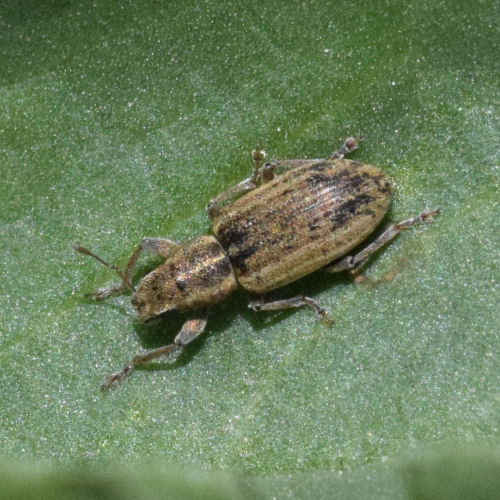
Hypera nigrirostris (Fabricius, 1775)

Hypera nigrirostris
  • Gwydir Street: 1 Apr 2021
  • Subfamily: Entiminae.
  • Has conspicuous pale setae on the elytra.
  • Host plants are various clovers and other Fabaceae.
  • NBN Atlas

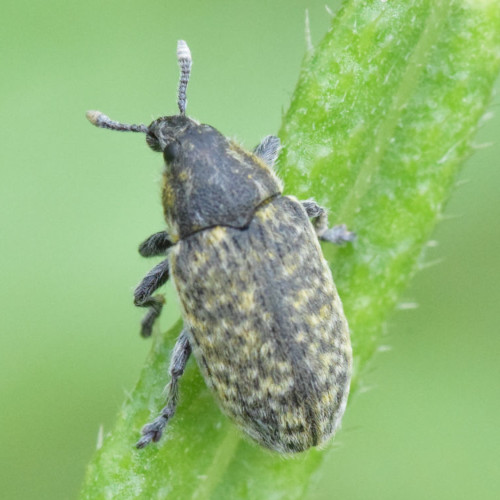
Rough Strawberry-root Weevil Otiorhynchus rugosostriatus (Goeze, 1777)

Otiorhynchus rugosostriatus
  • Gwydir Street: 21 Sep 2021
  • Natural hosts include a range of herbaceous plants where the larvae are external root-feeders.
  • The species is also synanthropic, occurring in domestic gardens and commercial fruit nurseries where they may become serious pests. Fruits most vulnerable include currants, gooseberry and raspberry, but they are more generally an important pest of strawberries.
  • Females are parthenogenic and so far no males have been recorded
  • NBN Atlas

Clay-coloured Weevil Otiorhynchus singularis (Linnaeus, 1767)

Otiorhynchus singularis
  • Cambridge: 16 Jul 2016, Gwydir Street
  • Subfamily: Entiminae.
  • Similar to the Vine Weevil (below) but with brown scales, reddish surface, and erect hairs on the elytra.
  • Also uses a wide range of food plants.
  • NBN Atlas

Vine Weevil Otiorhynchus sulcatus (Fabricius, 1775)

Otiorhynchus sulcatus

Common Leaf Weevil Phyllobius pyri (Linnaeus, 1758)

Phyllobius pyri
  • Fulbourn Fen TL528562: 27 Apr 2023
  • Subfamily: Entiminae.
  • Adult weevils feed upon leaves and flowers of a wide range of woody plants and may be found in most habitats; parkland, gardens, wooded borders and dunes etc.
  • Although widely polyphagous the adults show a preference for Prunus, Betula, Quercus and Carpinus.
  • NBN Atlas

Nettle weevil Phyllobius pomaceus Gyllenhal, 1834

Phyllobius pomaceus
  • Cambridge, Gwydir Street: 26 May 2001
  • Subfamily: Entiminae.
  • Length (head + body): 9mm
  • On raspberry: we don't cultivate (many) nettles!
  • NBN Atlas

Romualdius scaber (Linnaeus, 1758)

Romualdius scaber
  • Cambridge, Gwydir Street: 21 Feb 2021
  • Subfamily: Entiminae.
  • Notable for the grooves in the rostrum where the antennae are inserted.
  • Feeds on plant detritus in preference to living plants.
  • Previously included in Trachyphloeus bifoveolatus (Beck, 1817). Placed in new genus by Borovec (2009), and scaber (Linnaeus) recovered from confusion with "Otiorhynchus scaber" (now Otiorhynchus carinatopunctatus).
  • NBN Atlas (for T. bifoveolatus)

Pea-leaf Weevil Sitona lineatus (Linnaeus, 1758)

Sitona lineatus
  • Cambridge, Gwydir Street: 30 May 2015
  • Subfamily: Entiminae.
  • Feeds on the leaves of many leguminous species including vetches and clovers.
  • Also feeds on pea and bean plants, leaving circular notches on the edges of leaves.
  • NBN Atlas

Rhinocyllus conicus (Frölich, 1792)

Rhinocyllus conicus
  • Coe Fen New Bit TL451571: 19 Jun 2019
  • Subfamily: Molytinae.
  • Adults are found of thistles, larvae feed on the seed heads.
  • Previously local on southern coasts, but now widespread.
  • NBN Atlas

Family Rhynchitidae

Apple fruit weevil Neocoenorrhinus aequatus (Linnaeus, 1767)

Neocoenorrhinus aequatus
  • Cambridge, Gwydir Street: 6 May 2001
  • Until recently known as Rhynchites aequatus and also Tatianaerhynchites aequatus.
  • Note coppery tint to thorax and slightly hairy elytra
  • Lays eggs in apple buds: larvae leave tunnels in the growing fruit.
  • NBN Atlas

Return to Coleoptera Index | Insect Index