
South of the Royal Mile in EdinburghClick on a photo for a large version. |
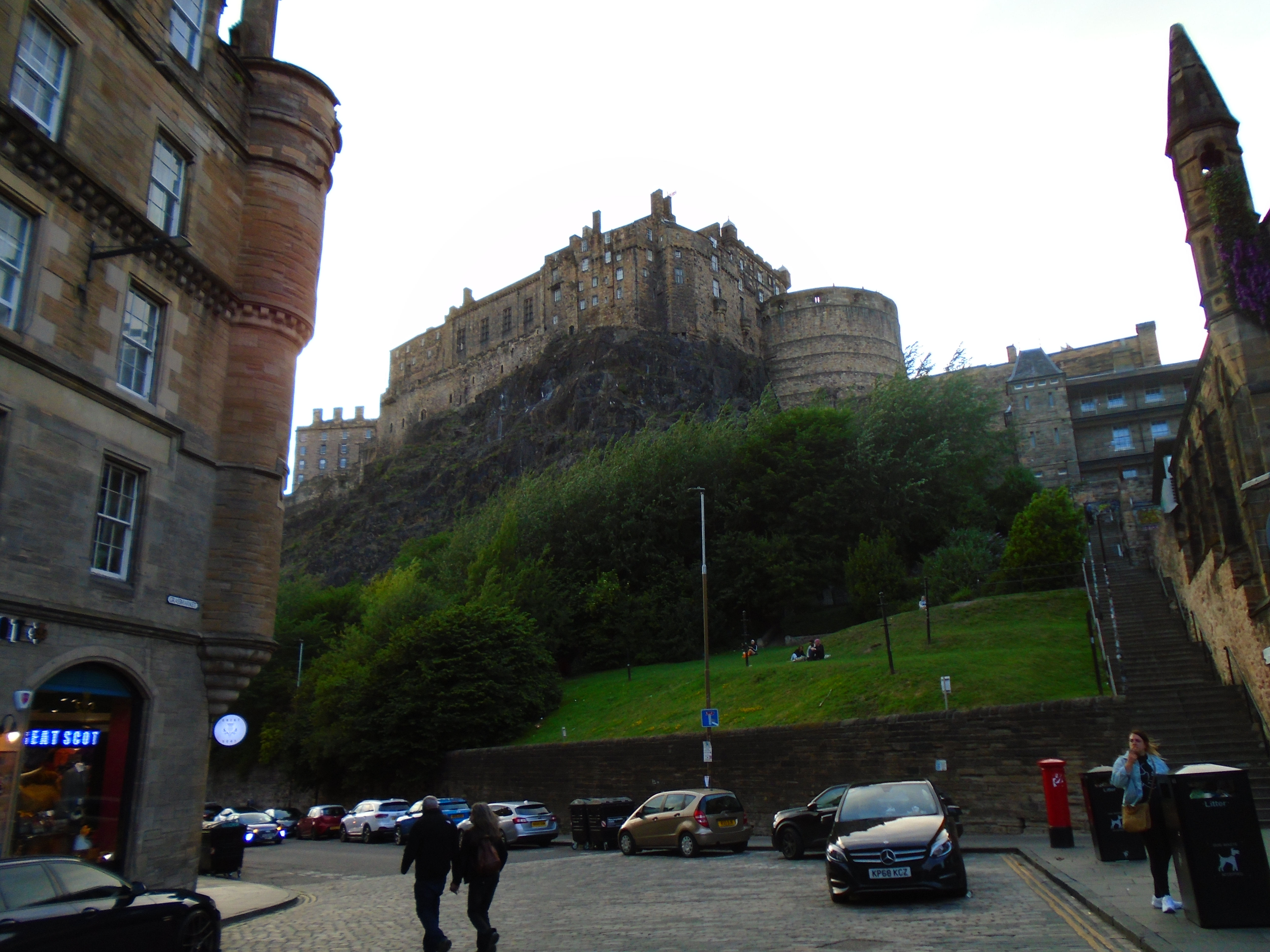
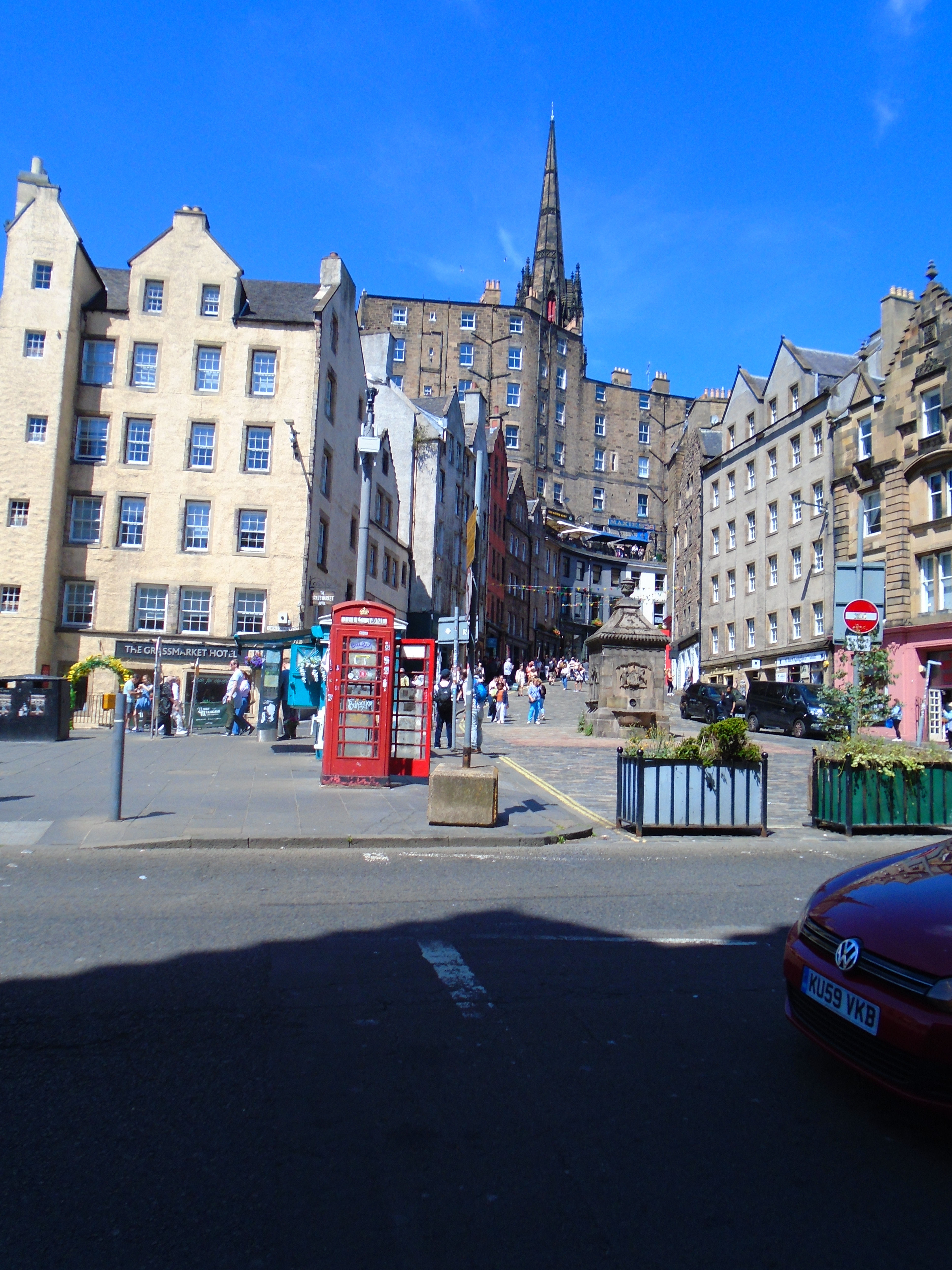
This is a street, to the south of the Royal Mile, parallel to it, and considerably below it! It is quite wide, and used to be a market for cattle, which were brought along Cowgate. It has many pubs and restaurants, plus interesting memorials. Edinburgh Castle looms above it.



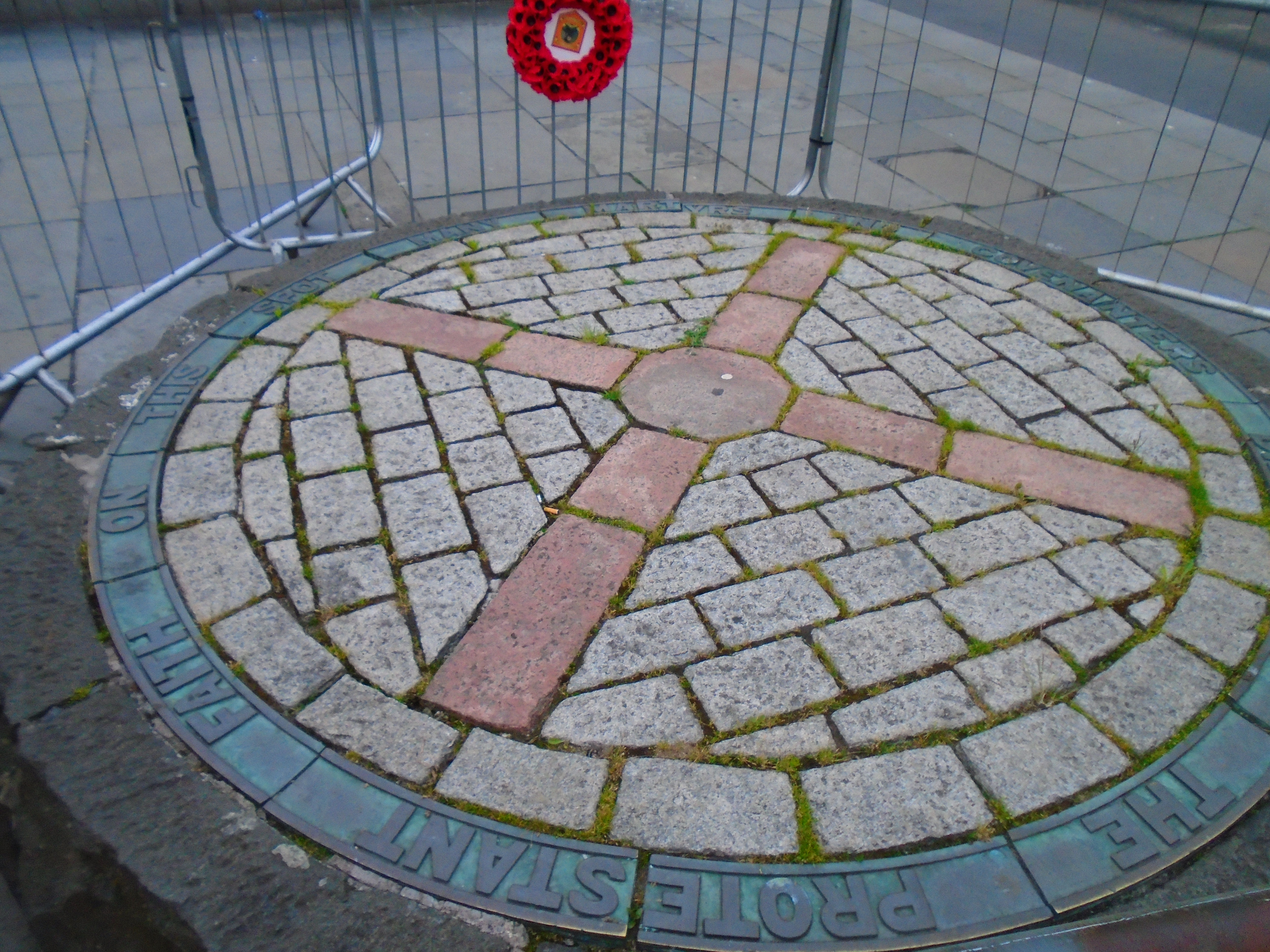
Covenanters' Memorial - Grassmarket, near West Bow
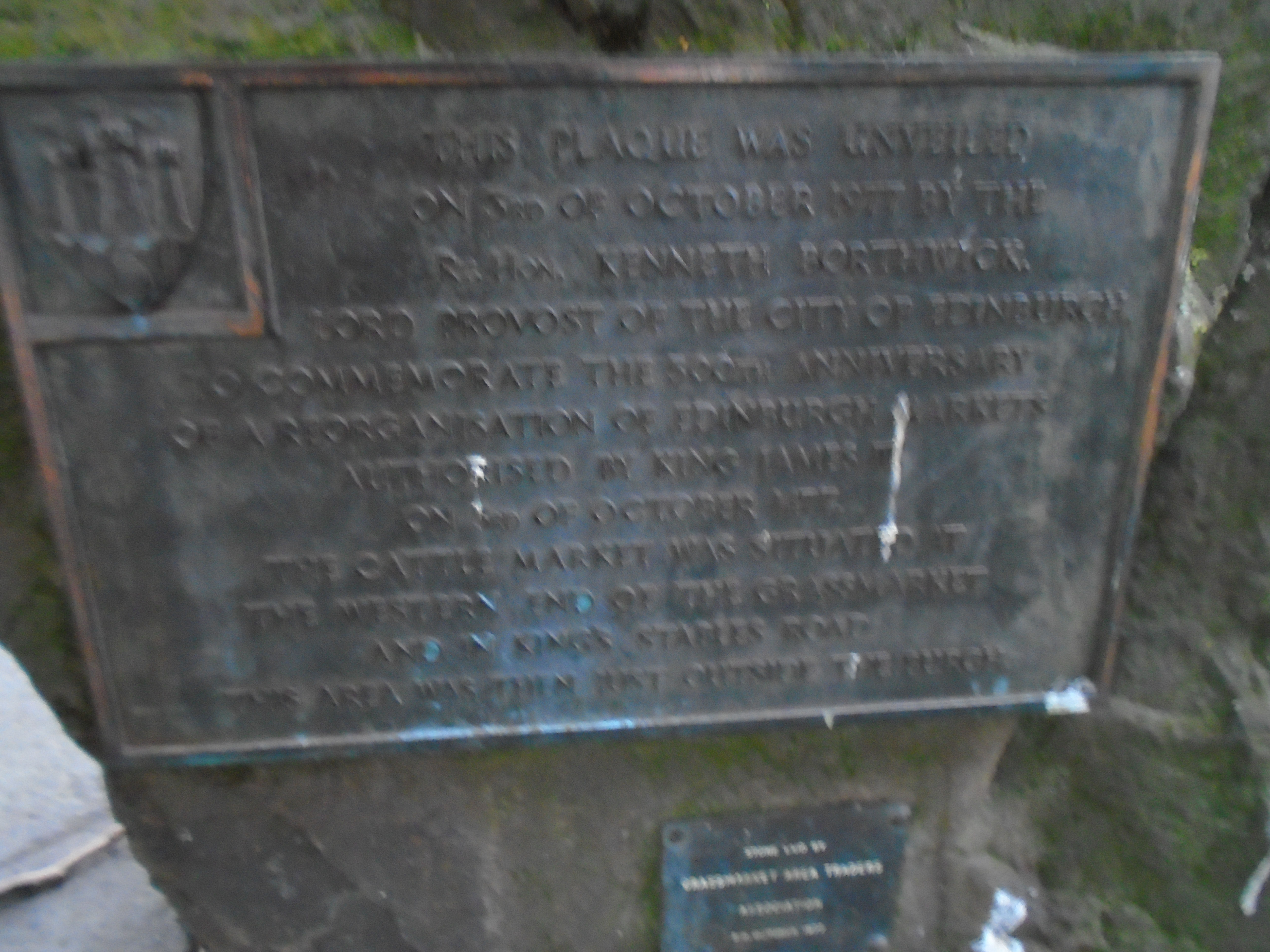
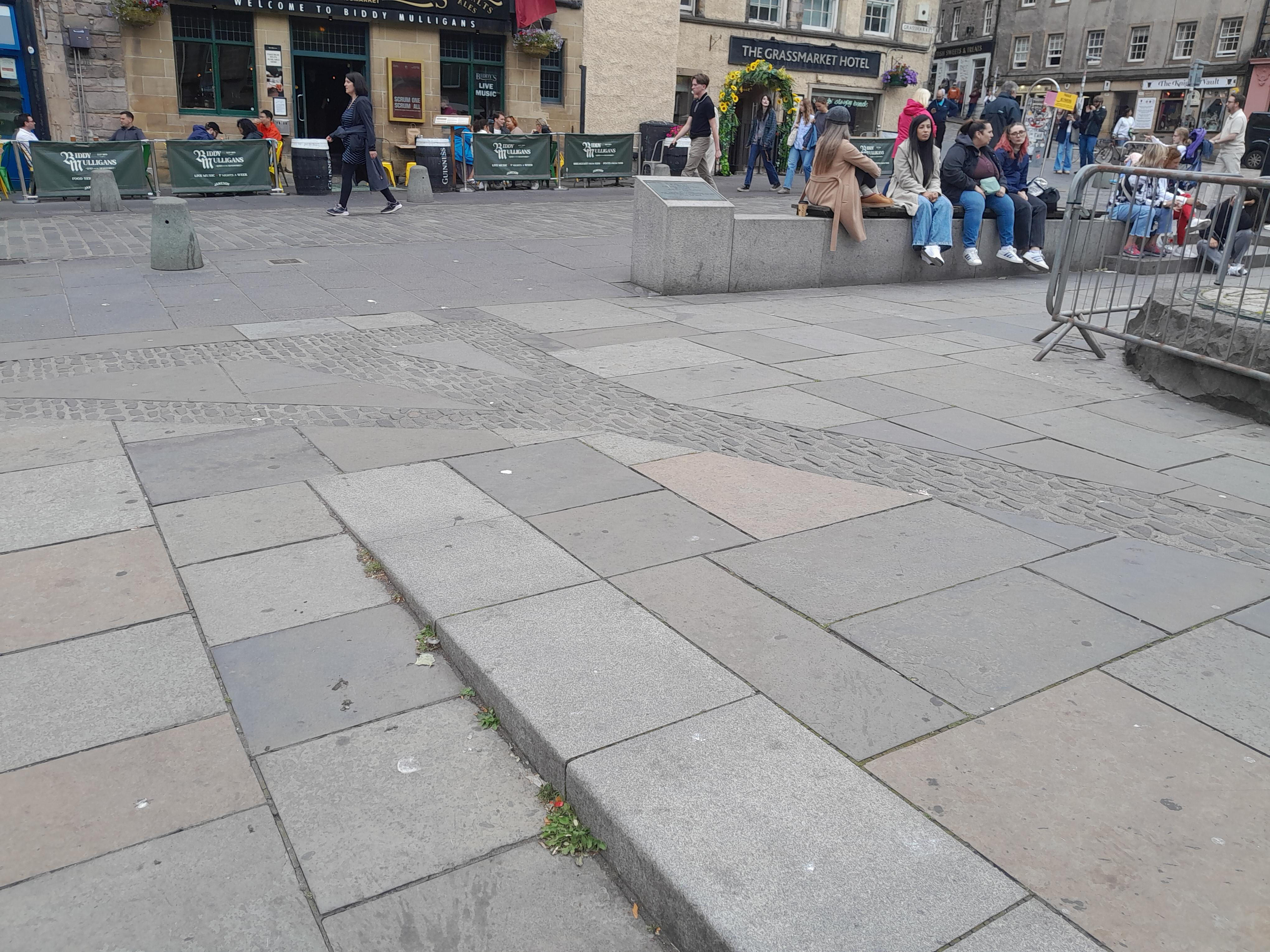
Raised circle in pavement. The Grassmarket is an wide open street on the south side of Edinburgh's Old Town. The city had the public gallows there, and many Covenanters were executed during the Covenanting period. A circular memorial, erected by public subscription in 1937, marks the site, and an adjoining plaque lists the names of the many Covenanters who were hanged there. In a recent renovation of the locality, a representation of the gallows' shadow was made on the ground using different coloured stone.


Junction of Grassmarket and West Port
150 steps! Picturesque. Good views of castle.
The word Vennel refers to an old French word that means "a small street between two large structures."
In 2018, the staircase was rechristened The Jean Brodie Steps in honor of the title character from the novel, The Prime of Miss Jean Brodie on the author's Muriel Spark's 100th birthday. A scene from the Oscar-winning 1969 film was shot here.


Until 1856 the Vennel was the boundary of the city of Edinburgh. The boundary was marked by the Flodden wall, built after the disastrous Scots defeat by the English in 1513. A tower of this wall still survives at the top of the Vennel. Following the Union with England and the defeat of Napoleon in 1815, the Flodden wall was clearly redundant and was gradually demolished. James Brown, the owner of an inn in the Grassmarket right next to the wall took the opportunity to develop his back-lands with a square opening onto the Vennel, no doubt reusing the stone from the demolished wall. He called it Brown's Place.


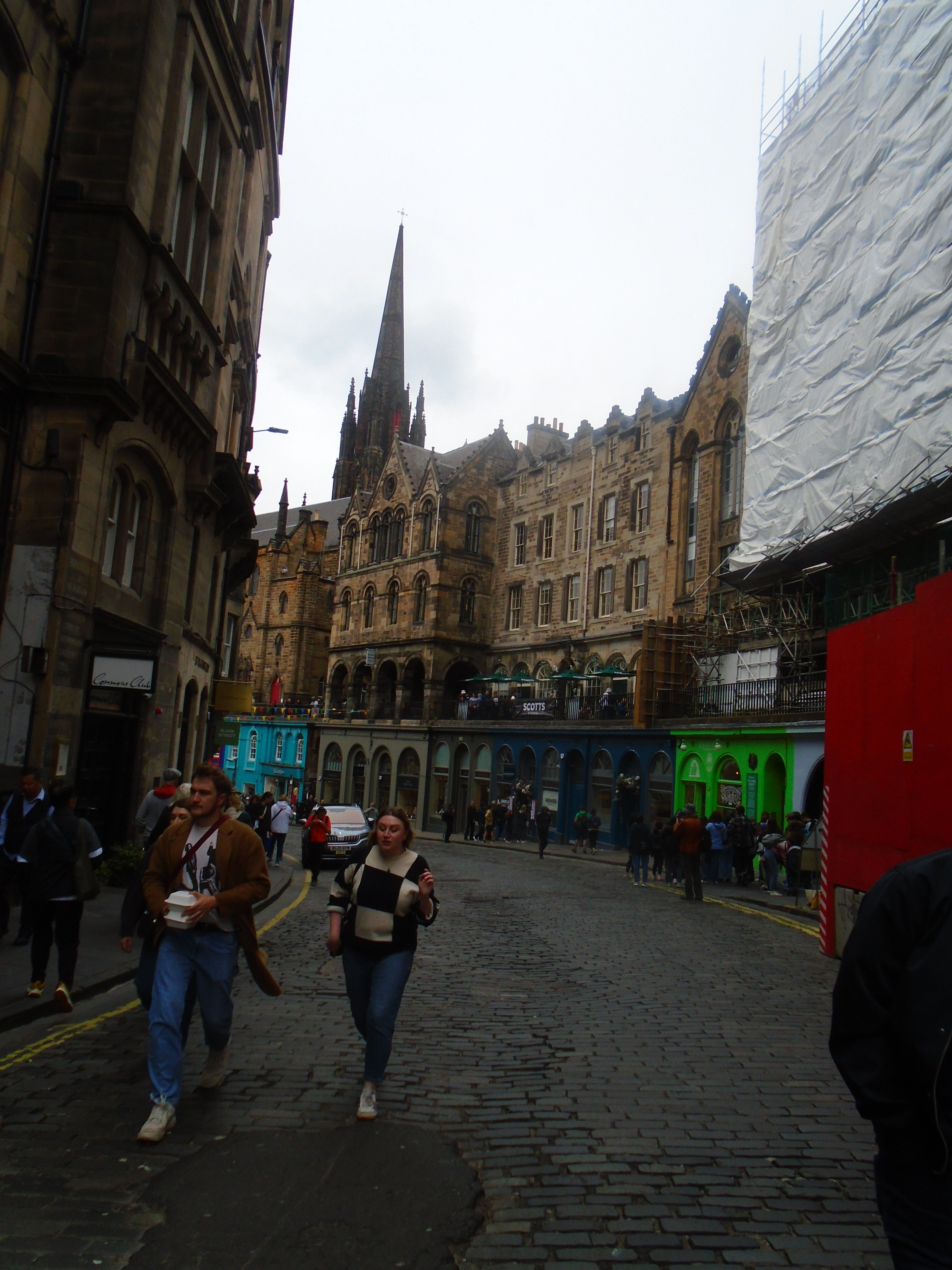
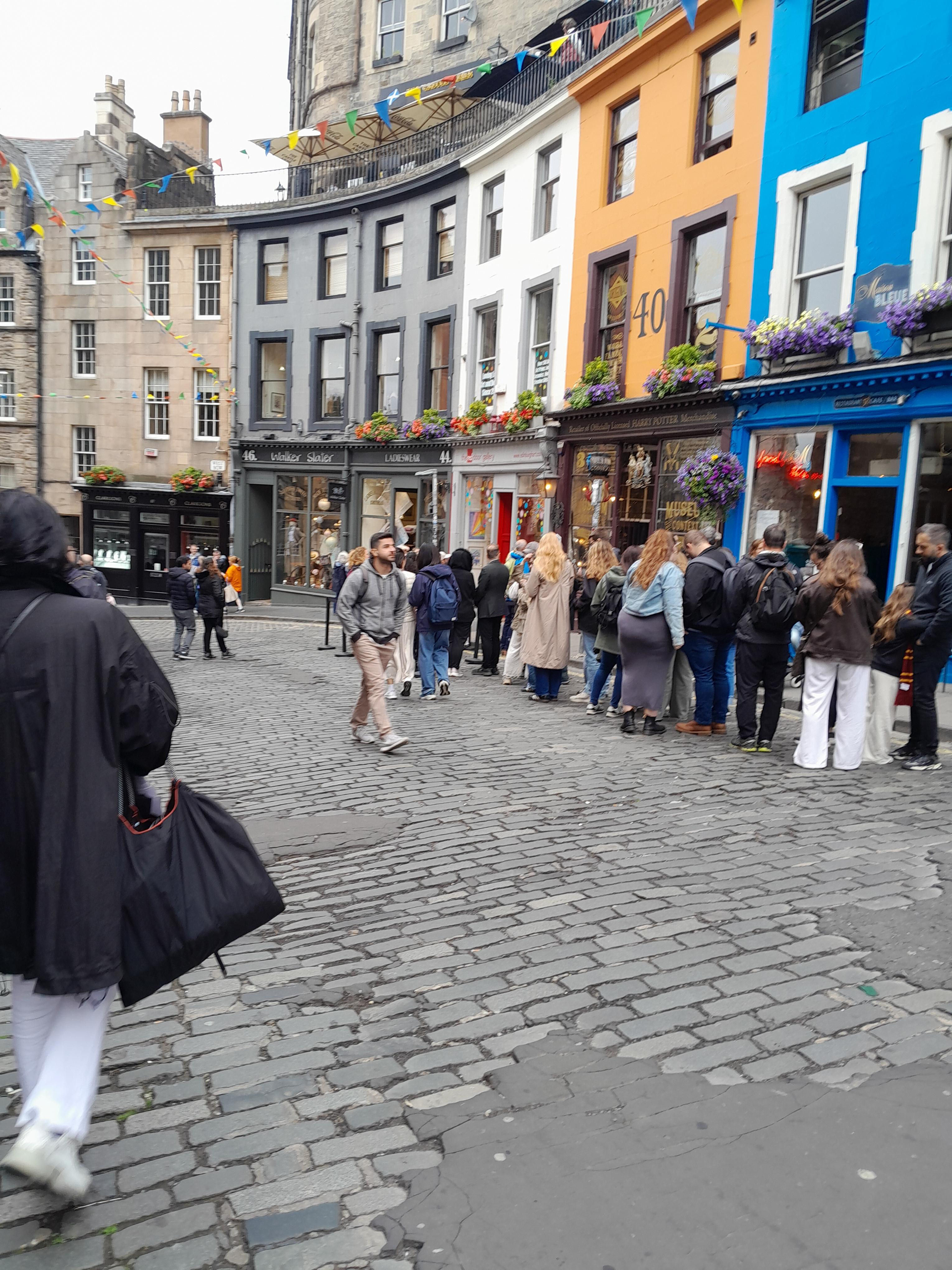
At the other end of Grassmarket is West Bow, which then becomes Victoria Street. It is a bending, steep street taking you from Grassmarket up to George IV bridge, and then onto Lawnmarket, near the top of the Royal Mile. It is claimed that it inspired Diagon Alley in the Harry Potter books. It seemed to perpetually feature an inexplicable queue for one shop.


Bowfoot Well - Junction of Grassmarket and West Bow
Listed grade A - Built by Robert Mylne under supervision of Sir William Bruce, 1674, restored 1861. There are several other wellheads along the Royal Mile.

This is the view from Cowgate Head. I was fascinated by the chimneys!
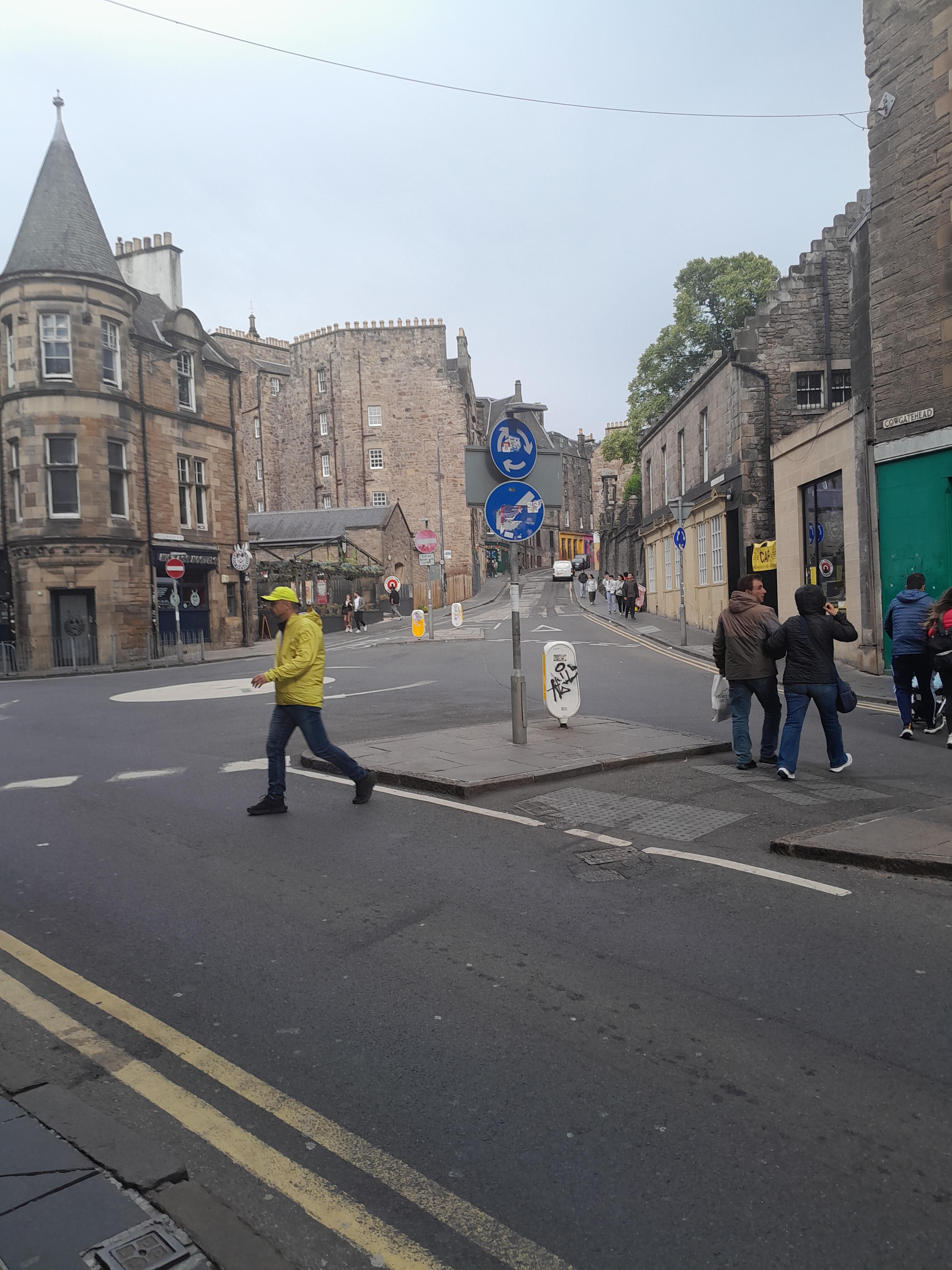
41 Cowgate
Listed grade A. John Tailefer, mason and Robert Wilson, wright, 1541-44, with later alterations and additions, including Richard Crichton.
The oldest building in Cowgate lies to the west end, but is sandwiched between other larger buildings and easily missed. It stands on the south side of the street, just west of where George IV Bridge crosses over the Cowgate. This is the Magdalen Chapel, a 16th-century almshouse chapel built with monies left by Michael MacQueen in 1537. Work was completed in 1544 and it operated as a hospital almshouse (dedicated to Mary Magdalen) under the control of MacQueen's widow, Janet Rynd until her death in 1553, when it passed to the Incorporation of Hammermen (metalworkers). The entrance as seen from the Cowgate was rebuilt in 1613. The spire was added in 1620.


The South Bridge crosses Cowgate. Note the cow, with more round the corner.


Greyfriars Place, EH1 2QQ
Listed grade A. Building begun 1601, opened 1620; possibly incorporating earlier fabric.
Greyfriars is famous for Greyfriars Bobby, which we resolutely ignored.....
There is a small museum inside the church.
The mortsafe is interesting.


Chambers Street, Edinburgh, EH1 1JF
Grade A. Captain Francis Fowke (Royal Engineers), 1861-71 and W Wing completed 1885-9 by W W Robertson. Later alterations and additions, including neo-classical SE extension by WT Oldrieve, 1910-14, further S extension of 1934-7 (Office of Works), W block by Gordon Benson and Alan Forsyth, 1998 and internal remodelling Gareth Hoskins, 2011.
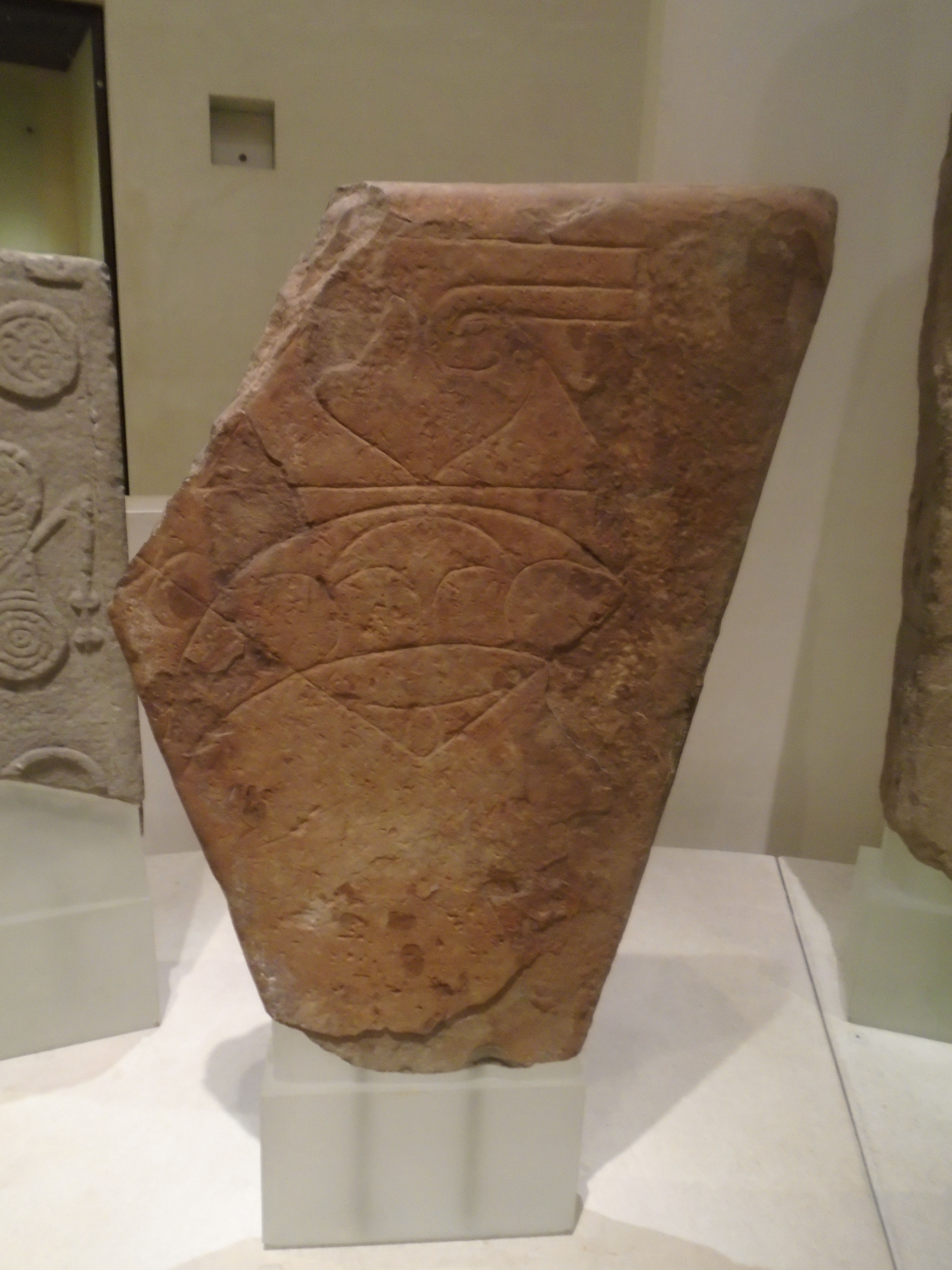
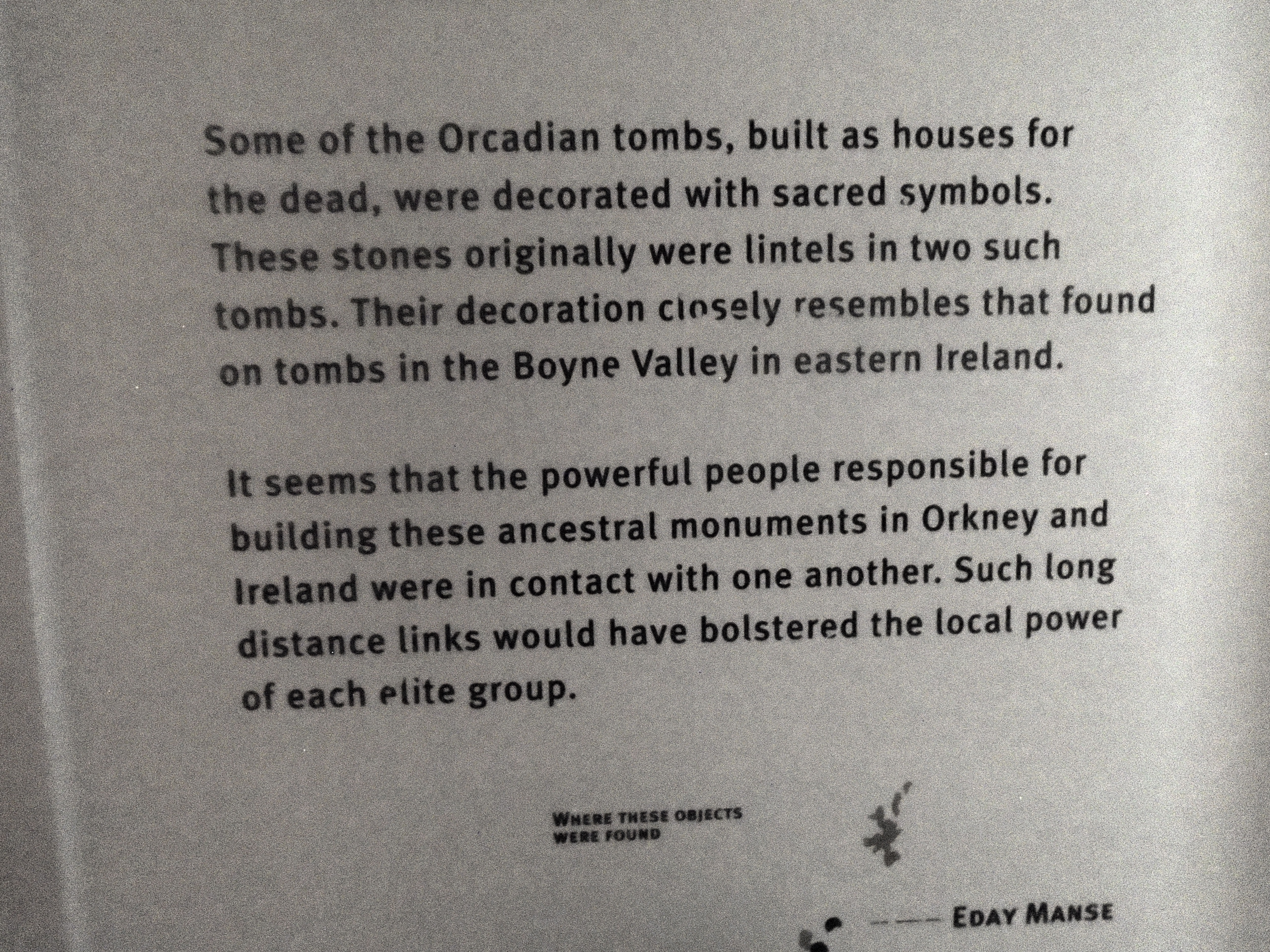
Entry is free. It was pouring with rain when we visited this, so I didn't take a photo of the outside! Here are some of the exhibits (my particular interests).


It does mad things on the hour (when it's working - check with staff).

Roman. It's in the basement


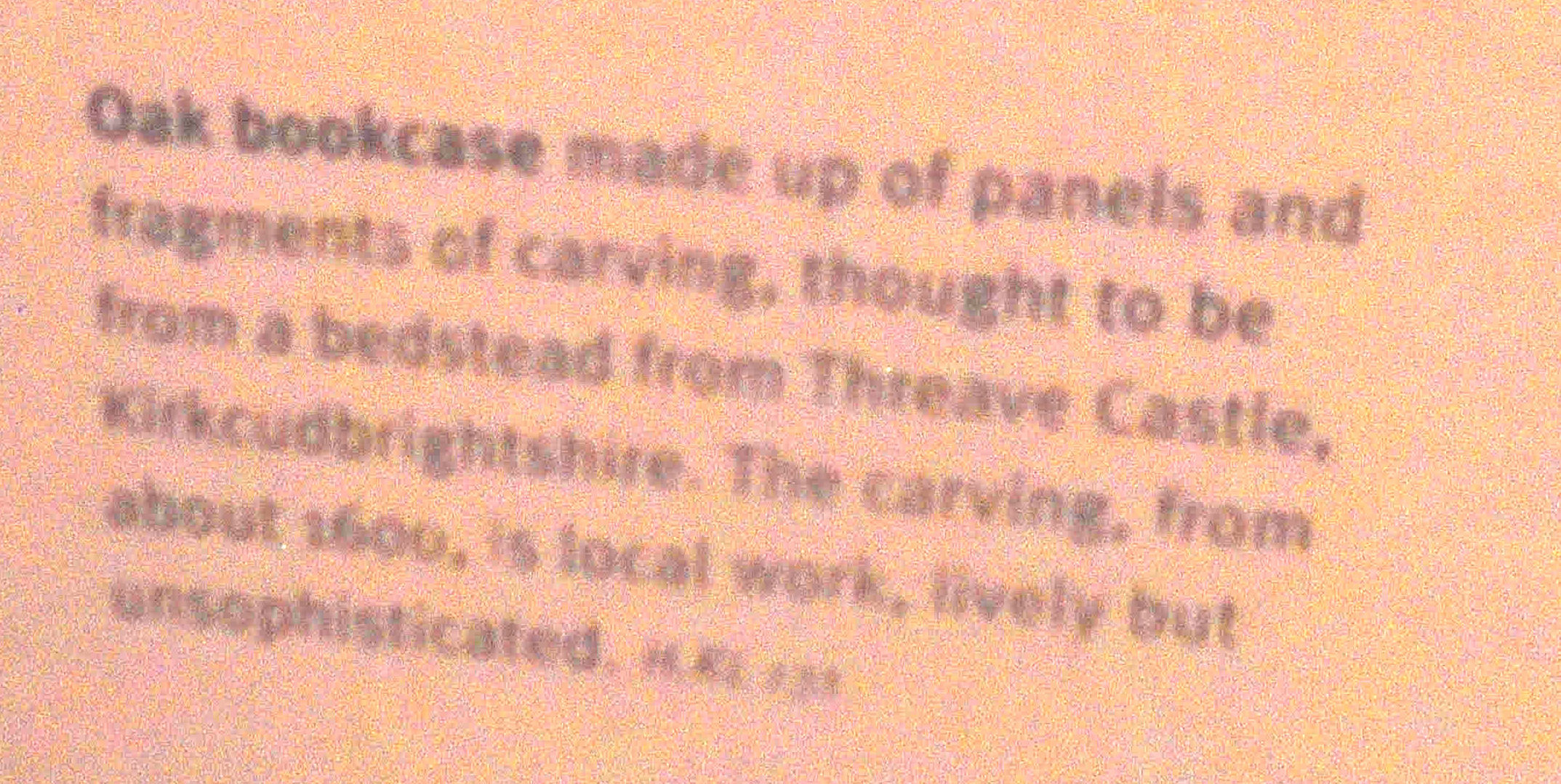


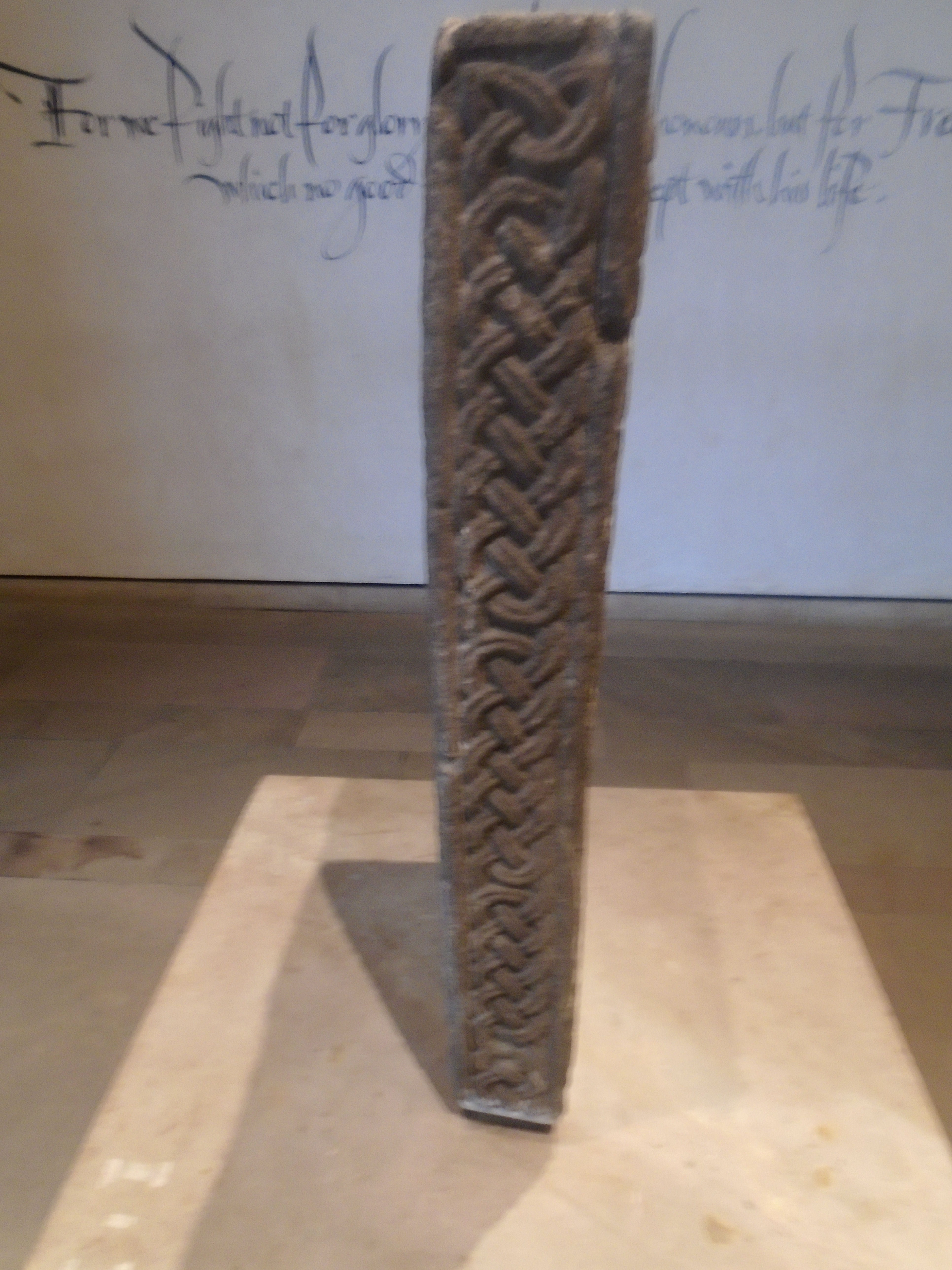

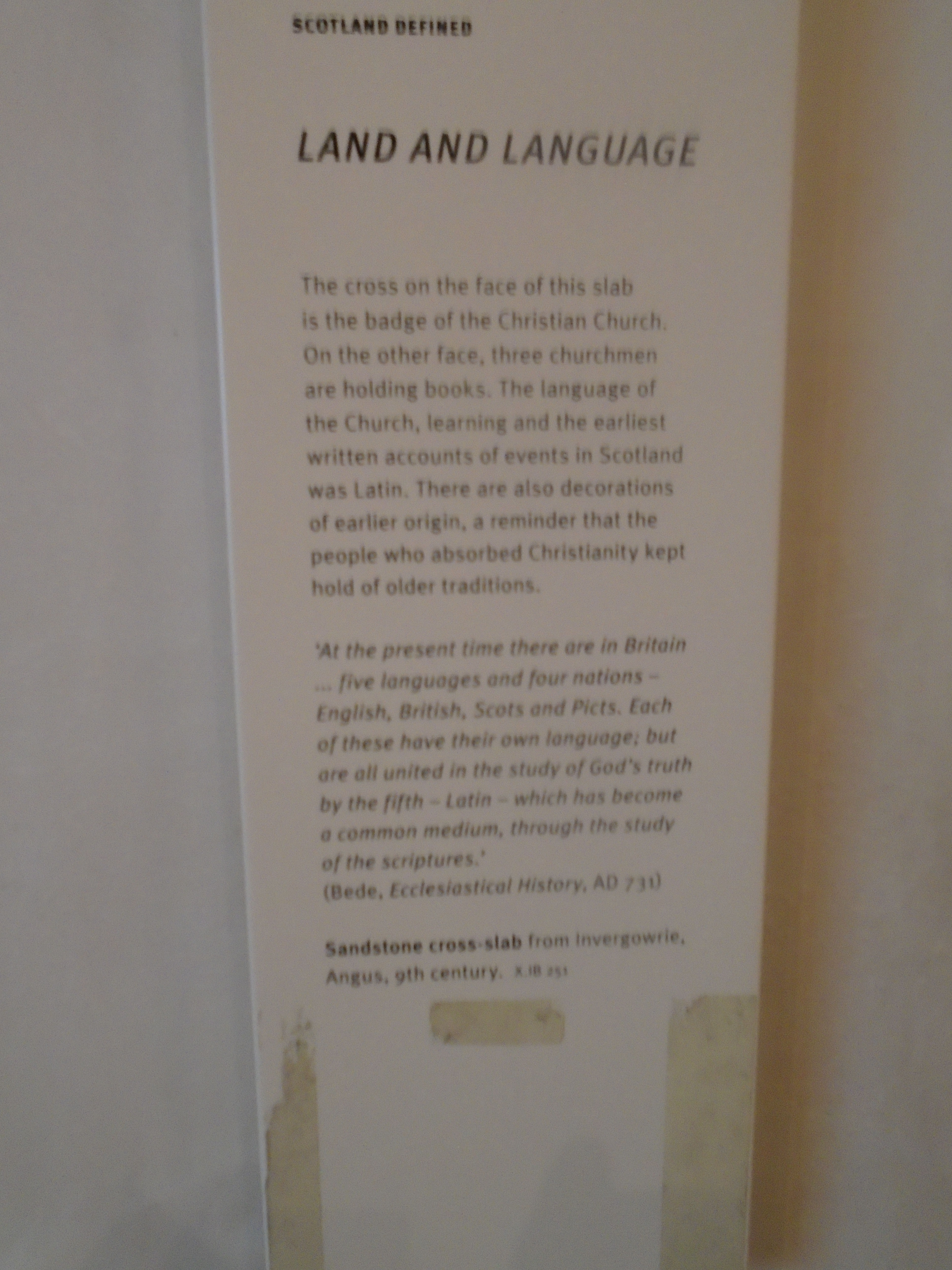





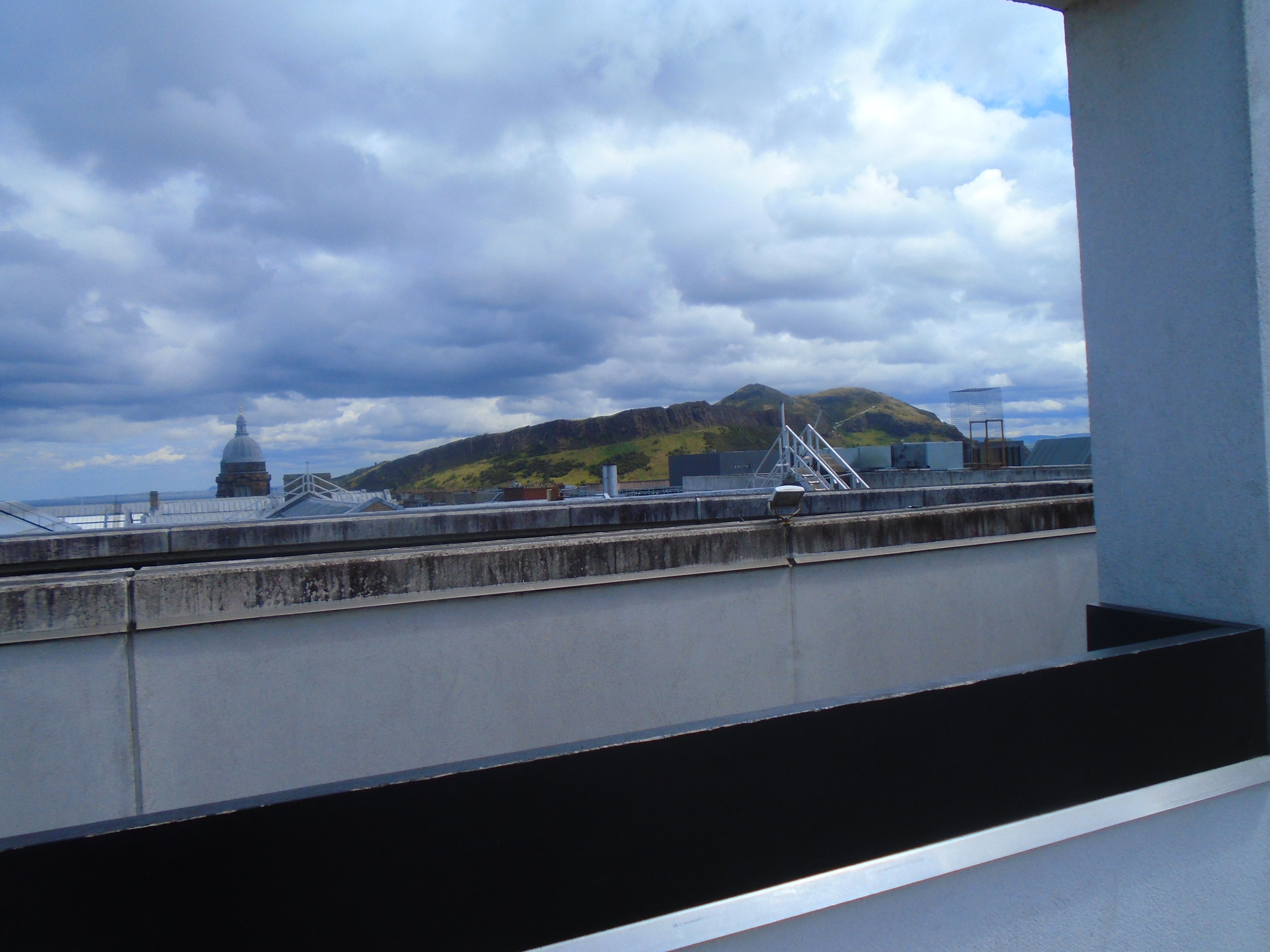
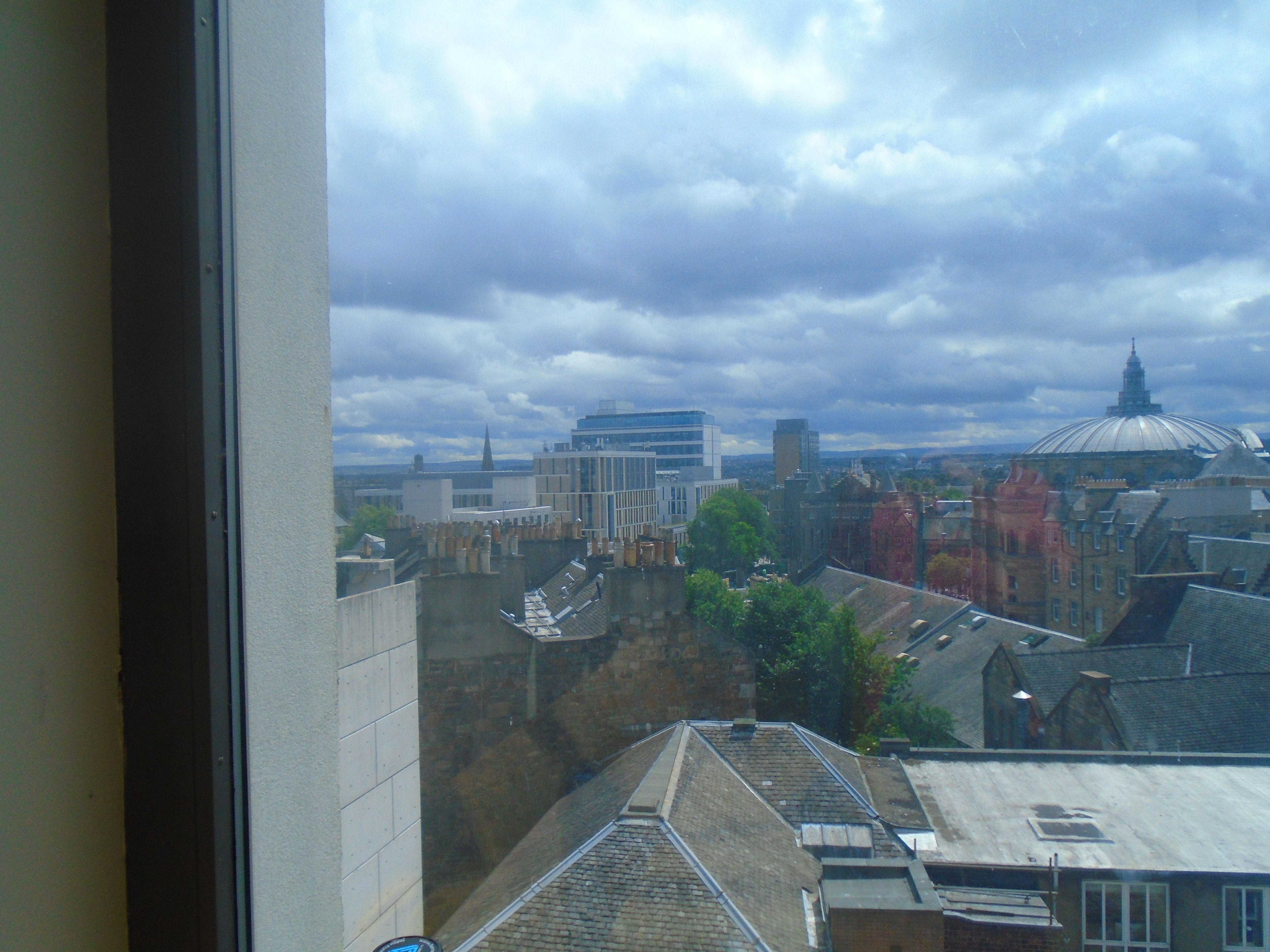
We went back on a non-rainy day to get to the roof terrace. It's a bit tricky to find. It's served by a single lift (and the museum is a large and sprawling place), and that lift seems to be quite crowded. But it does have probably the best views of the centre of Edinburgh. Calton Hill shows New Town and the Firth of Forth, but the centre is further off.
Mind you - I say there's a good view. But WHY did they plant trees blocking some of it? On a roof terrace?And more chimneys...



10 Viewcraig Gardens, EH8 9UL
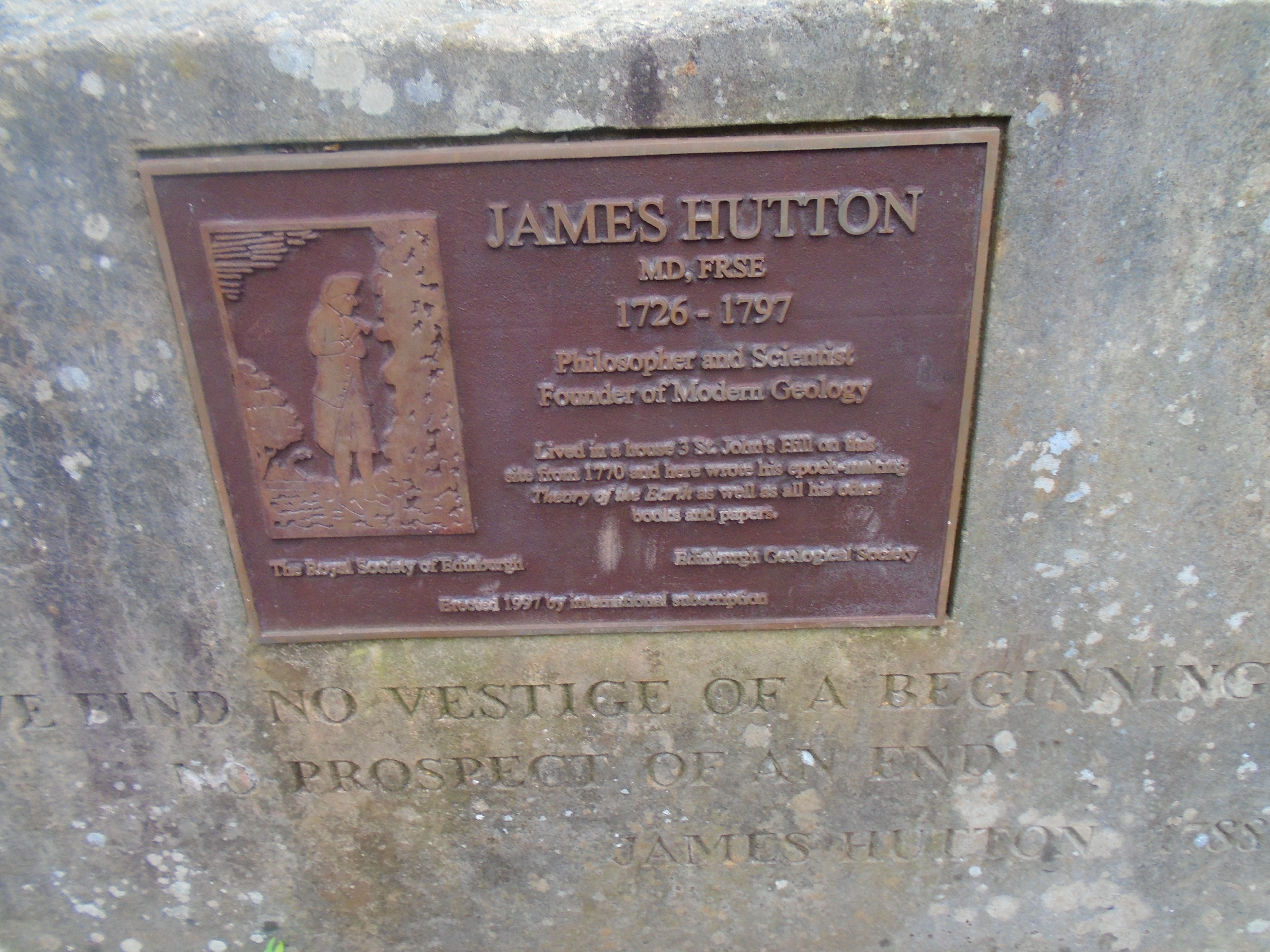
A stone-filled garden in the heart of Edinburgh commemorates the father of modern geology. A few feet east of the juncture where Holyrood Road meets the Pleasance, near the traffic lights, is a set of stairs with a black railing on what looks to be a lane called Viewcraig Gardens. The memorial is at the top of the stairs.
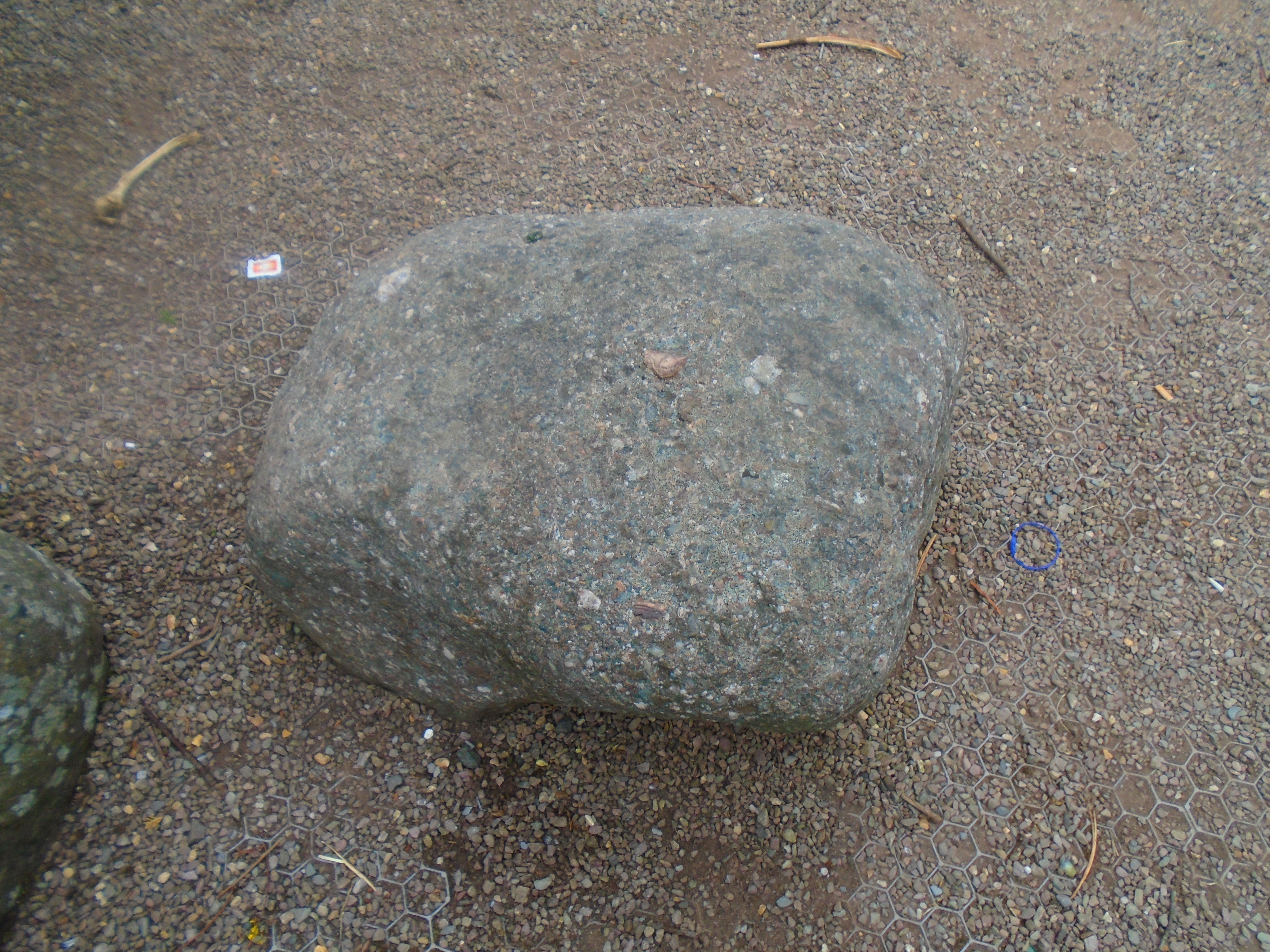
In the 18th century, James Hutton developed a theory that the earth was much, much older than anyone had previously thought. Though he had originally studied to be a physician, Hutton developed an interest in geology and meteorology while living at his family's farm. Along with several others, he helped establish the theory of uniformitarianism, which maintains that changes in the development of mountains and oceans are the result of actions caused by violent, continuous, and steady natural events. In other words, the development of the earth's crust was most likely due to events like earthquakes, volcanoes, and other natural phenomena rather than acts of god. Situated on a hill overlooking Holyrood Park, near Hutton's birthplace, is a garden dedicated in his honor. The James Hutton Memorial Garden was unveiled in 2002, on the bicentenary of his death. Visitors will find an array of stones that were important to the development of his scientific theories, including Barbush conglomerate and Glen Tilt boulders A nearby sign indicating where the garden's stones were sourced and their significance. At the center, a plaque mounted on a block of Clashach sandstone, which is engraved with a quote from Hutton: "We find no vestige of a beginning, no prospect of an end."
It would have been nice if they had labelled the rocks...




© Jo Edkins 2025