
All SaintsClick on a photo for a large version. |
George Row, Northampton NN1 1DF
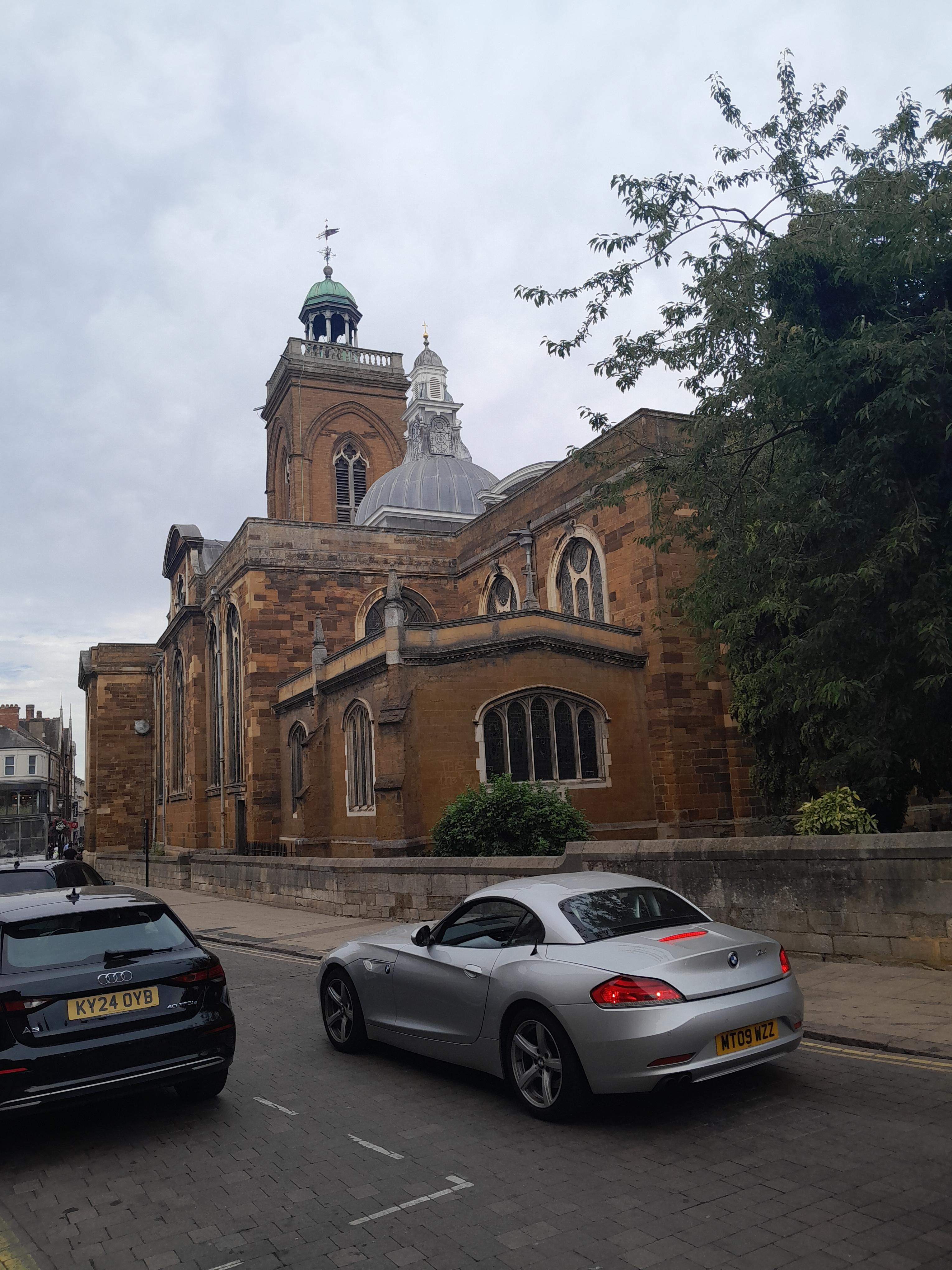
In 1675, the Great Fire of Northampton burnt the centre of Northampton, including the central church of All Hallows. Only the tower was left. After the the Great Fire, a parliamentary commission was formed to rebuild the historic church and indeed the settlement. The Parliamentarian leanings of Northampton had resulted in the razing of the castle by King Charles II after his invitation to reclaim the throne in 1660. Despite this, the Earl of Northampton, a friend and confidant of the King, persuaded Charles II to contribute 1000 tons of timber from the Royal forests of Salcey and Rockingham. Such a magnanimous gesture, together with the repeal of the 'chimney tax' endeared the King to the people of Northamptonshire. As a result, they and others throughout the country, contributed to the rebuilding fund. A statue of the King by John Hunt was erected on the portico parapet in 1712 in memory and thanksgiving for his part in the rebuilding.
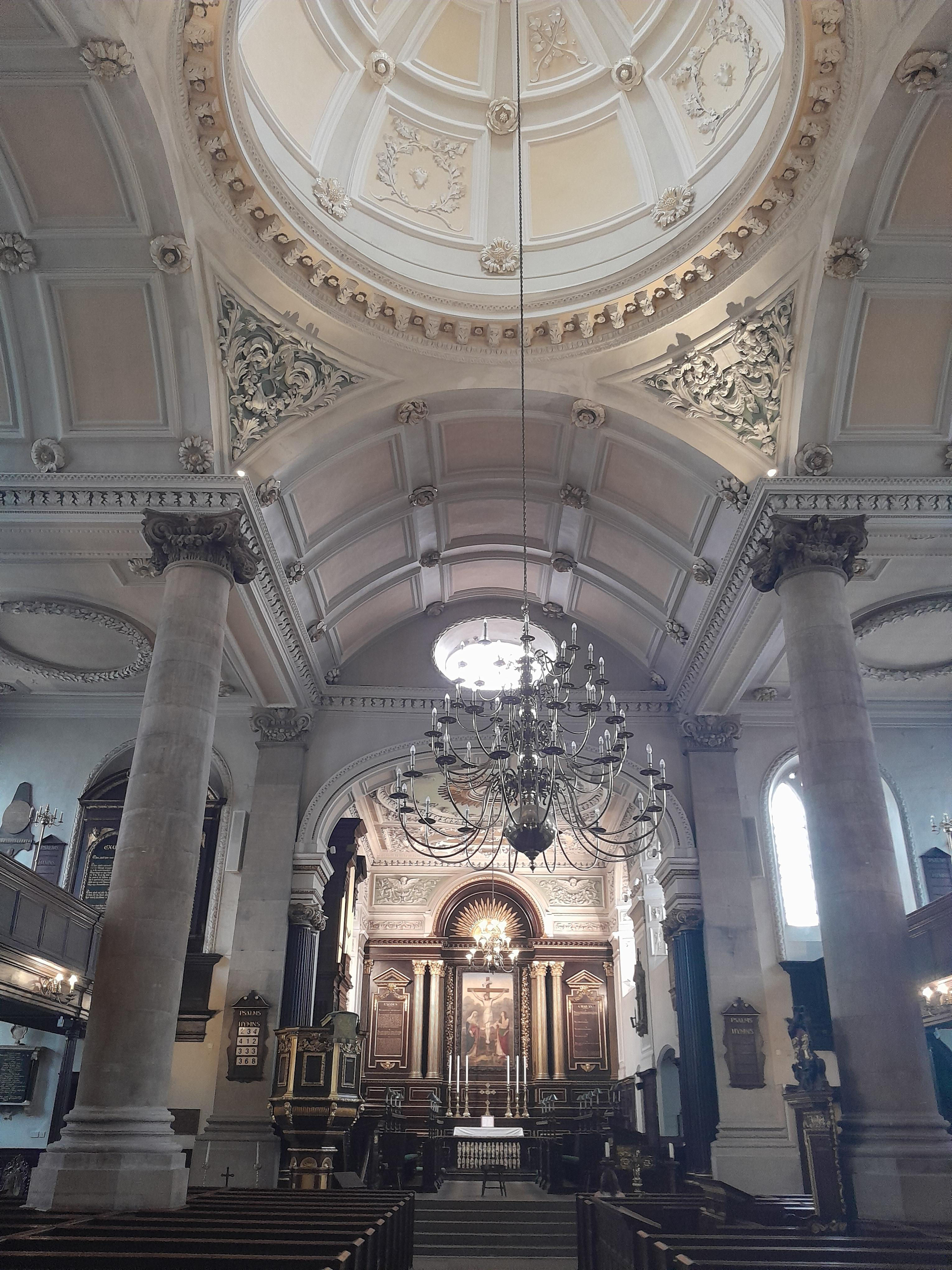
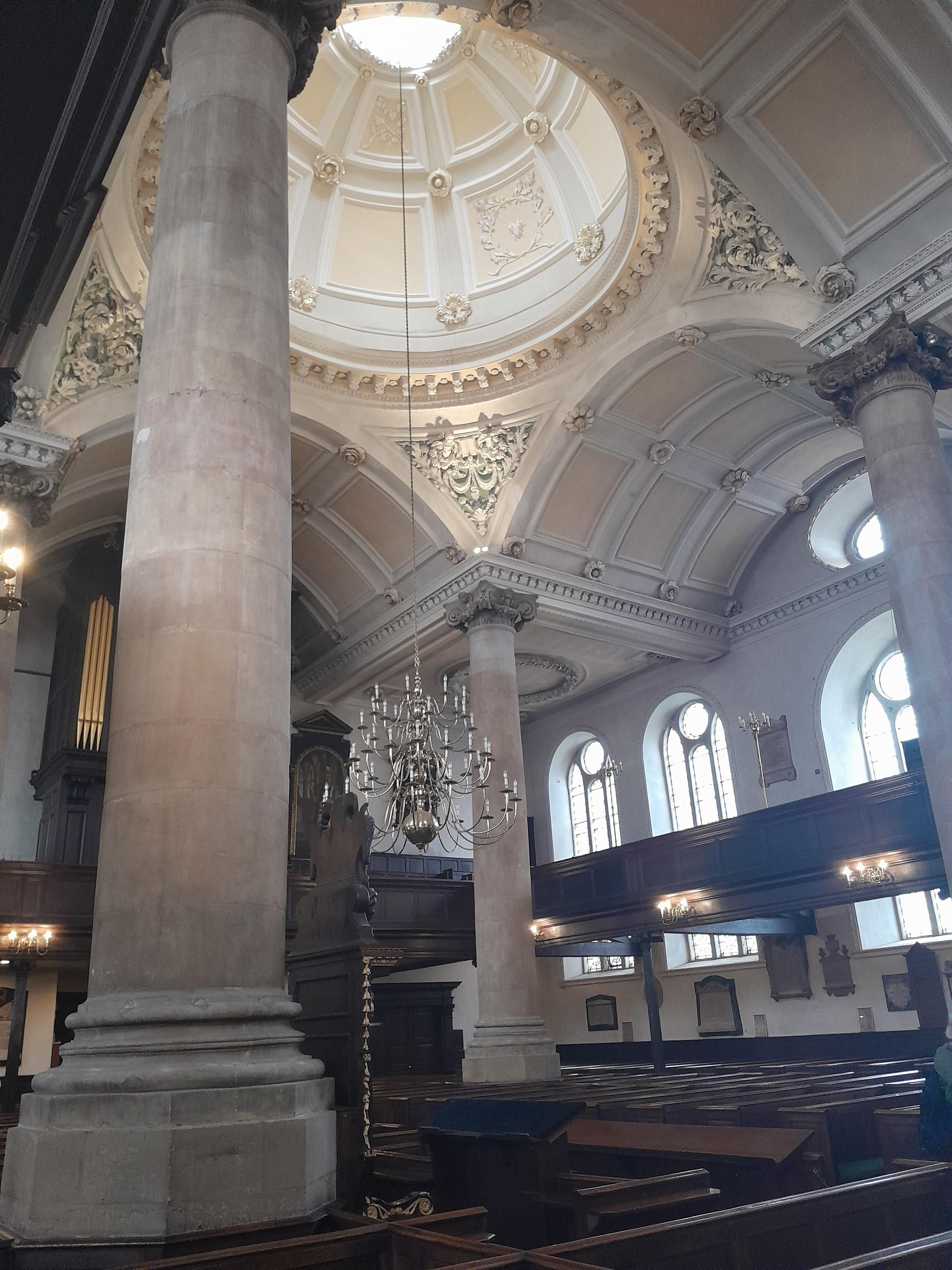
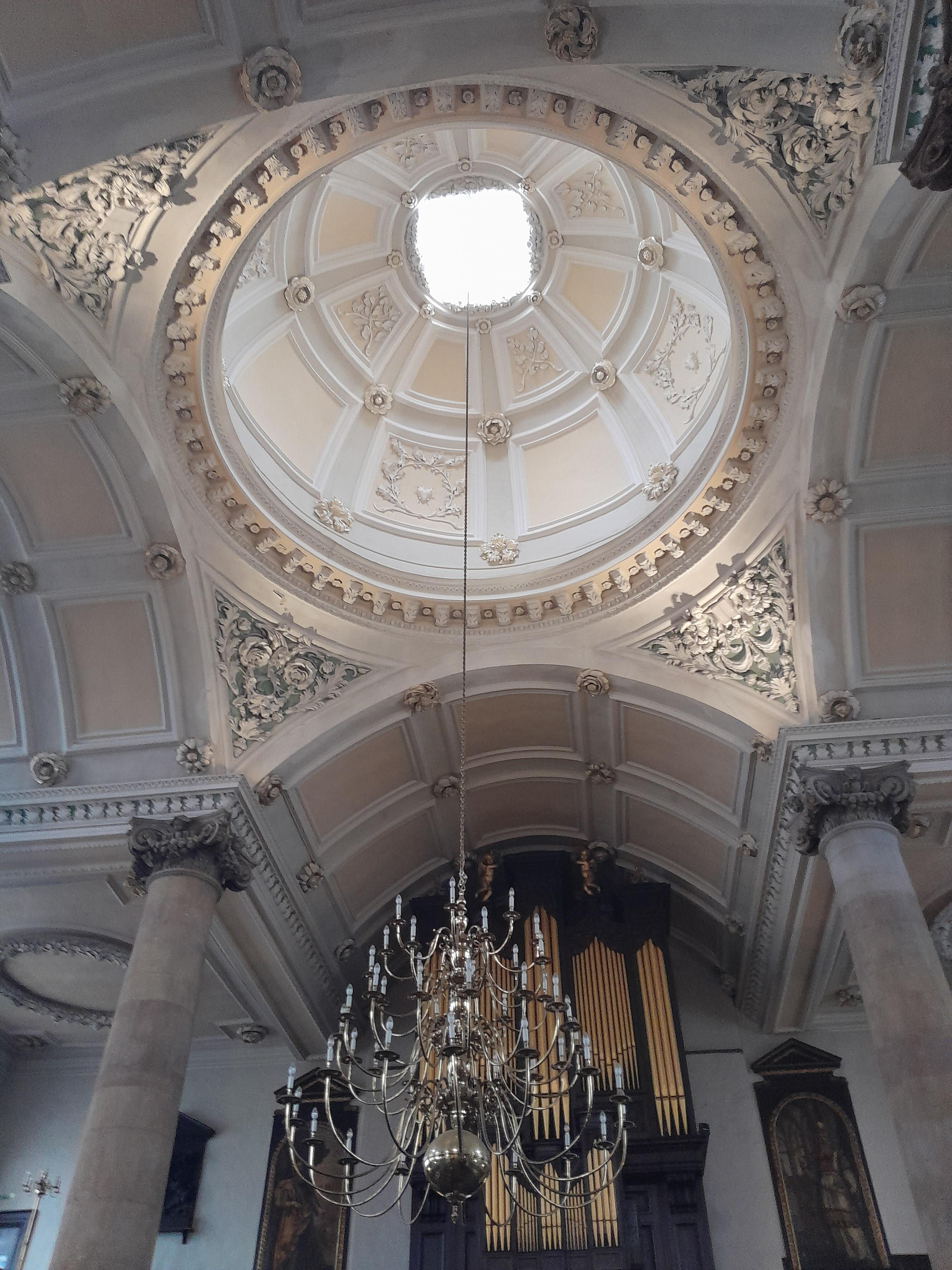
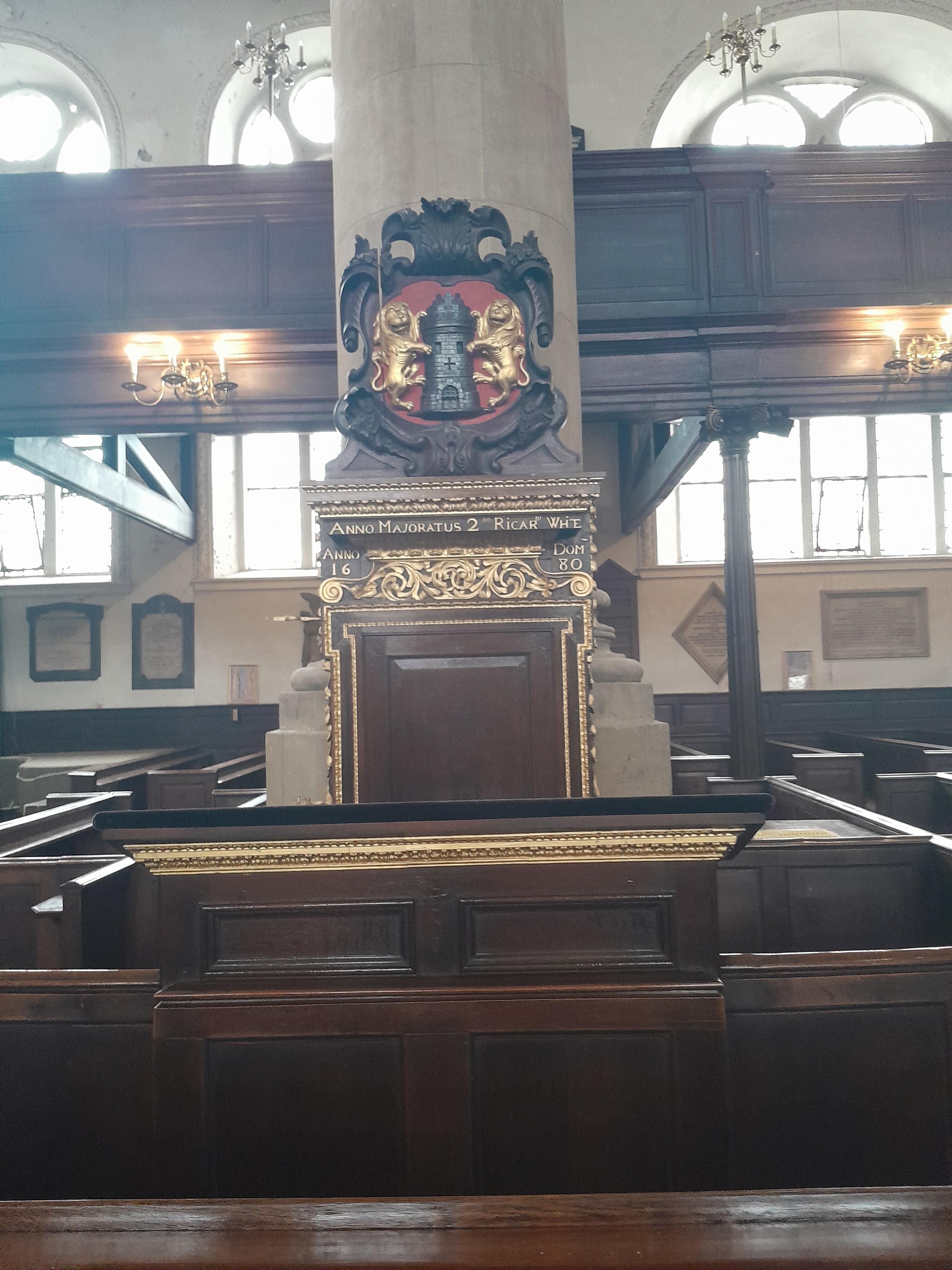
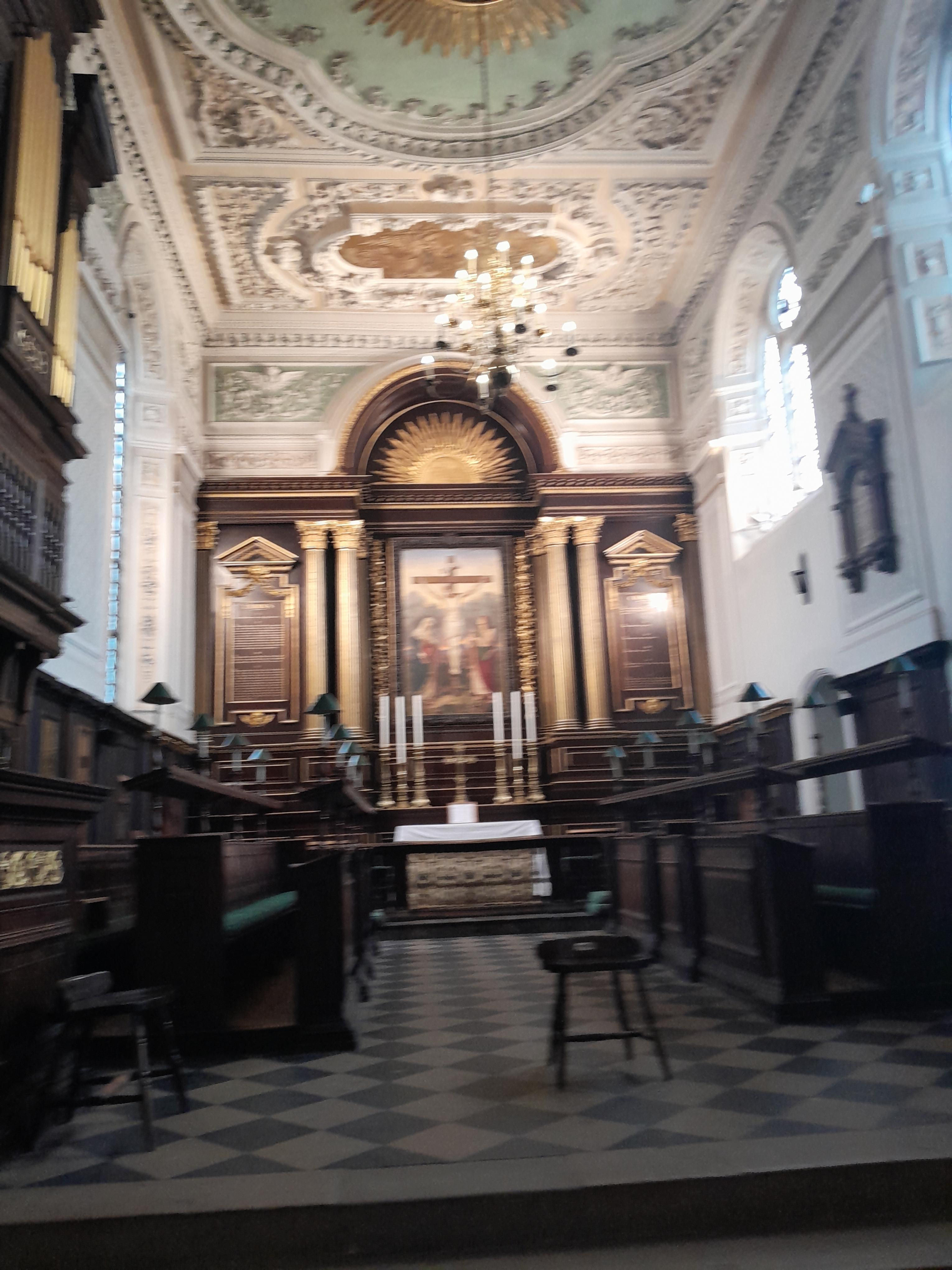
(From Wikipedia): The central medieval tower survived the fire, as did the crypt. The new church of All Saints' was built east of the tower in an almost square plan, with a chancel to the east and a north and south narthex flanking the tower. Visitors enter the church through the existing tower into a barrel vaulted nave. At the centre is a dome, supported on four Ionic columns, which is lit by a lantern above. The barrel vault extends into the aisles from the dome in a Greek-cross form, leaving four flat ceilings in the corners of the church. The church is well lit by plain glass windows in the aisles and originally there was a large east window in the chancel, that is now covered by a reredos. The plasterwork ceiling is finely decorated, and the barrel vaults are lit by elliptical windows.



© Jo Edkins 2026