
 Symmetry
Reflective symmetry - single line of symmetry
More than one line of symmetry
Rotational symmetry
Translational symmetry
Pictures
Symmetry website
Draw symmetrical picture online
handout
You can say that symmetry means that part of a picture is the same as another part.
If you look at a face, half of it is the same as the other half, but "flipped".
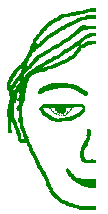
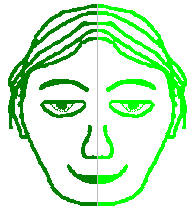
There is a line separating the two halves. This type of symmetry is called reflective symmetry, and the line is the line of symmetry. The line is very important!
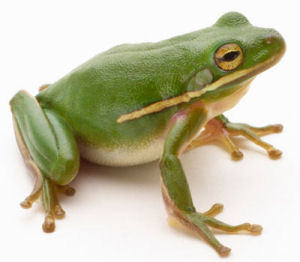
That line is vertical. This is very common for animals, and indeed, plants. Having one side the same as another means that it is balanced, which helps with gravity!
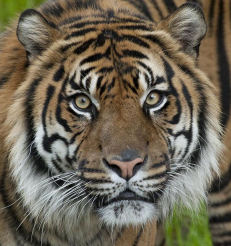
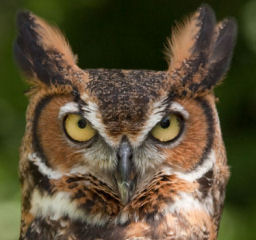
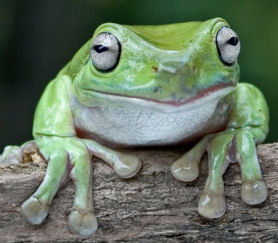

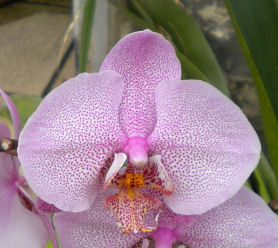
This symmetry is only from the front, not from the side.
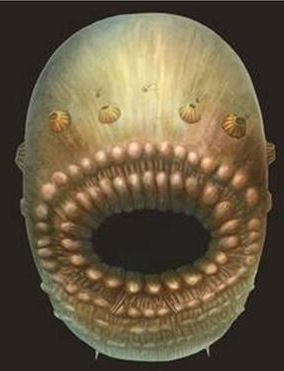
This tiny animal is called Saccorhytus coronarius, and it lived 540 million years ago. It has the same type of symmetry, and may be the start of the whole idea!
But the line of symmetry doesn't have to be vertical! It can be horizontal. Look at this picture of a flower reflected in water.
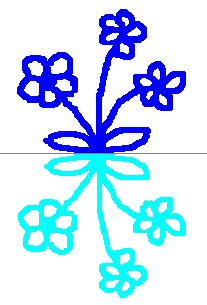
Here, instead of the left of the picture being the same as the right, the top is the same as the bottom.
It is possible to have more than one line of symmetry. Here is a symmetrical house reflected in water.
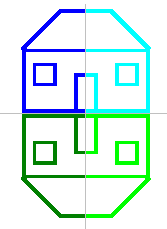
This has two lines of symmetry, not four. It's tempting to divide this picture into four, and say each bit is the same. But really, there are two ways of dividing it (along a line) and in both cases, each half is the same as the other half.
You can have three lines of symmetry. Here is a clover leaf (without the stem!) Again, it is tempting to think of 3-way symmetry, 3 leaves. However, the whole picture is mirrored along the lines of symmetry, in 3 different ways.
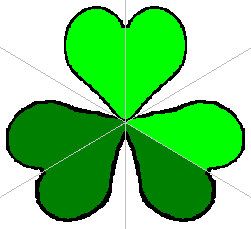

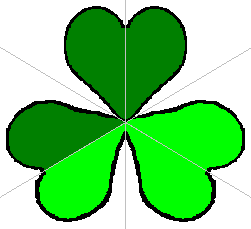
It is true that 3-way symmetry does produce 3 leaves, of course!
A snowflake has 6-way symmetry.
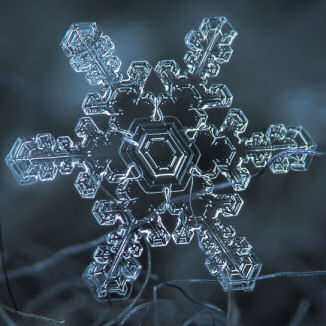


How to draw a snowflake:
First draw the 6 lines of symmetry. Start with the vertical and horizontal:
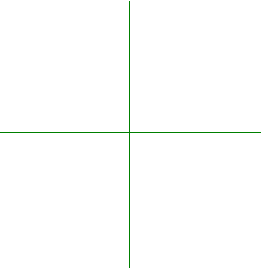
Then draw two more lines fitting between those:

Now draw a pattern between two of the lines. This could be simple lines, or filled in shapes. But don't make it too complicated!
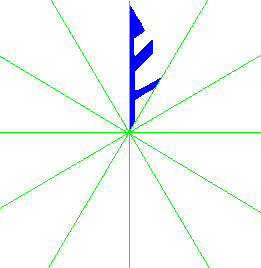
Copy that pattern across one of the lines, reflecting it.



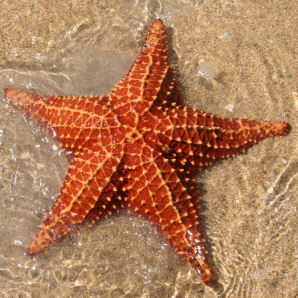
You can have 5-way symmetry - a star fish:
And 8-way - an octopus (although I'm not quite sure the function of all the limbs is the same, and anyway, they won't stay still!)

Rotational symmetry works in a completely different way. Instead of a line of symmetry, you have a dot, in the centre of the picture. Rather than reflecting half the picture to make the other half, you rotate, or turn, half of the picture, using the dot as a pivot. To see what this means, lets try to do it to half of a face.

That is completely wrong! So what has rotational symmetry? Surprisingly enough, many of the patterns that we have been looking at.

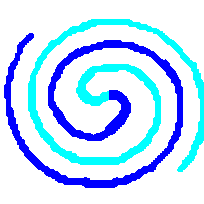
Colouring it in like this means that it is not the same when rotated. I did that to show what is happening. But if it was all one colour, it would have 2-way rotational symmetry (because you can turn it through a half circle, and it's the same, then do that again to get back to wahere you started.).
The coat of arms of the Isle of Man is a triskelion, and this has 3-way symmetry. Turn it through a third of a circle, and it will look the same. You cannot draw any line of symmetry where you can reflect it.

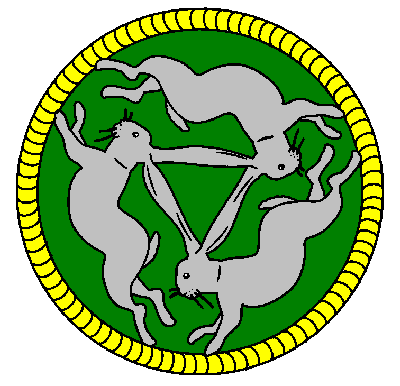
The "three hares" motif has appeared in many cultures, dating back to the 6C in China. The hares chase round in a circle, and each hare shares an ear with the next. It also has 3-wat symmetry.
The last type of symmetry is the simplest. It moves one part of the picture along, without flipping or turning it.

The Greek key is a translated pattern.
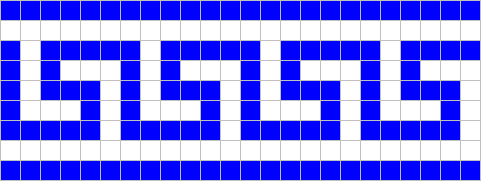
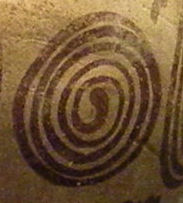
But a basic unit of a Greek key is rotational (because it is a square form of a double spiral.
This is a Danish brooch 950-1000 AD. Can you work out whether it is reflective or roational symmetry?
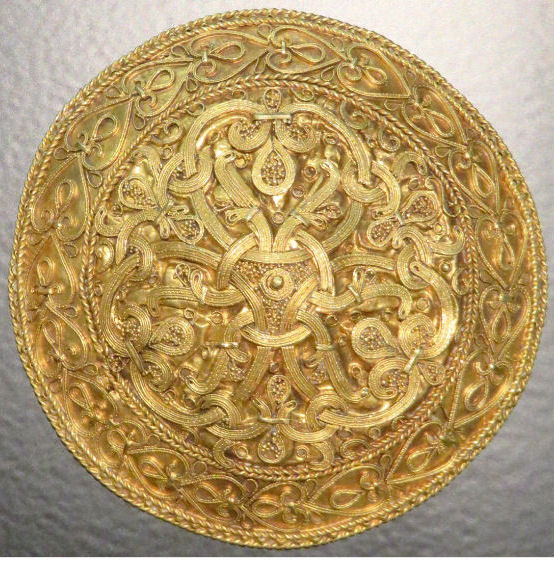
By the way, a simple spiral has no symmetry at all!
© Jo Edkins 2025 - Return to Patterns index