
 Features of buildings in Cambridge
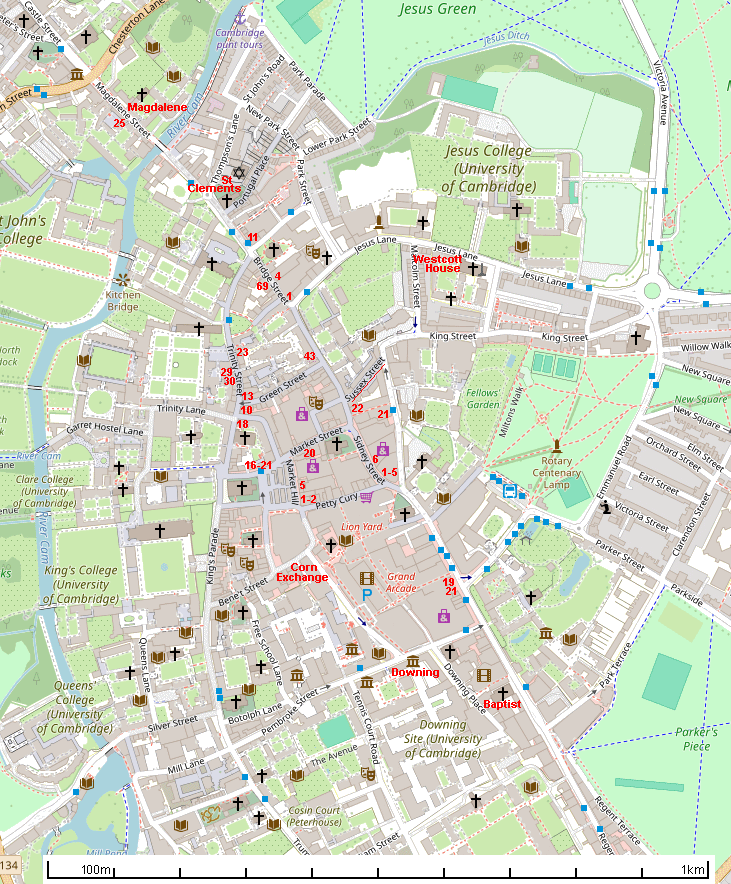
This page covers interesting features of various Cambridge shops and buildings. There is a scale at the bottom of the map. A kilometre is about half a mile.
Things worth looking at are marked in red. Click on them, or on the links, for descriptions and pictures.
Click on the photos for a bigger version.

The frontage of the Downing site from Downing Street.

The Downing site is in Downing Street. If you walk from the St Andrews St end, look left, and you will see this splendid mammoth.

Next is the coat of arms of Cambridge University, supported by an iguanodon (on the left) and a giant sloth (on the right). These are on the outer wall of the Sedgwick museum, featuring fossils. The architect of the Sedgwick Museum was Thomas Graham Jackson and he was responsible for this art (see here). The museum was opened in 1904.

This is above the gate to the Downing Site. The motton says "Hinc lucem et pucula sacra" which means "Out of here comes light and sacred draughts". The lady in the middle holds a sun and a cup to represent these. She is labelled "Alma Mater Cantabrigia", which means "Bountiful mother Cambridge". If you look carefully at her, she is indeed bountiful - she's lactating! She's the University's emblem.
There are more features and artworks in the Downing site. Click here to see them.
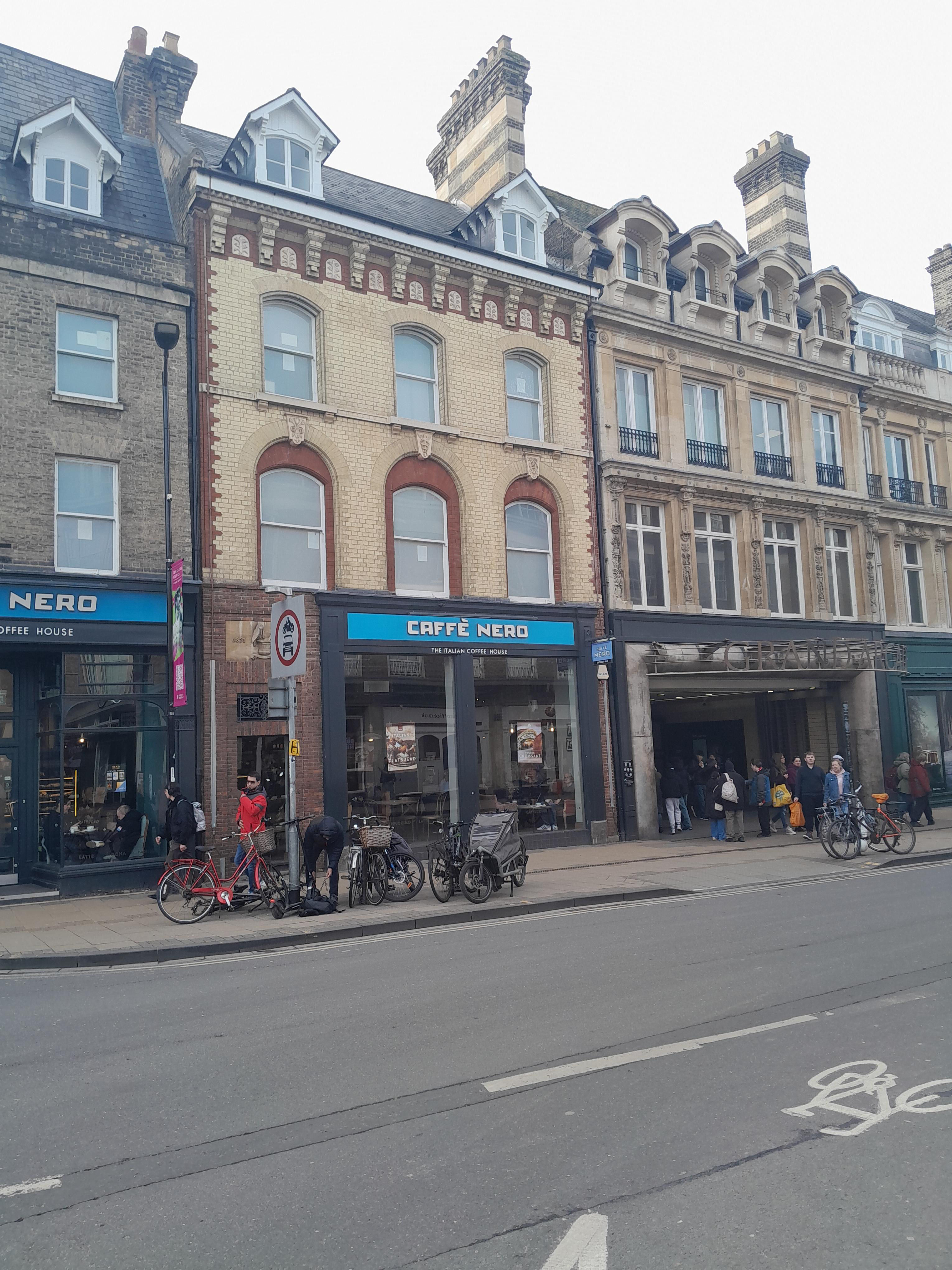

Above 19 At Andrews Street, there is an owl, sitting on a pestle and mortar. This shows that this shop was originally an apocathary. These sold medicines, like a chemist, but they ground up the ingredients themselves. The owl is a symbol of wisdom. The sign has a date 1851 1934. I assume that is the date of the building, and when the sign was made.

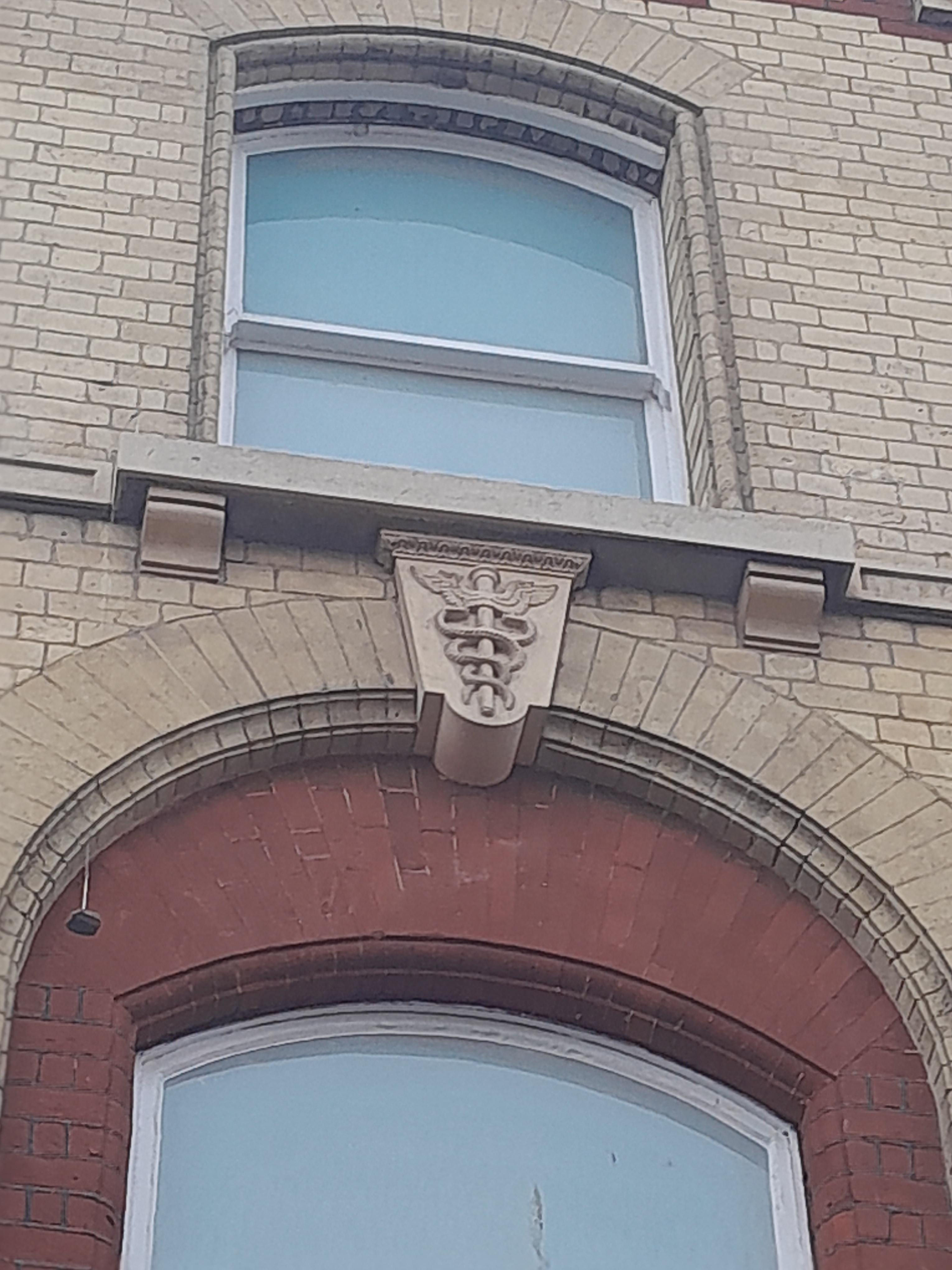

The Grand Arcade archaeological report of 2019 notes that this frontage was combined behind a single facade c.1866-9 when it was occupied by chemist Henry James Church. There are three symbols on the keystones of the first floor window arches. The southernmost is a foliage decoration with a stylized lotus flower at the top; in the centre is Caduceus, two snakes entwined around the winged staff of Hermes, generally taken to be a symbol of the medical profession; the northernmost is a bunch of grapes flanked by vine tendrils.
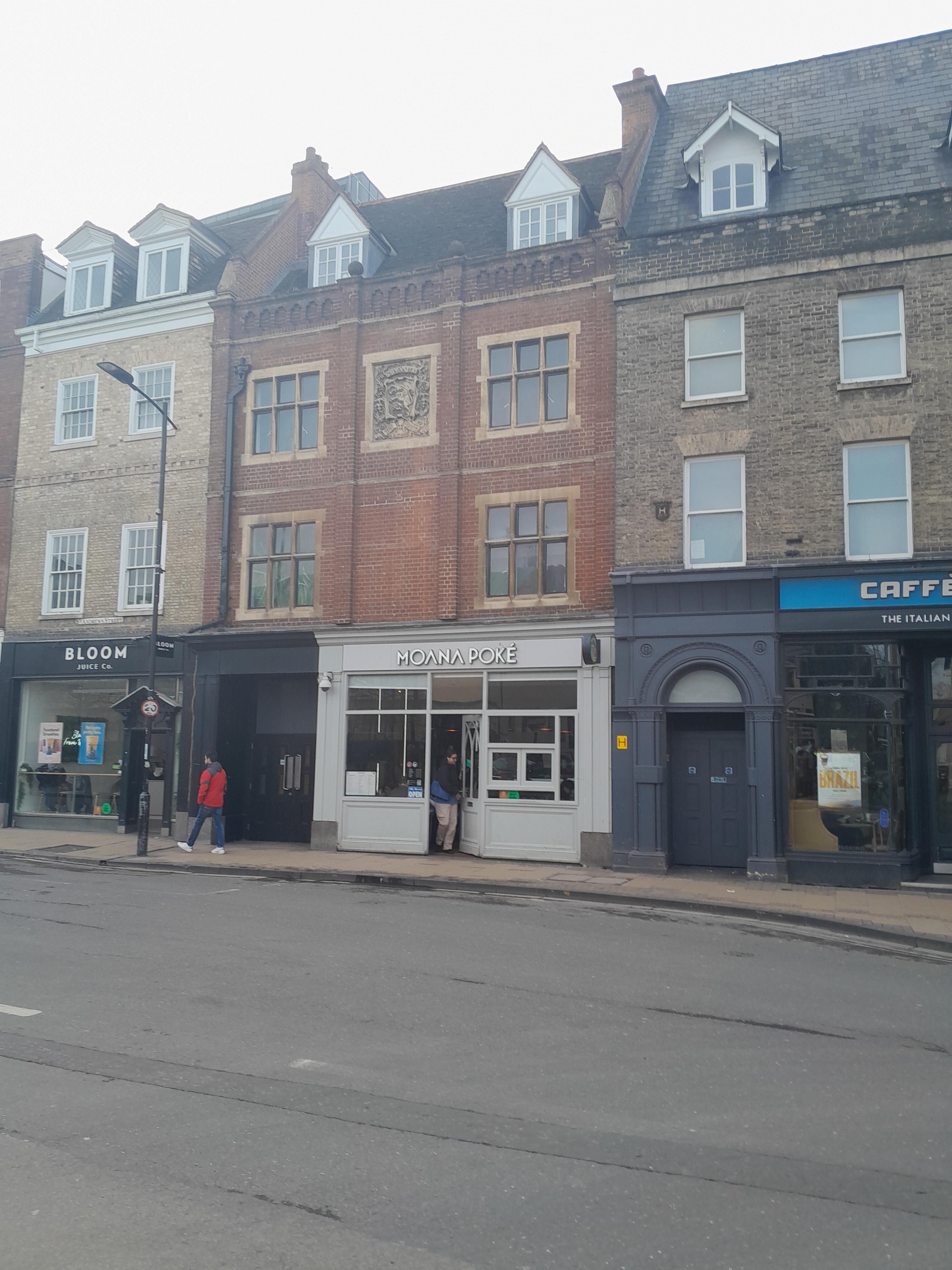
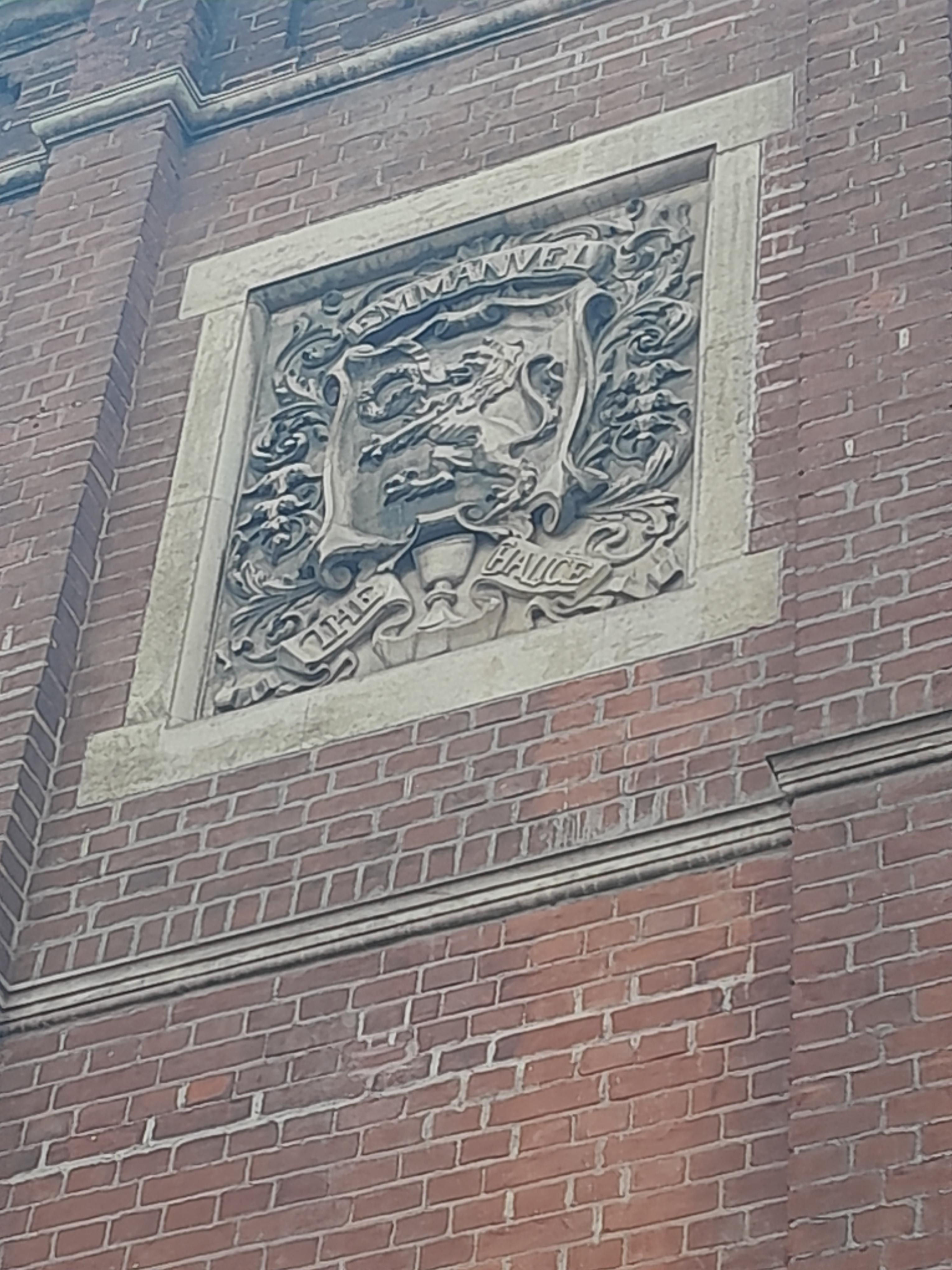
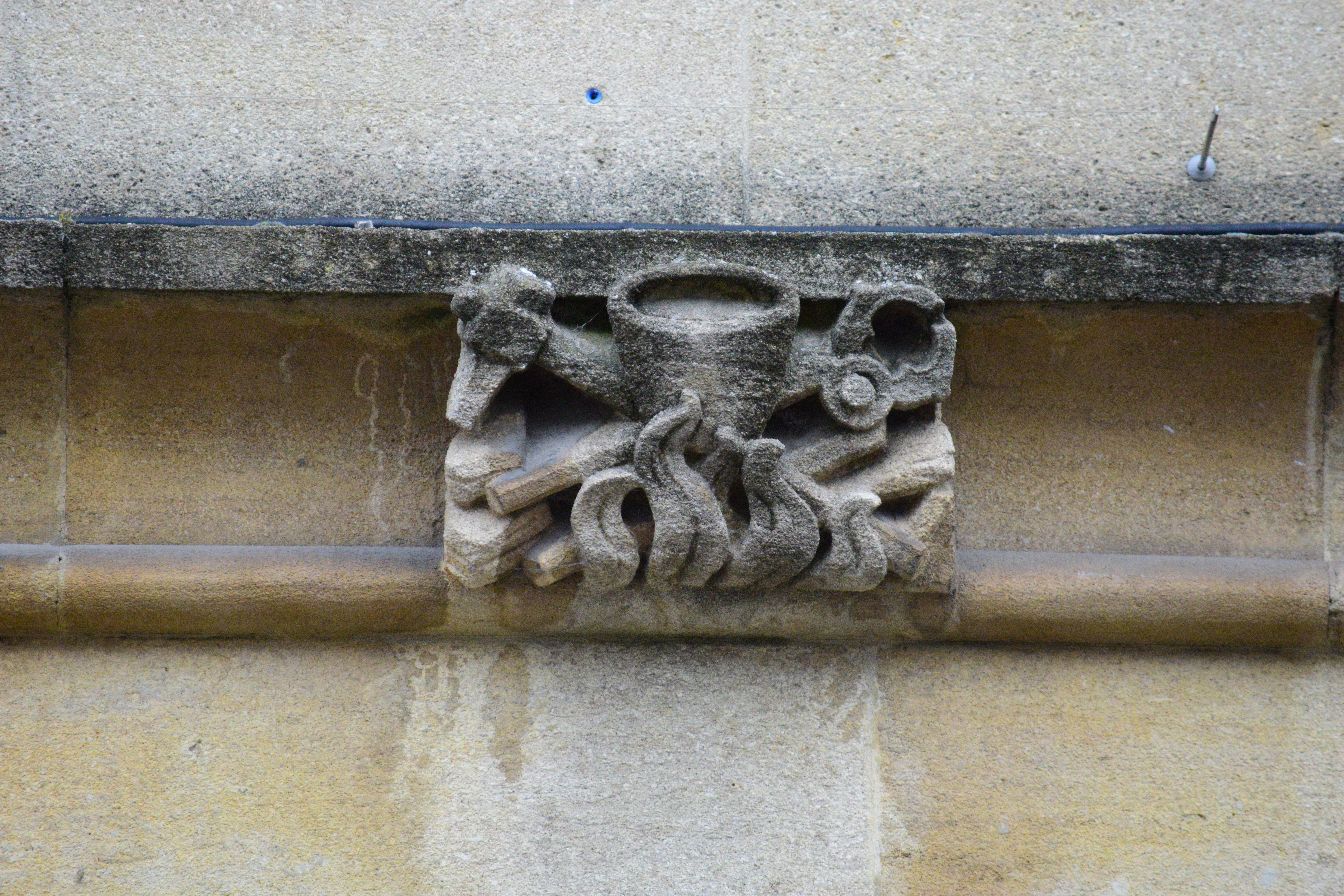
21 St Andrews St used to be the Chalice Inn. This shield gives its name..

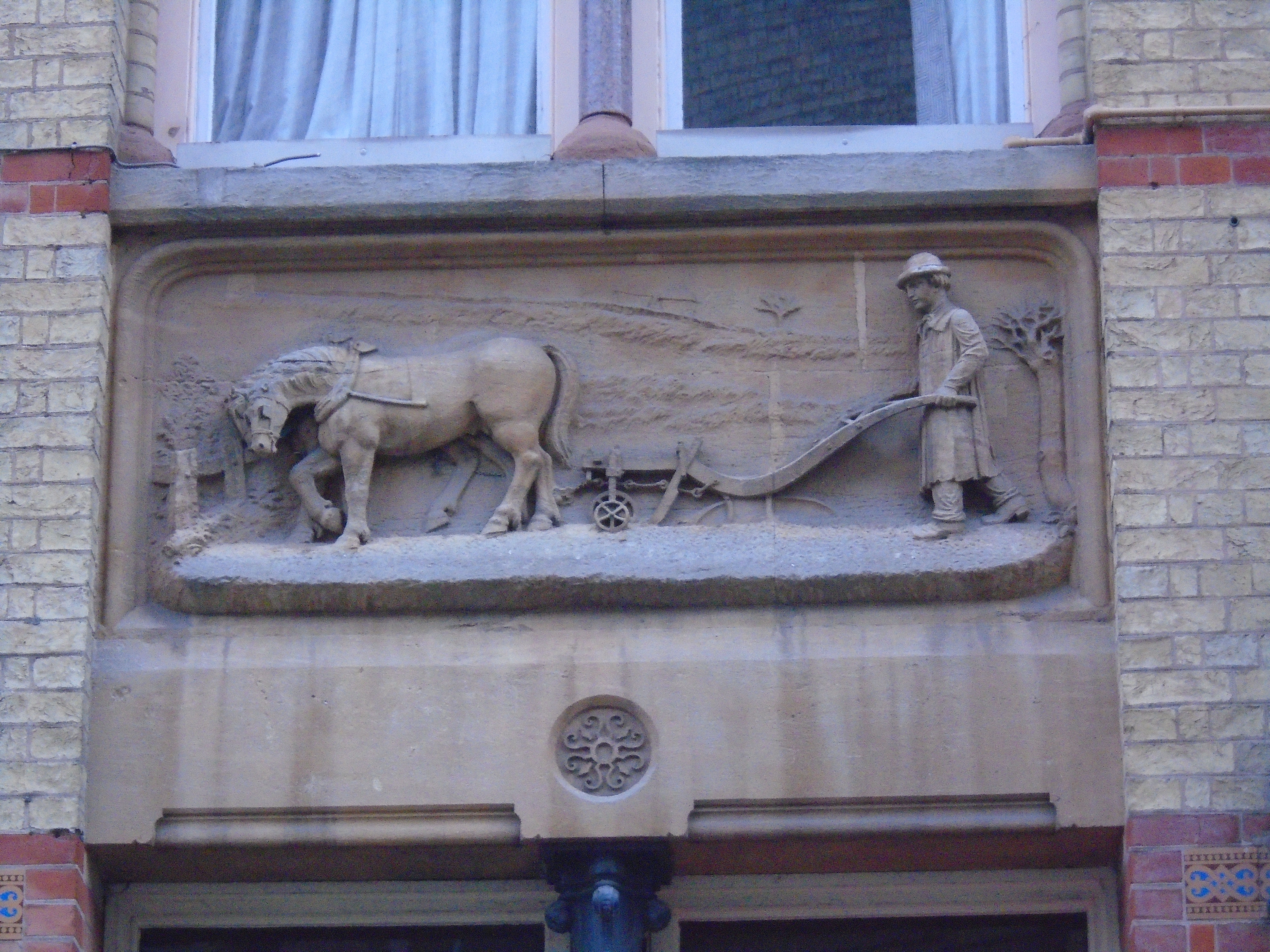
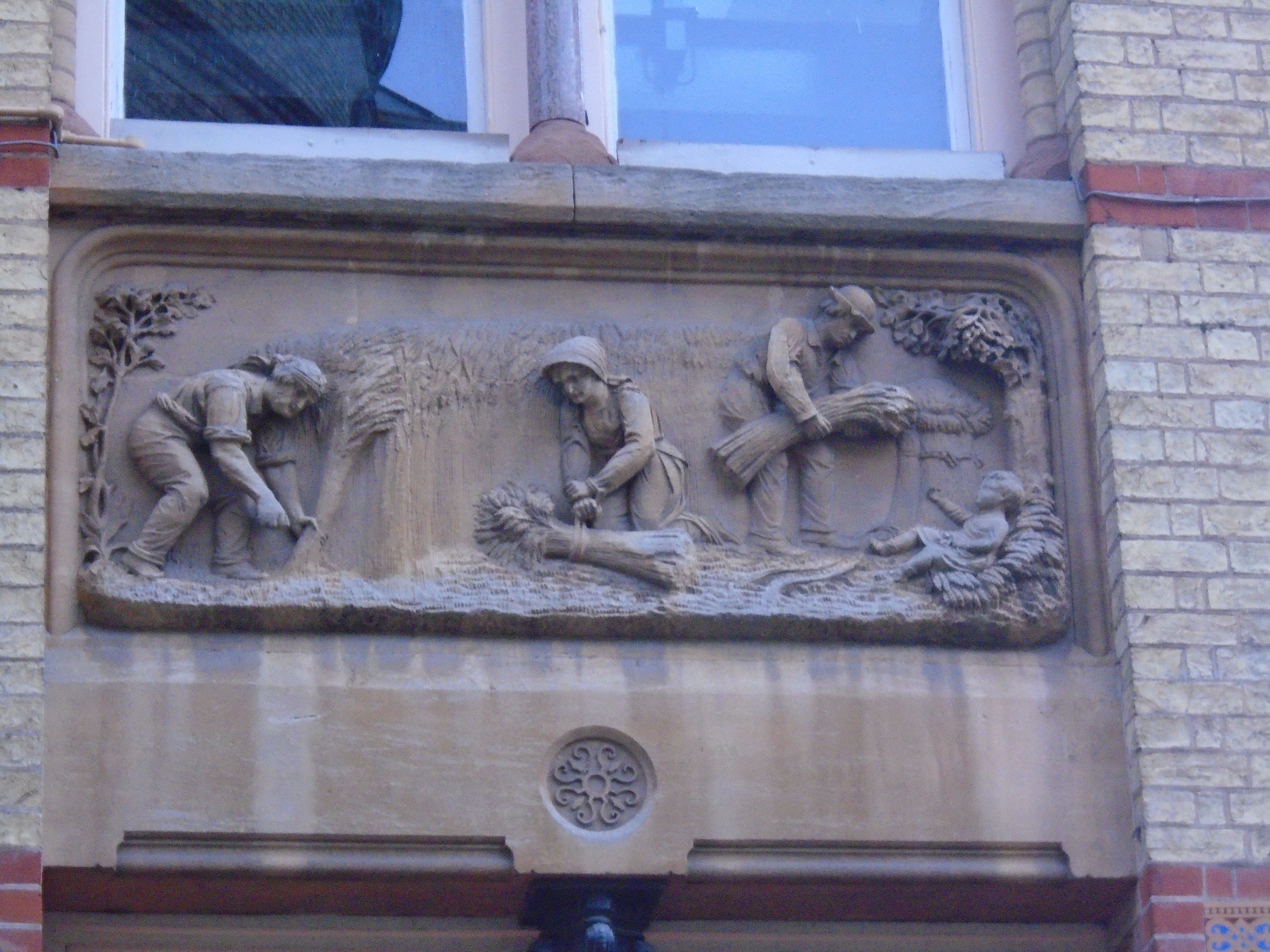
In Wheeler Street, behind the Guildhall, there is the Corn Exchange, listed grade II. There are carvings outside demonstrating farming, including a plough team.


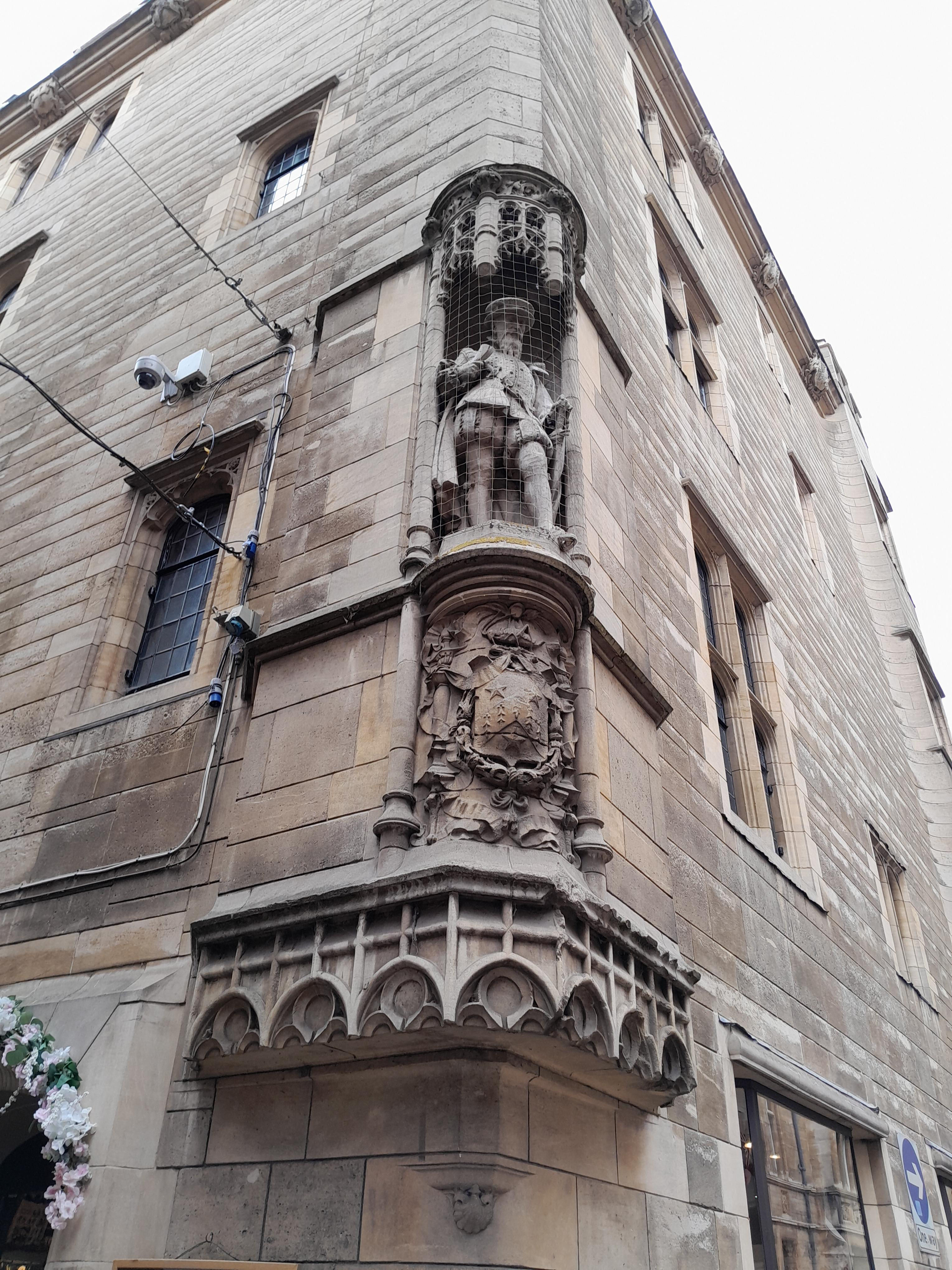

This inscription is on a building on the corner of Rose Crescent and Trinity Street. It says Ex prudentia et litteris virtutis petra firmatis immortalitas - "From wisdom and learning, founded upon the rock of virtue, come immortality". John Caius, one of the founders of Gonville and Caius college, is supposed to have said this, explaining the significance of the Caius arms granted to him in 1561. On the coat of arms the two serpents represent wisdom, the books portrays learning and the buckles, keys (i.e. Caius). The stone slab is the rock of virtue and the sengrene (large flower) and 'flowers gentle' (small flowers) stand for immortality.
The building was built by Gonville and Caius College in 1888. Edmund Gonville founded Gonville Hall in 1348. When he died in 1351, the Hall’s finances were shaky, and his executor William Bateman, Bishop of Norwich, stepped in to move the College a short distance to its present site and make provision for its endowment. The College entered a period of some decline. In 1557, rescue came in the shape of former student and Fellow John Keys. As was common in Elizabethan times, Keys spelled his name in many different ways, one of which was Caius. Perhaps the three figures also on this building are these three men.
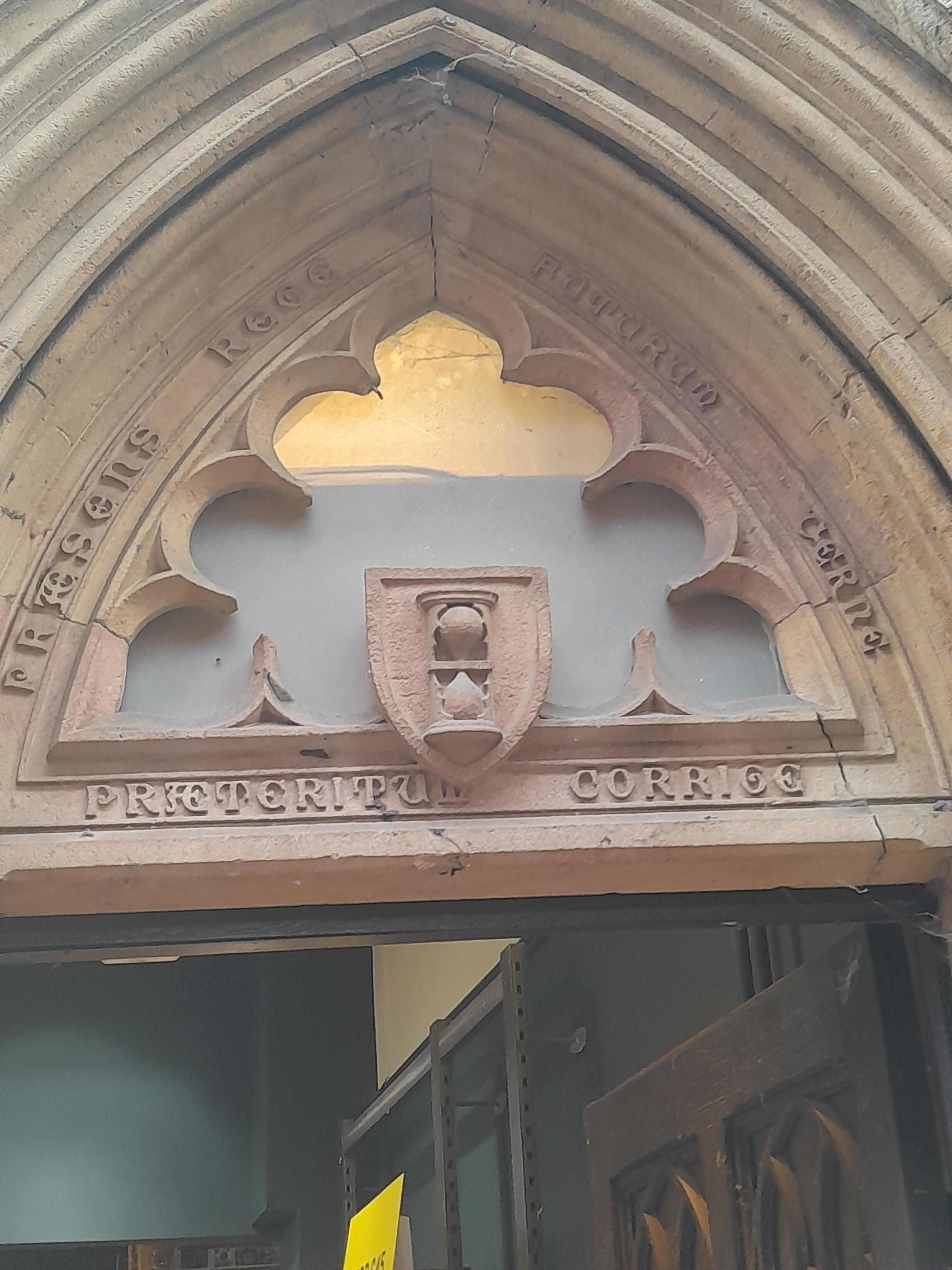
10 Trinity Street is listed grade II. It was built in the early 1880's for a firm of solicitors. Over the door it has this feature. The hourglass indicates that the subject matter of the inscription is Time. The writing says "PRAETERITUM CORRIGE" (Correct the past), "PRAESENS REGE" (Control the present), "FUTURUM CERNE" (Perceive the future), which is rather a chilling motto for solicitors! The original is part of a short epigram by the 16th century Bavarian jurist called Nicolaus Reusner.


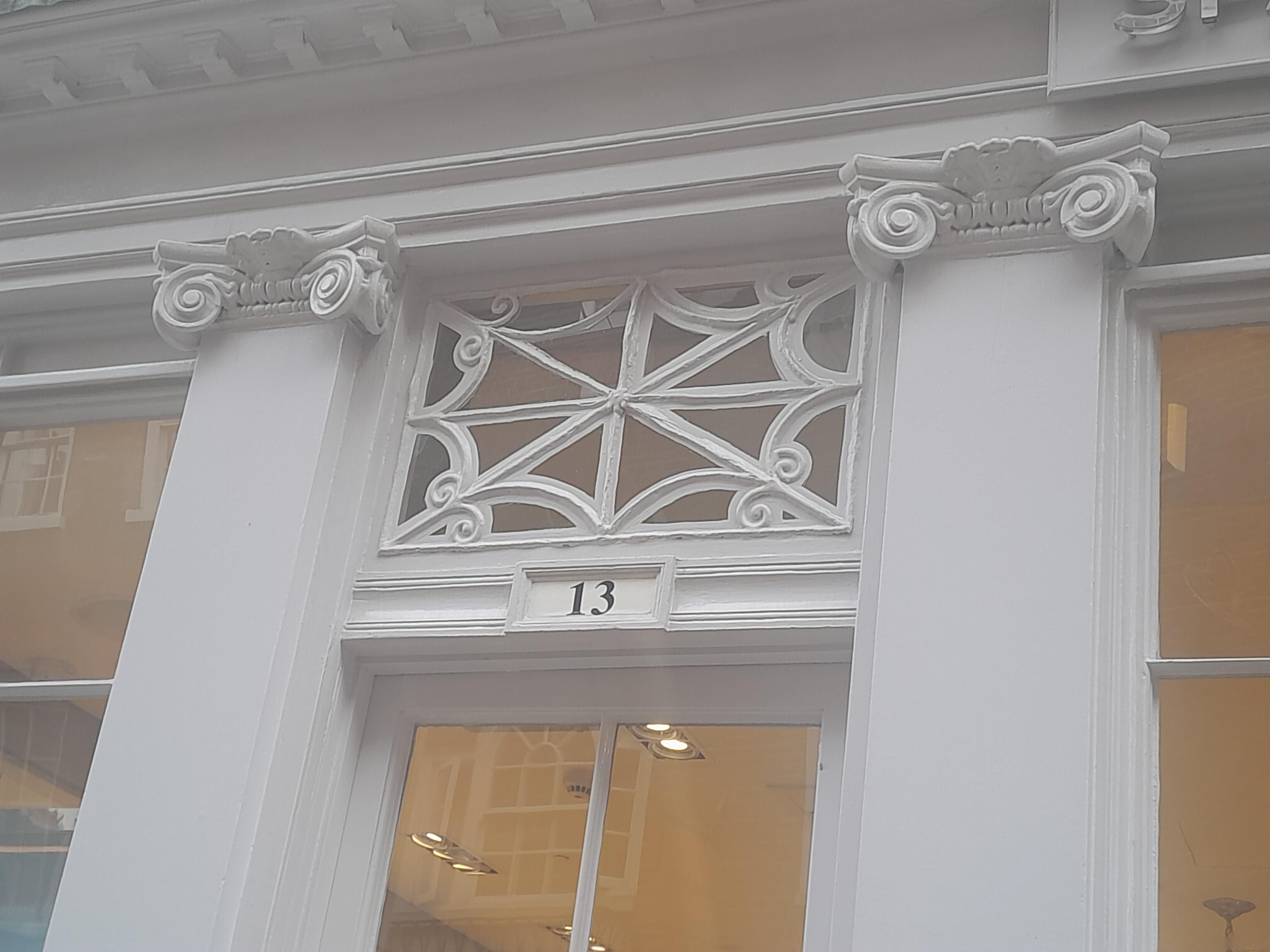
13 Trinity Street is listed grade II*. It was built in the late 18C, with a shop front of early 19c. There is a window pattern over the door.
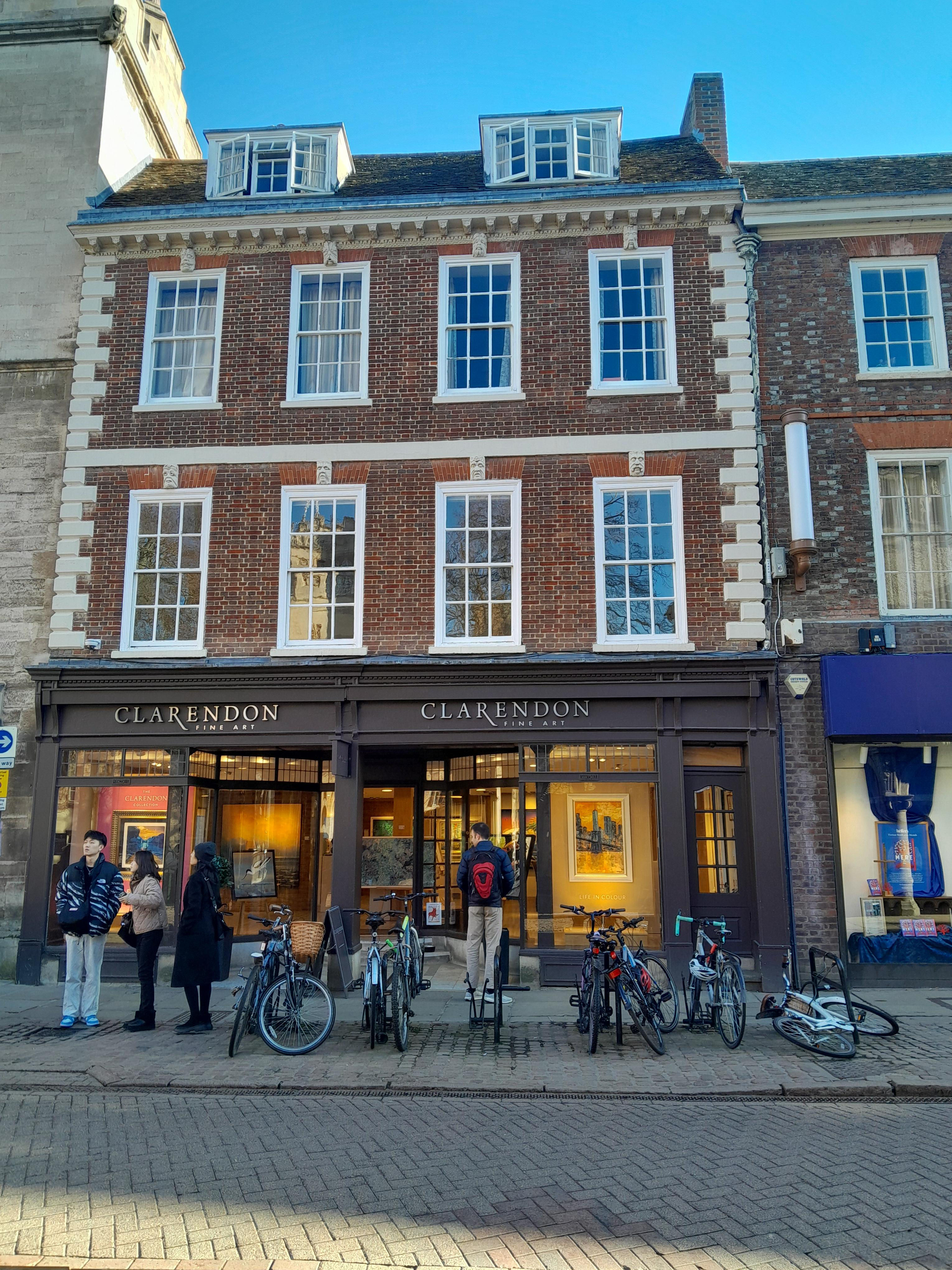


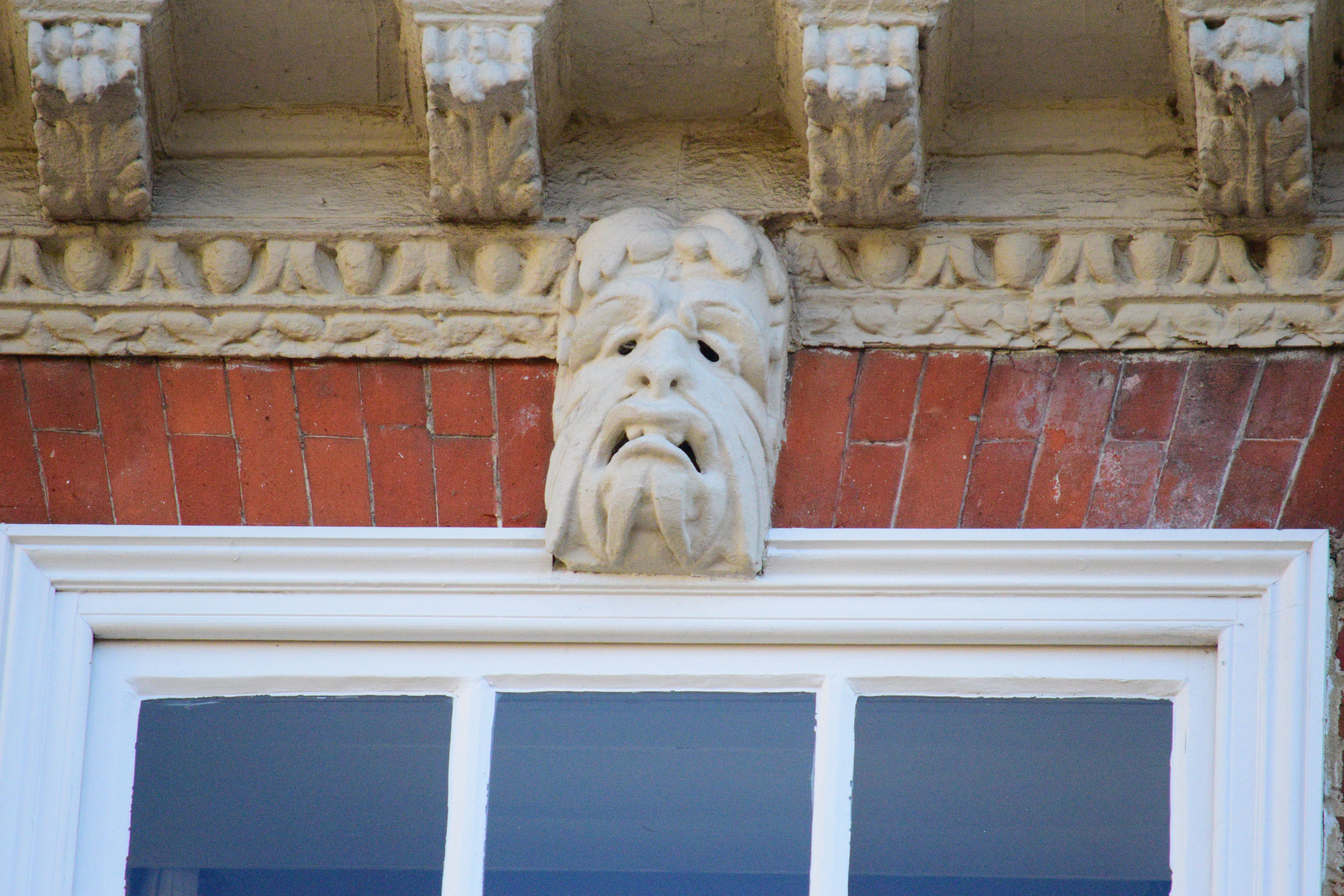
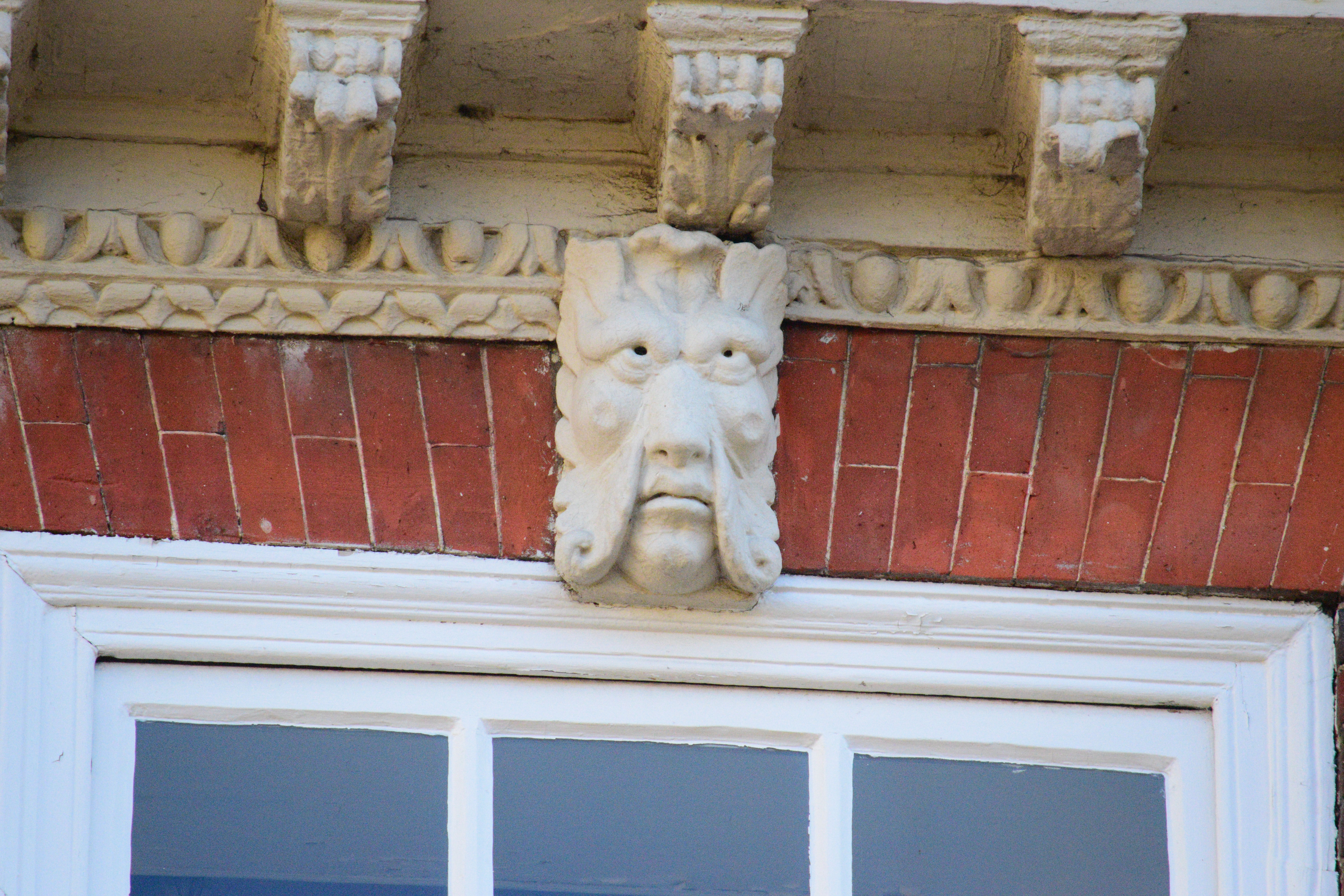
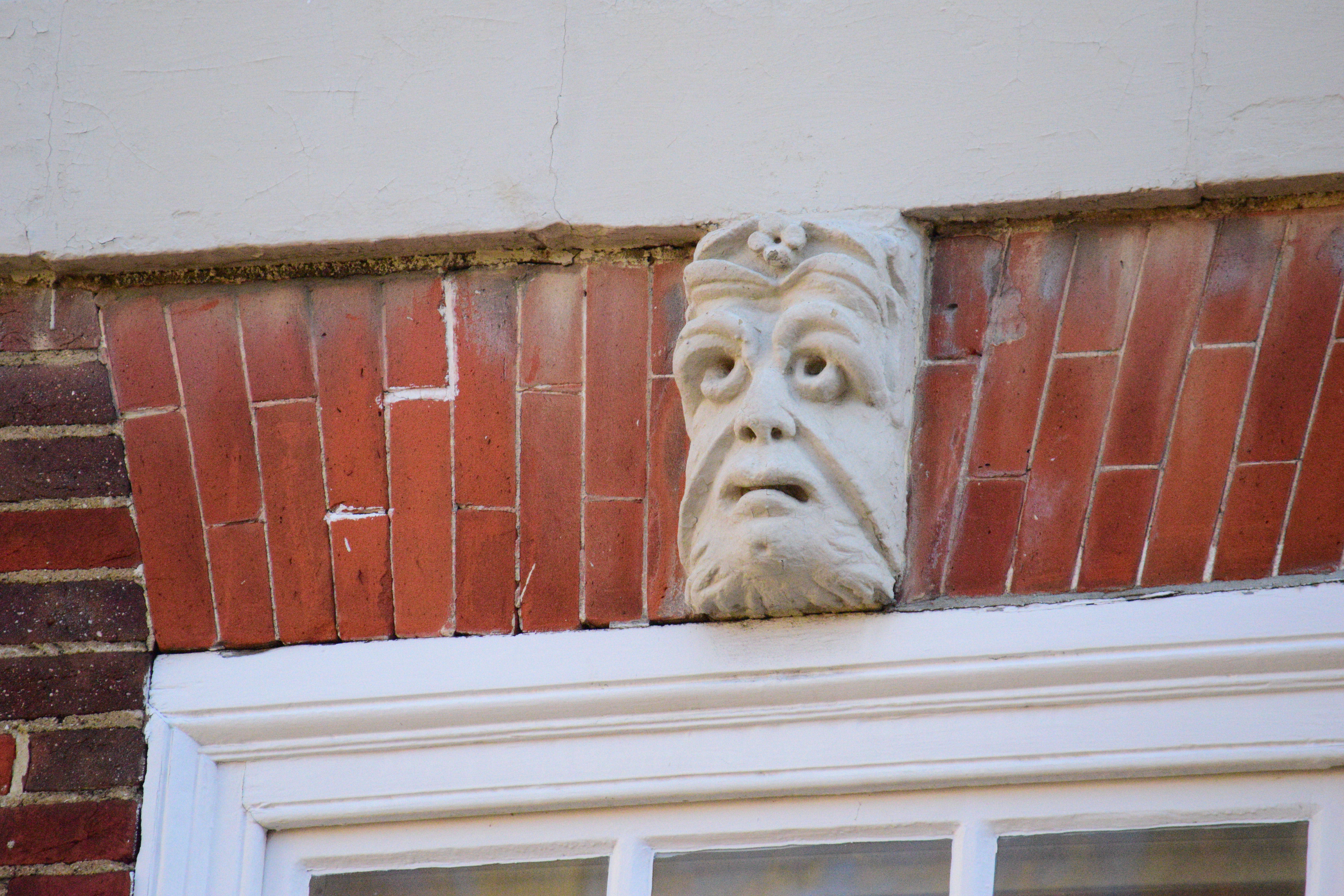


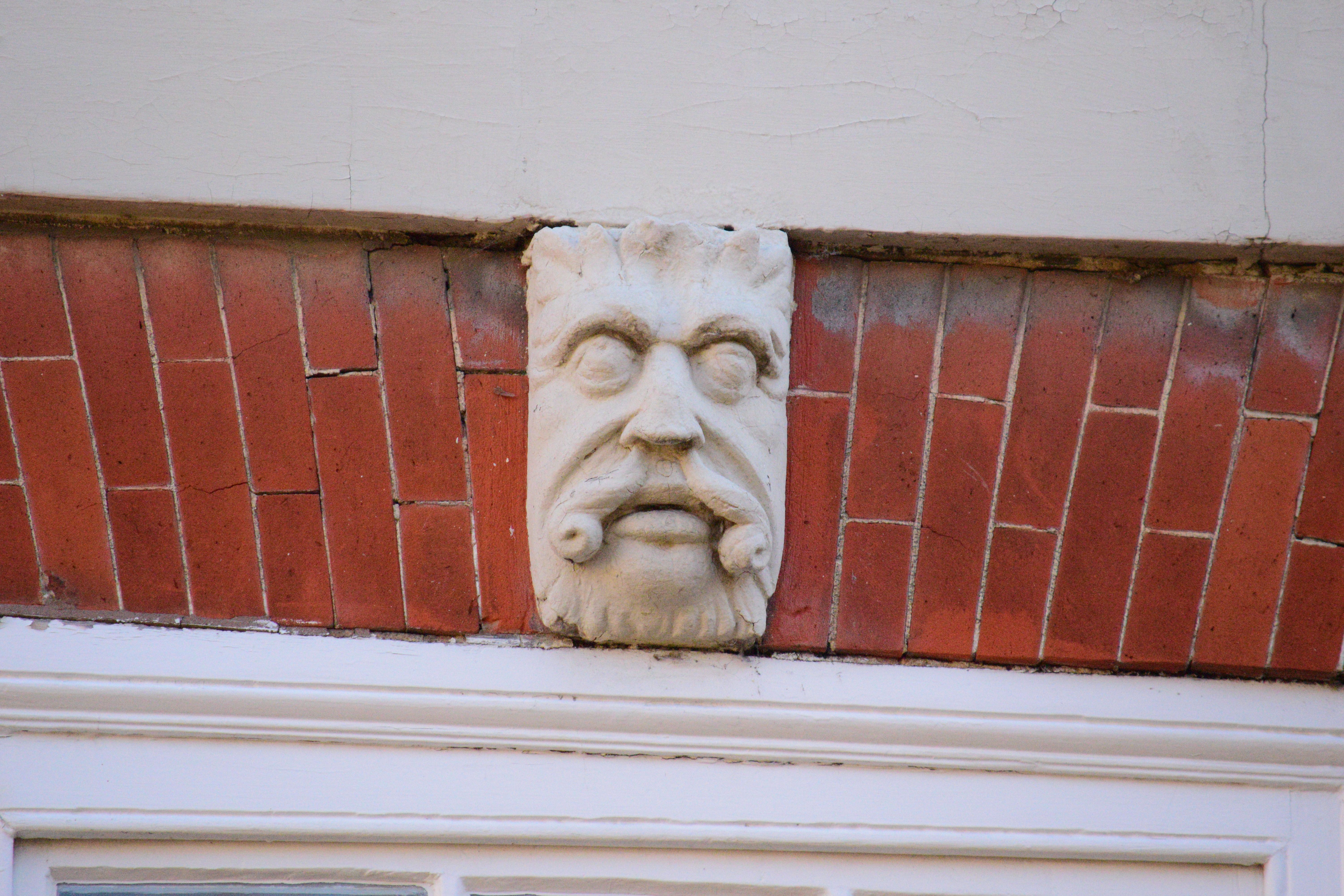
23 Trinity Street is listed grade II. It is early C18. There are heads above the windows. One of them looks as if he's going to sneeze!
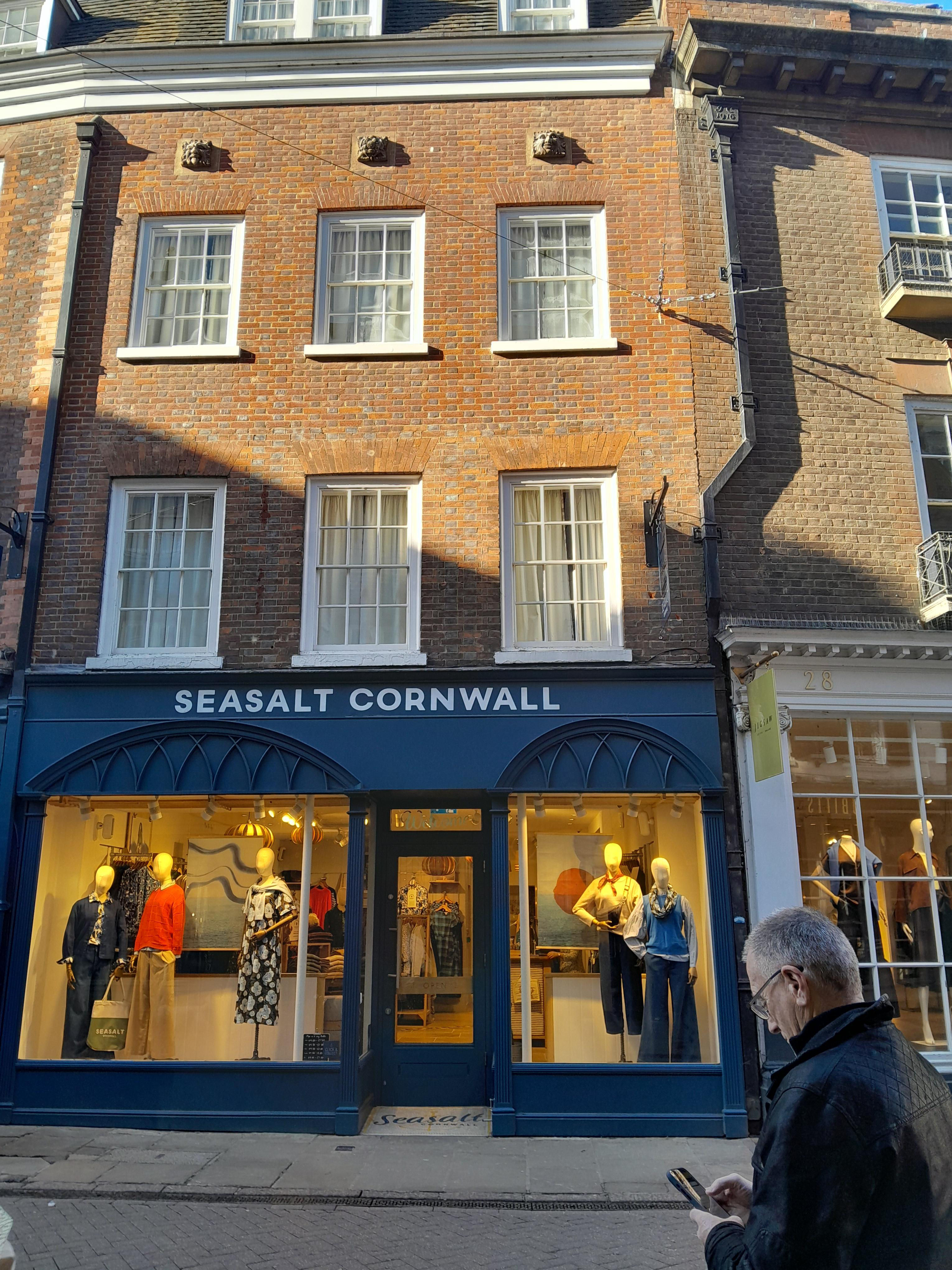
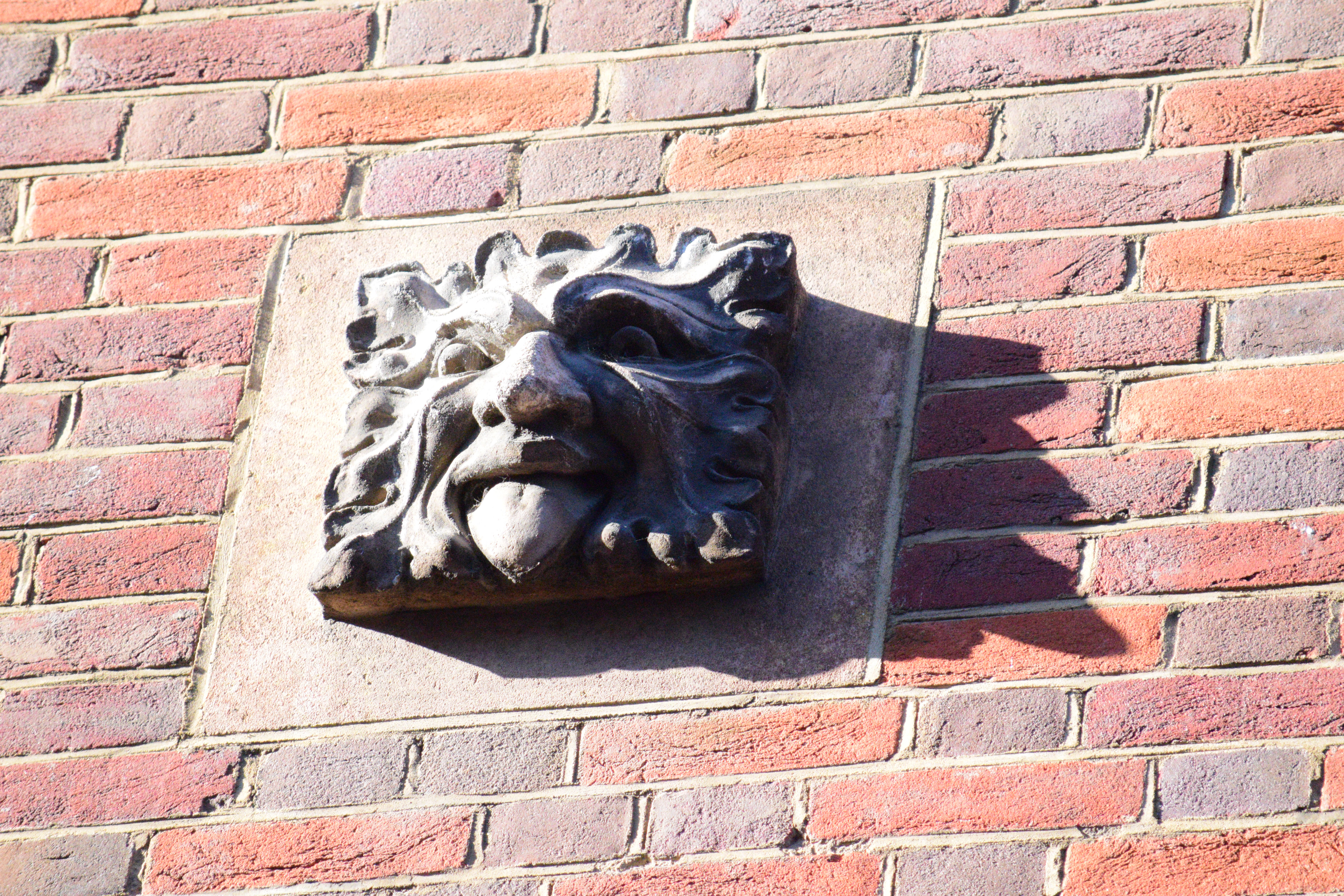

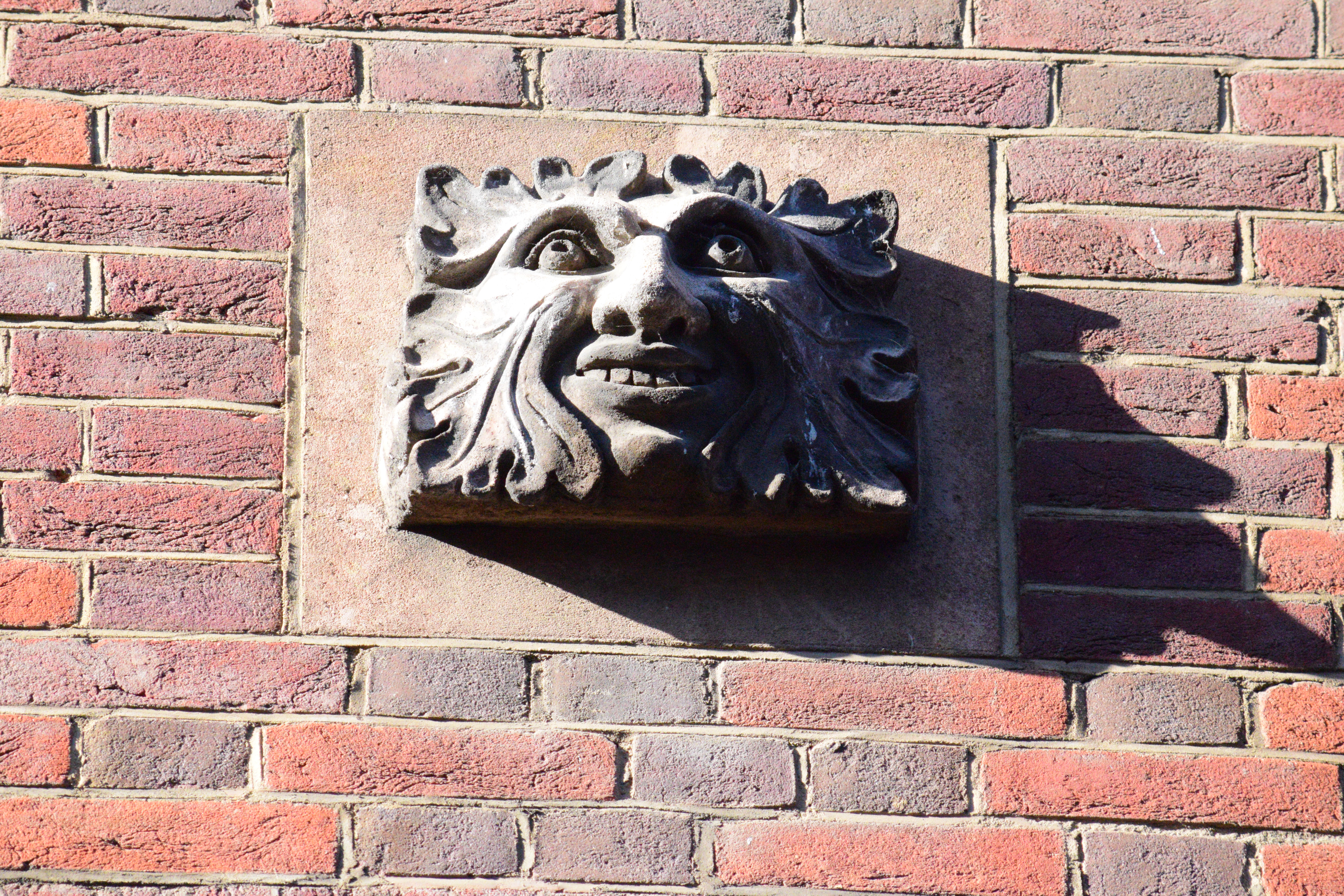
29 Trinity Street is listed grade II. It is C18. There are heads on the frontage. The shop window is modern, and obviously a copy of the next shop.
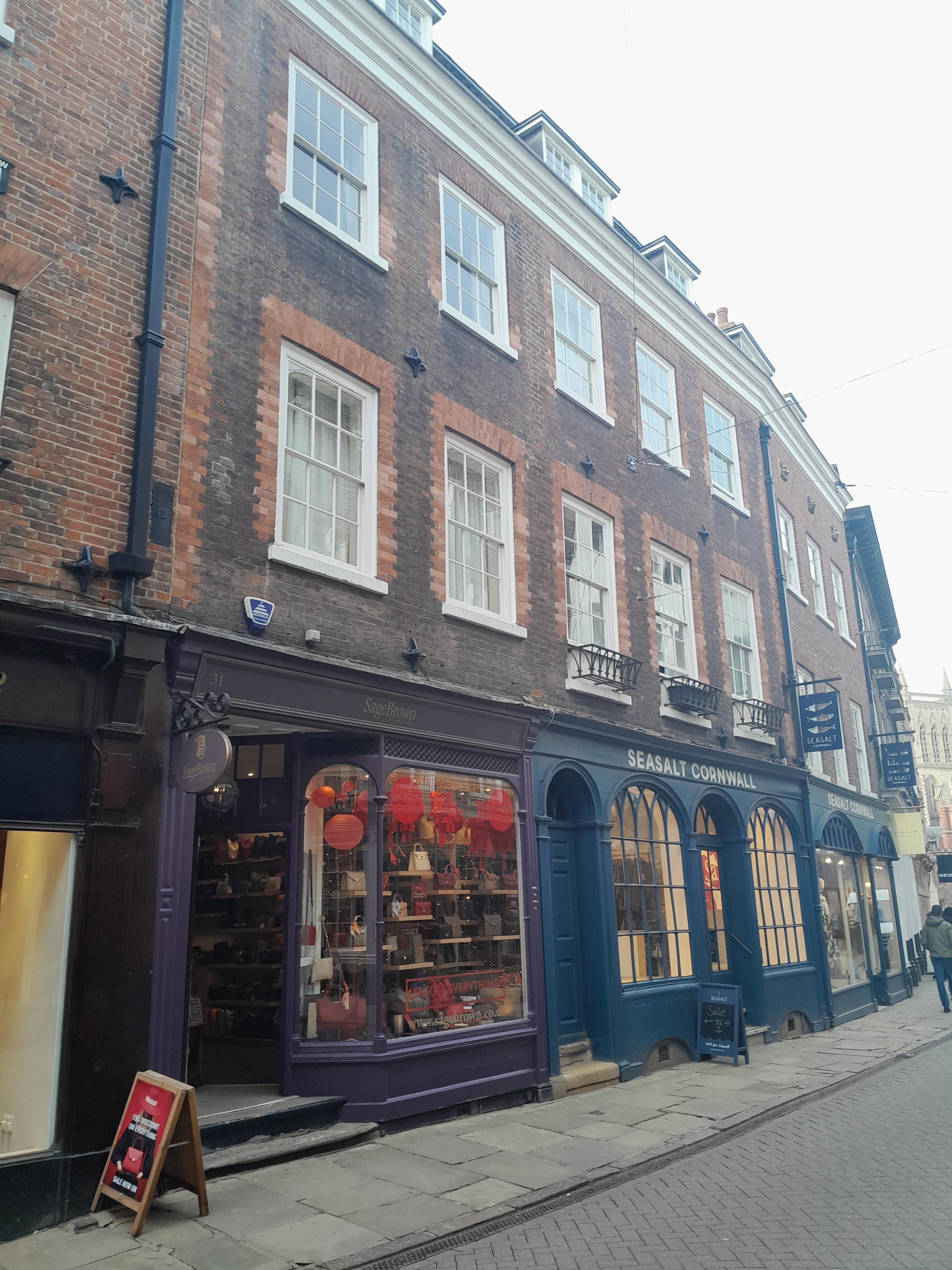
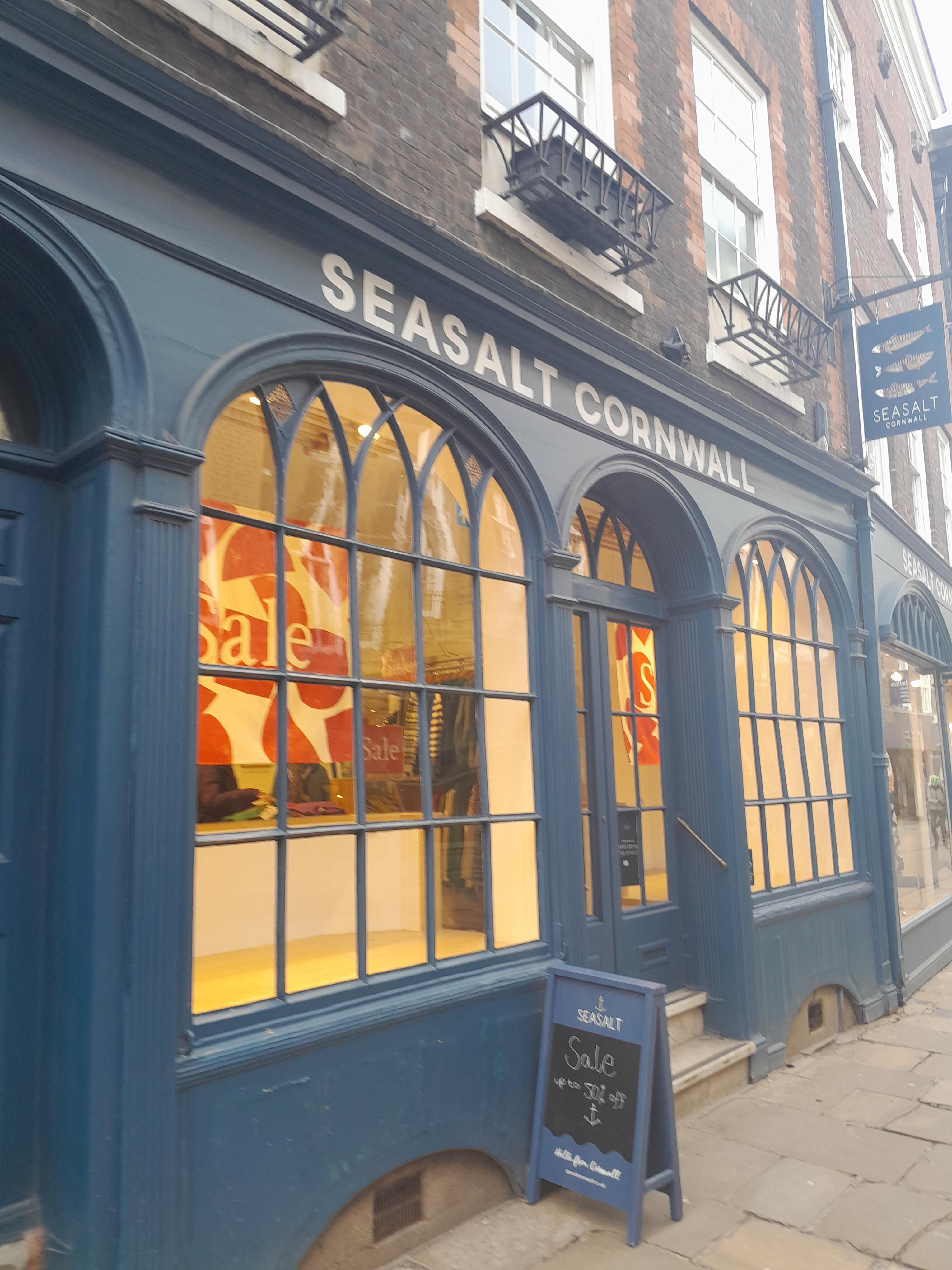
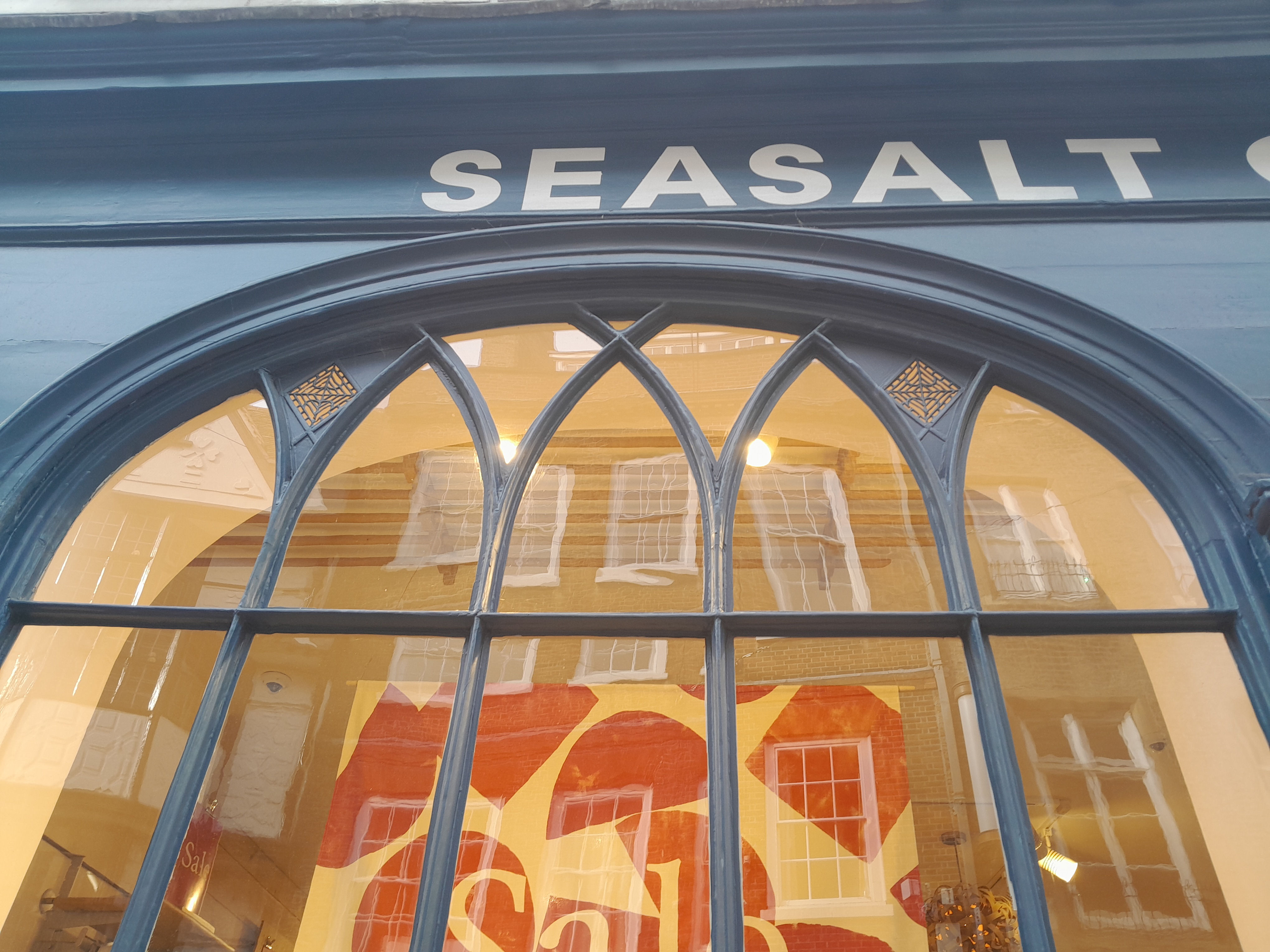
30-31 Trinity Street is listed grade II*. It is C18. The listing says that "The Georgian shop front to No 30 is a particularly good example of its kind."


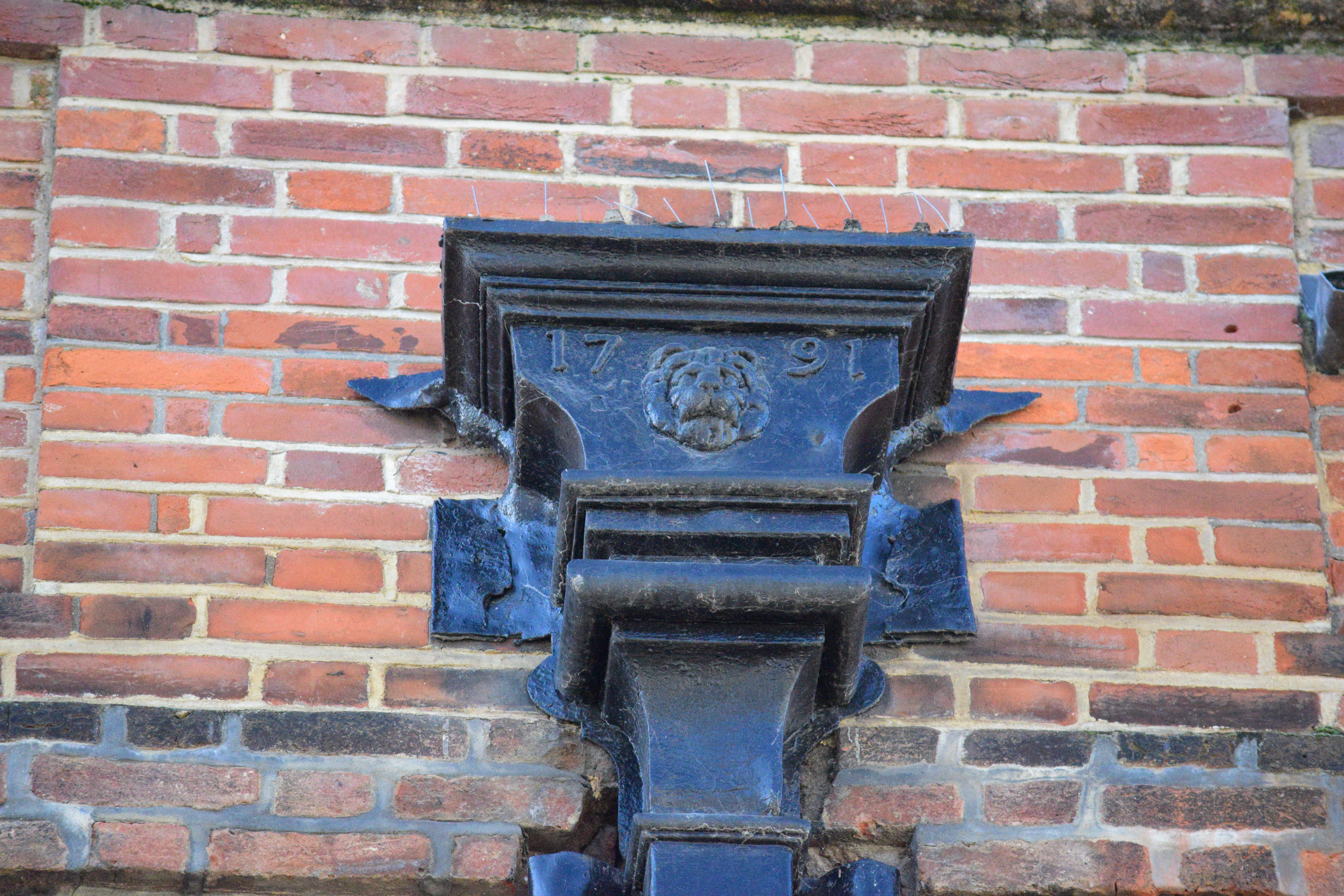
69 Bridge Street is listed grade II. It has 2 lead rain-water pipes with the date 1797, but the main building is early 18C. It was originally an inn, The Bell.

3-4 Bridge St is listed grade II. It was built in 1729. It used to be the Hoop Inn, which was mentioned by Wordsworth in The Prelude:
Onward we drove beneath the Castle; caught,
While crossing Magdalene Bridge, a glimpse of Cam:
And at the Hoop alighted, famous Inn.
Above each window is a little head. Every head on number 4 is different:

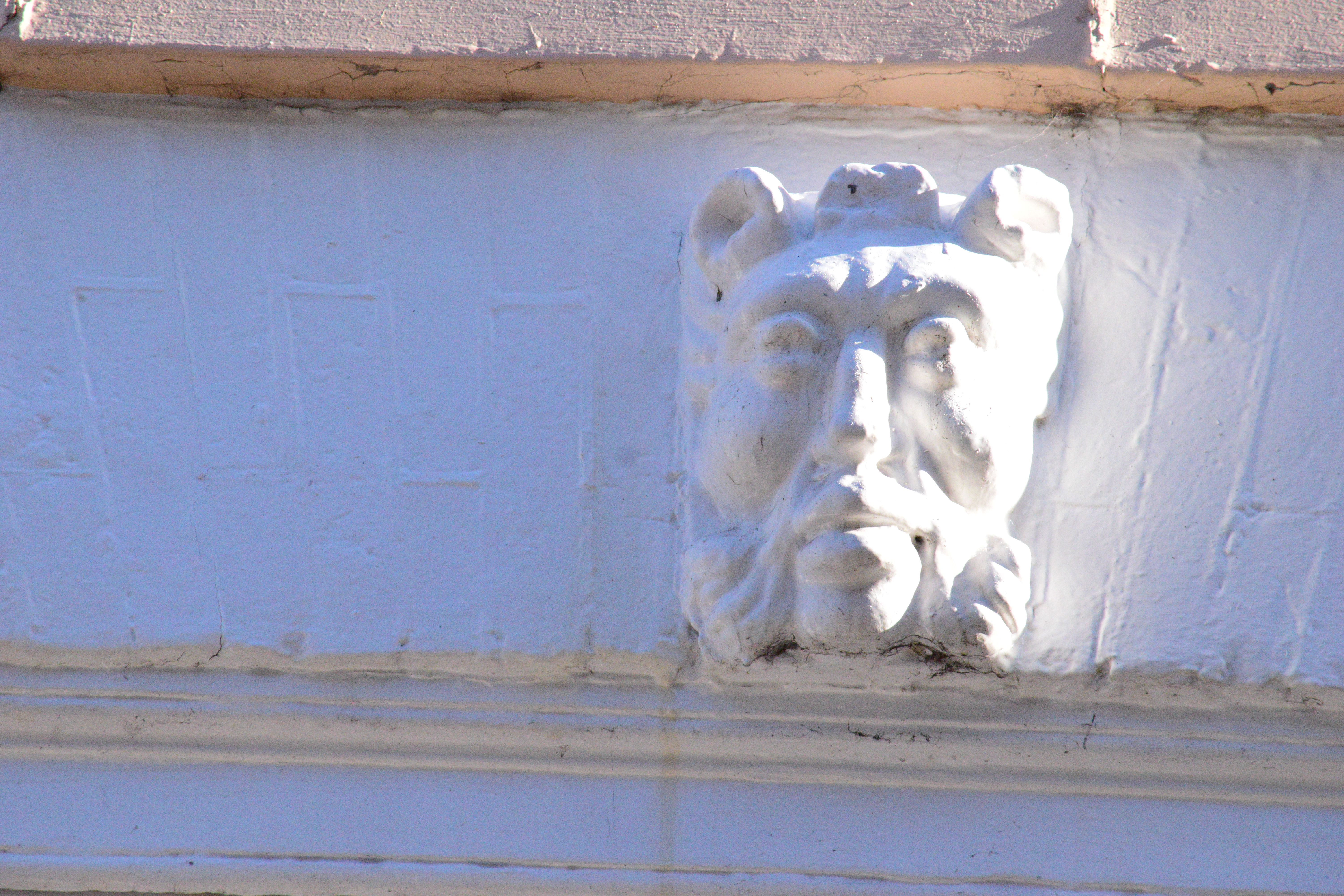


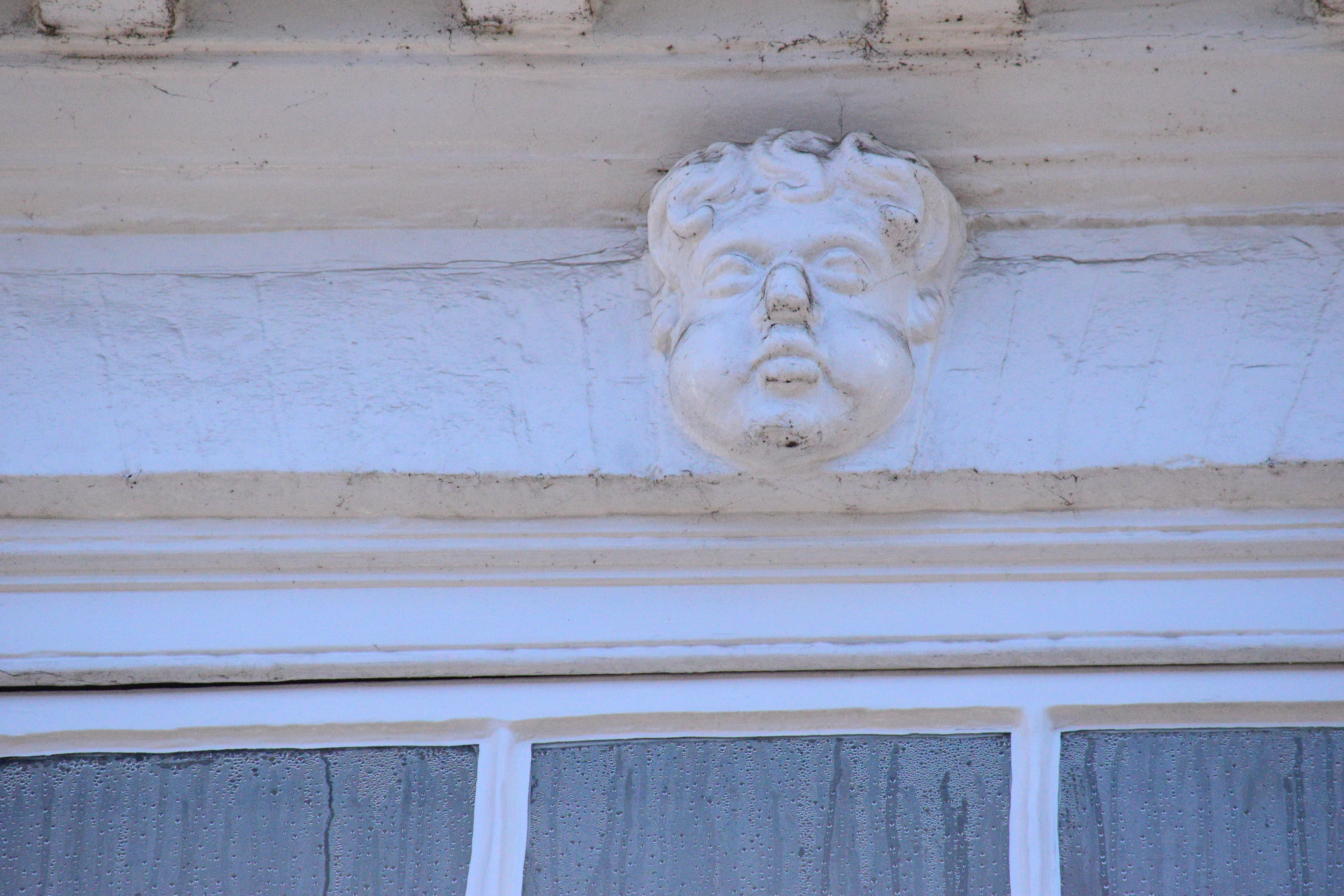

There are more heads above windows in number 3, but they are in poorer condition, and I suspect that they repeat the heads of no.4.


Above 1 Bridge Street (corner of Bridge Street and Jesus Lane) is this weather vane, with a cooper making a barrel. I don't know why. There is no record of a cooper working nearby.


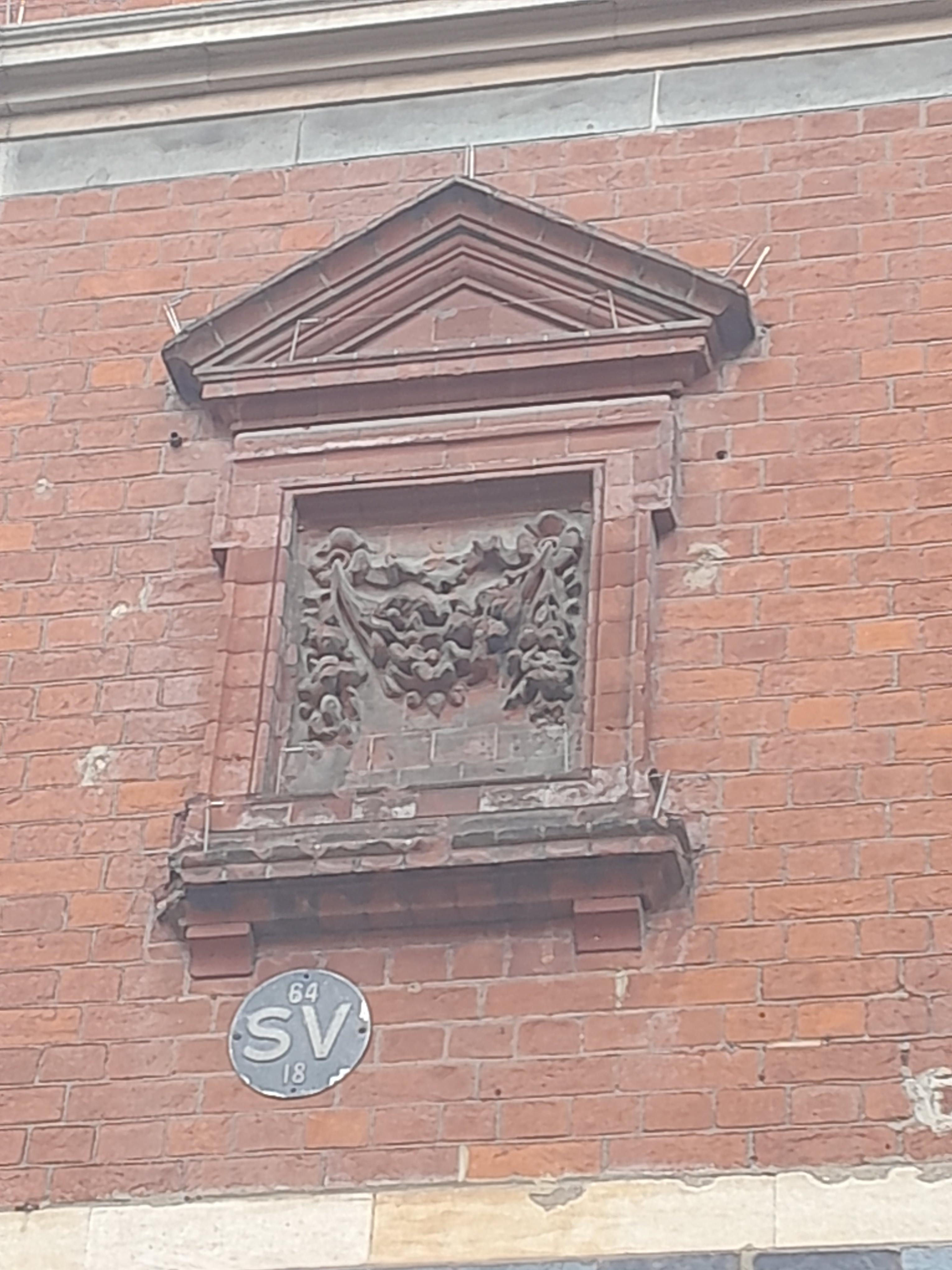
There is a coat of arms on 1-2 Market Hill, on the corner of Petty Cury, facing the market, with a camel on top, and 9 cloves on it. It is the coat of arms of the Worshipful Company of Grocers, and this used to be a grocer. Caputuring Cambridge says "Nos 1-2 in gabled red brick (originally Hallack & Bond, grocers) are dated 1890. 1538 Original building at this site erected by grocer Veysy; the arms of the Grocers' Company had been carved on fireplaces. This was discovered during demolition in 1889." There are two other features as well.

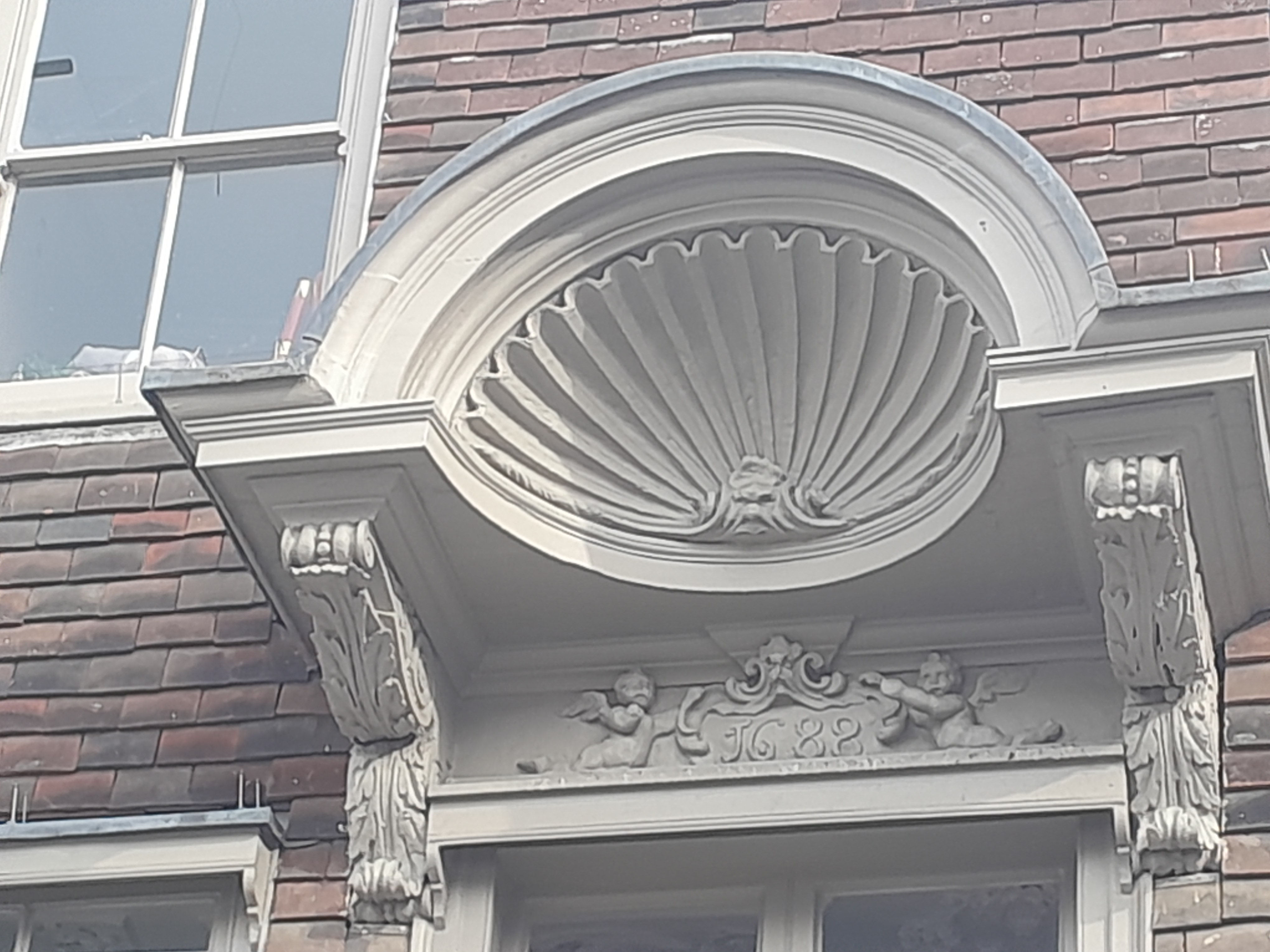
5 Market Hill (listed Grade I) is on the east side of the market place. It was built in 1688. The front is hung with tiles, and there is a doorway leading onto the balcony on the first floor, with a shell hood. There is a modern shop on the ground floor.


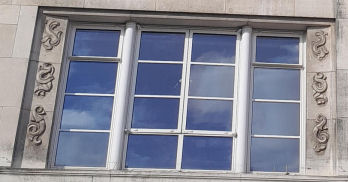
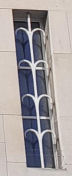
16-21 Market Hill (listed grade II) was built in 1937. It is on the north side of the market place. The architect won the RIBA bronze medal for his design. Pevsner describes it as the best modern building of its date in Cambridge. There are small decorative flourishes.

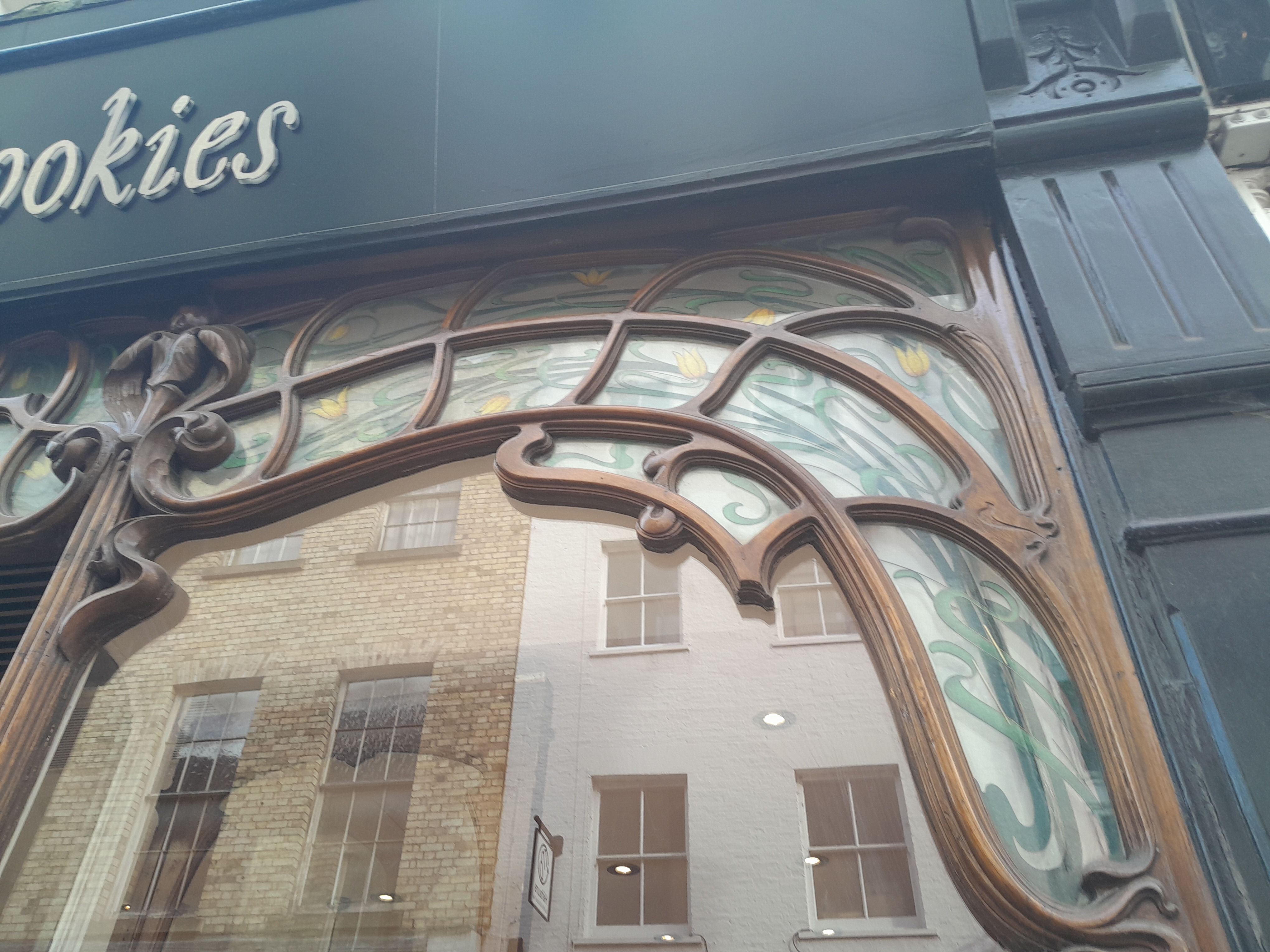
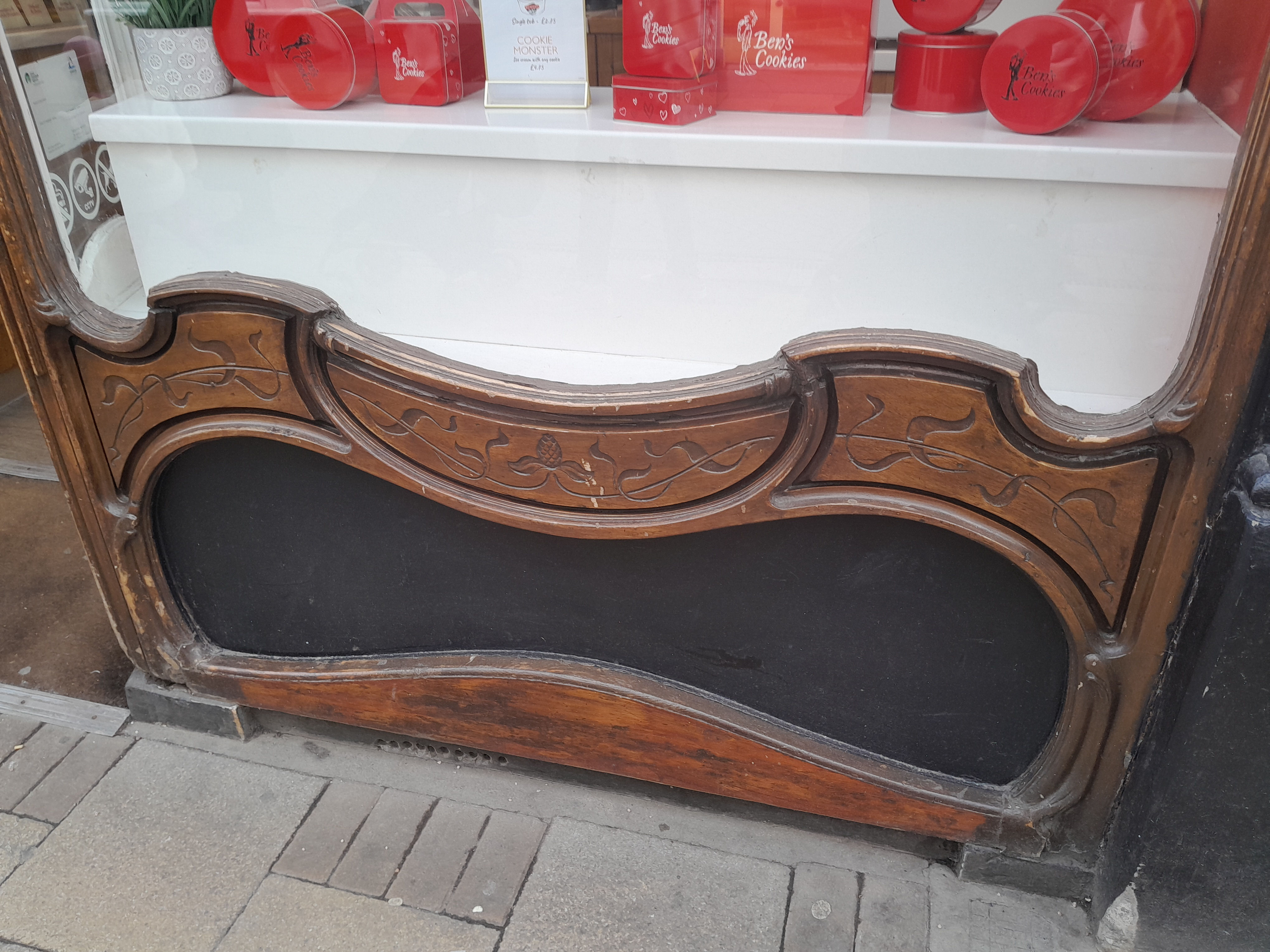
20 Market Street is listed grade II. The listing says it has a "central recessed glass door with carved timber bottom and top rails in vegetative Art Nouveau style with figurative carving. Display windows either side with carved bottom rails in Art Nouveau style, and open carved timber upper panels of vegetative type with floral and figurative carving... The shop front is an elaborate and very rare survival."


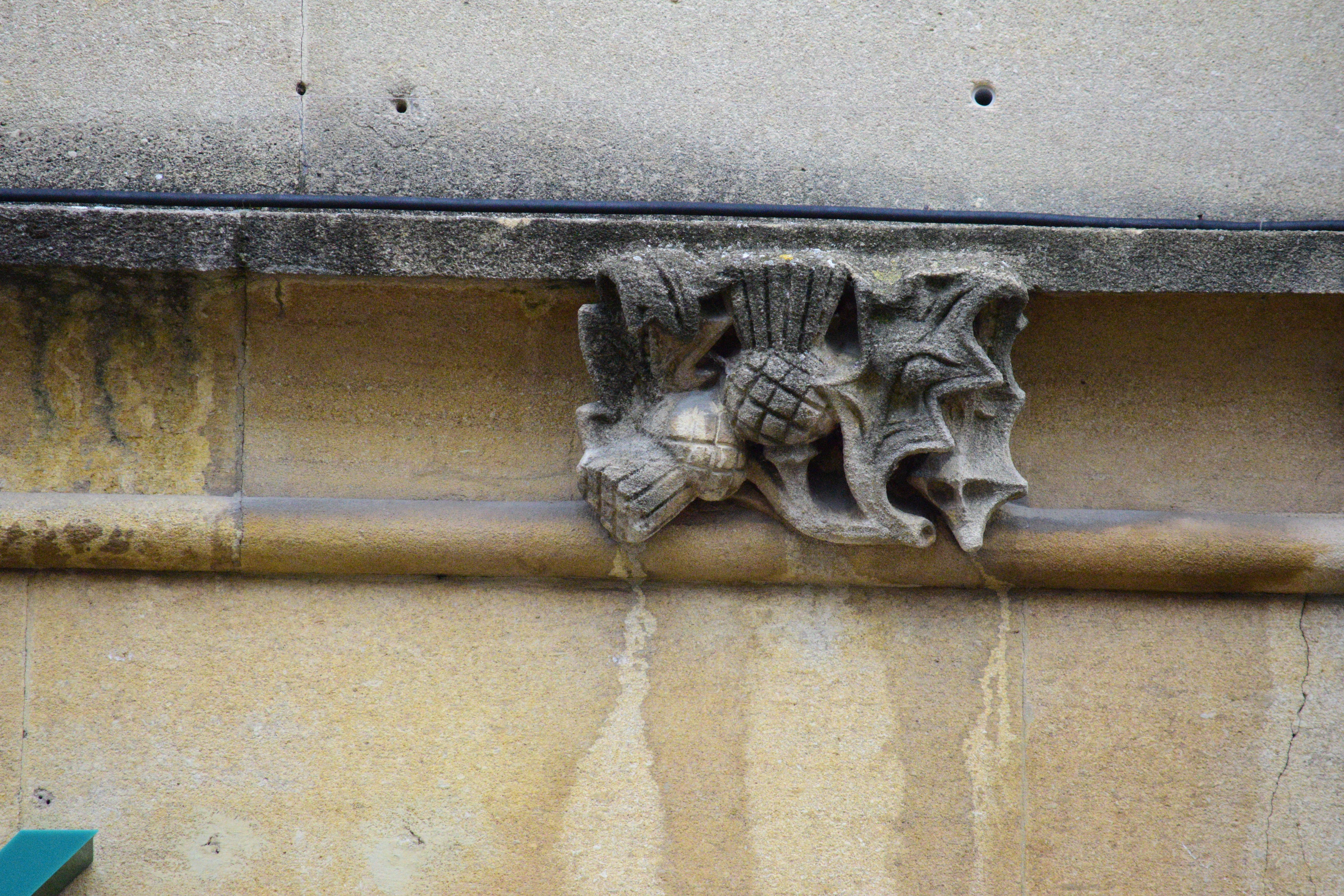
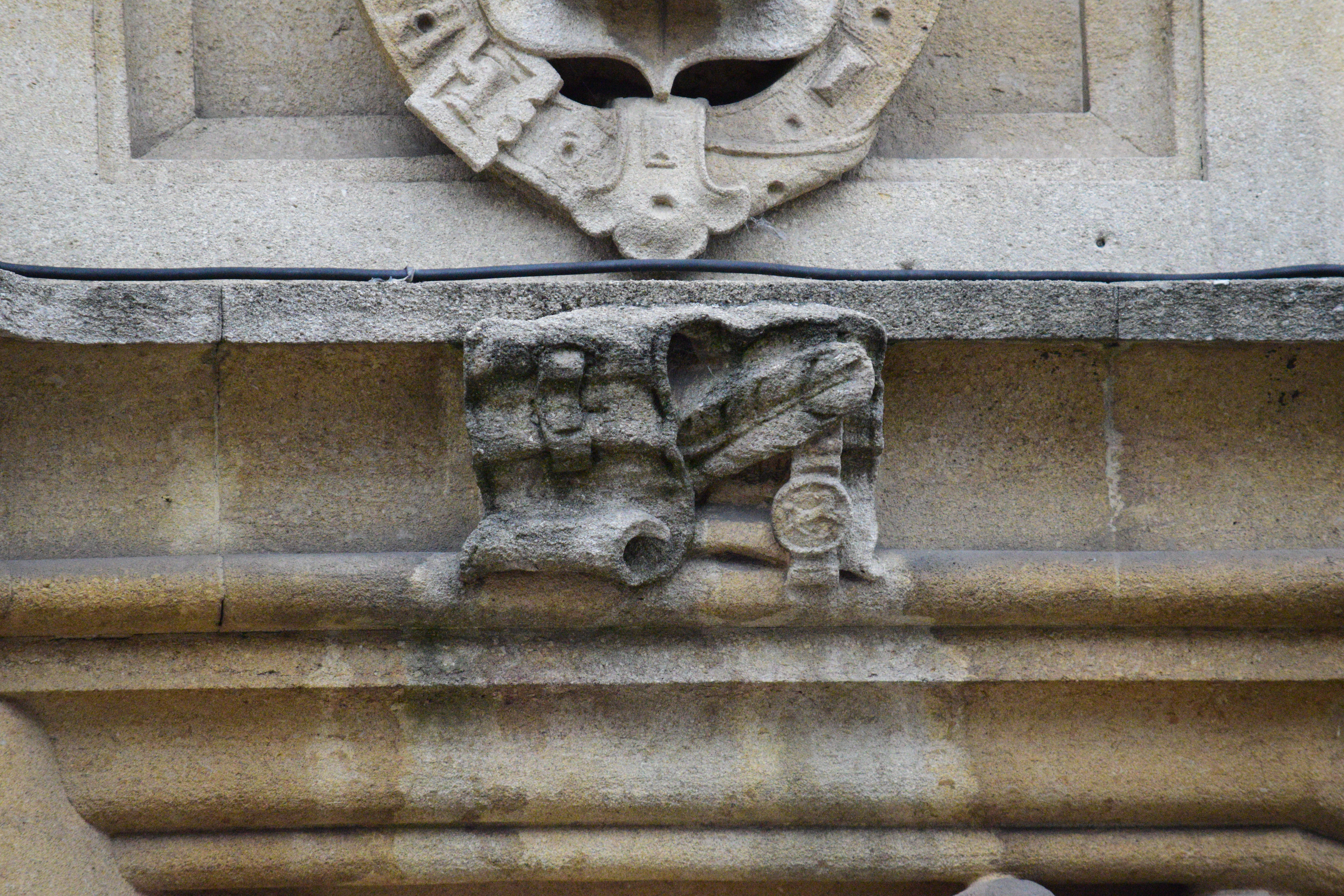


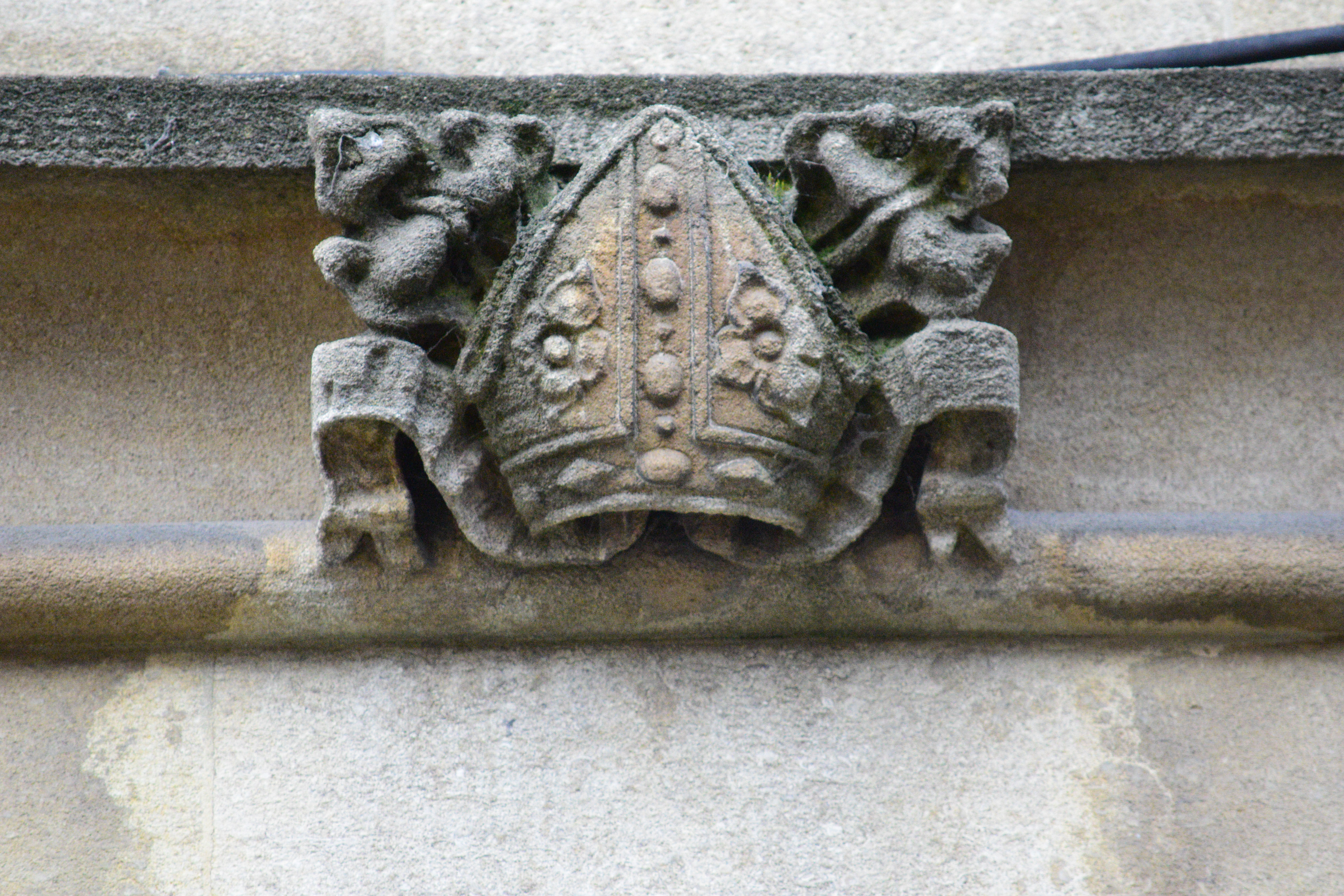
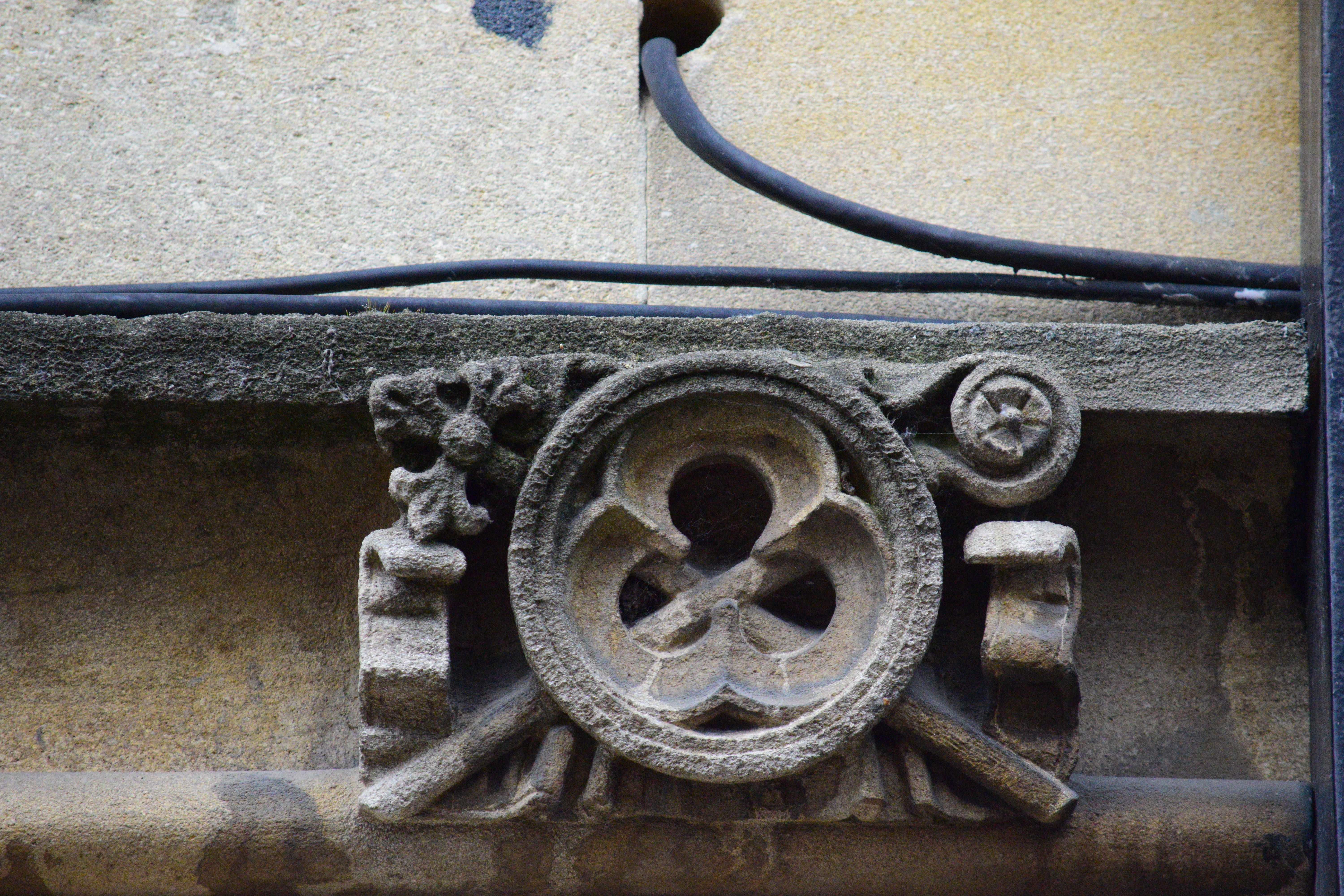
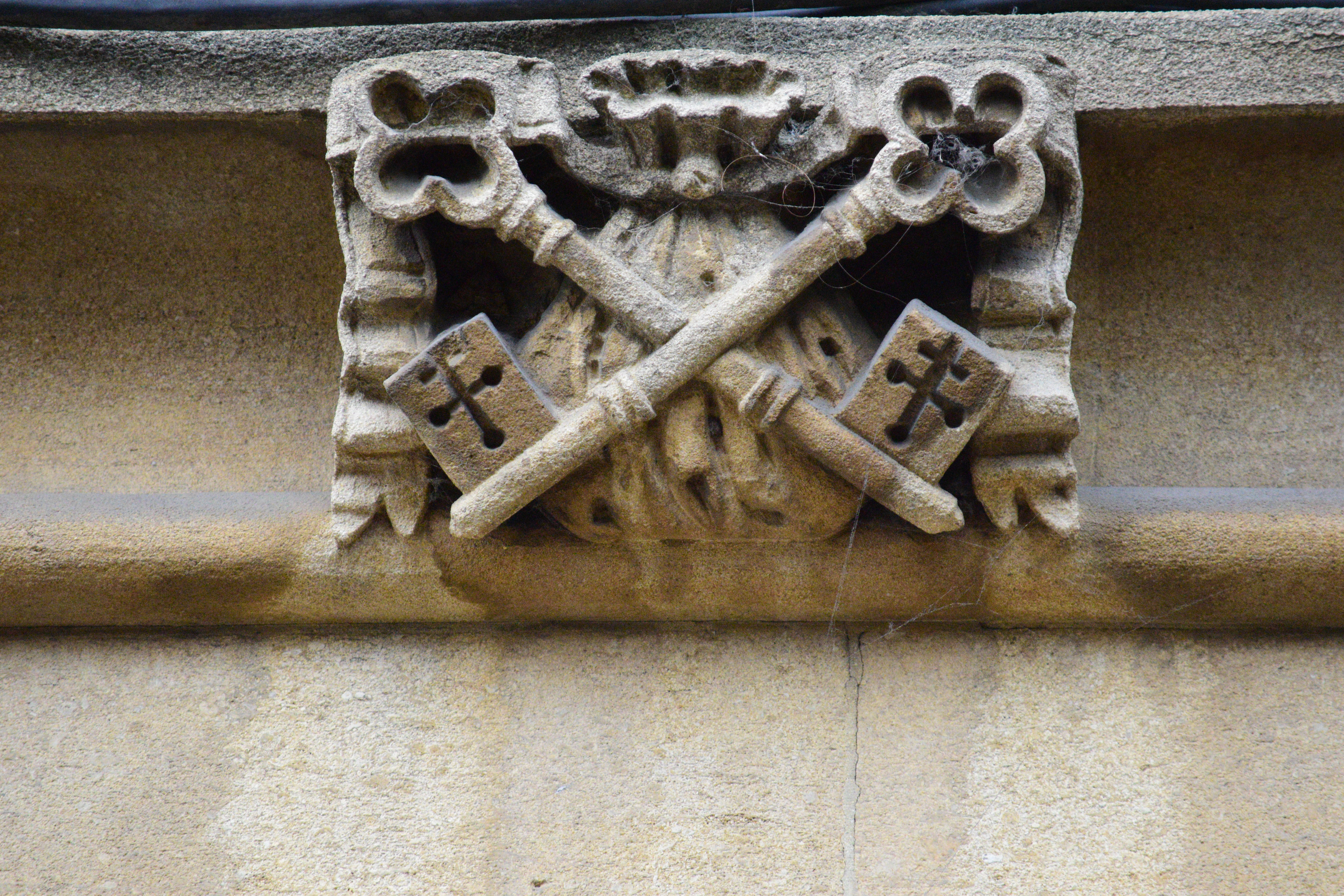
1-5 Sidney Street, Lloyd's Bank is listed grade II*. It was built in 1891, in a Dutch Renaissance style. There is a frieze of carvings round it, including into Hobson Street.
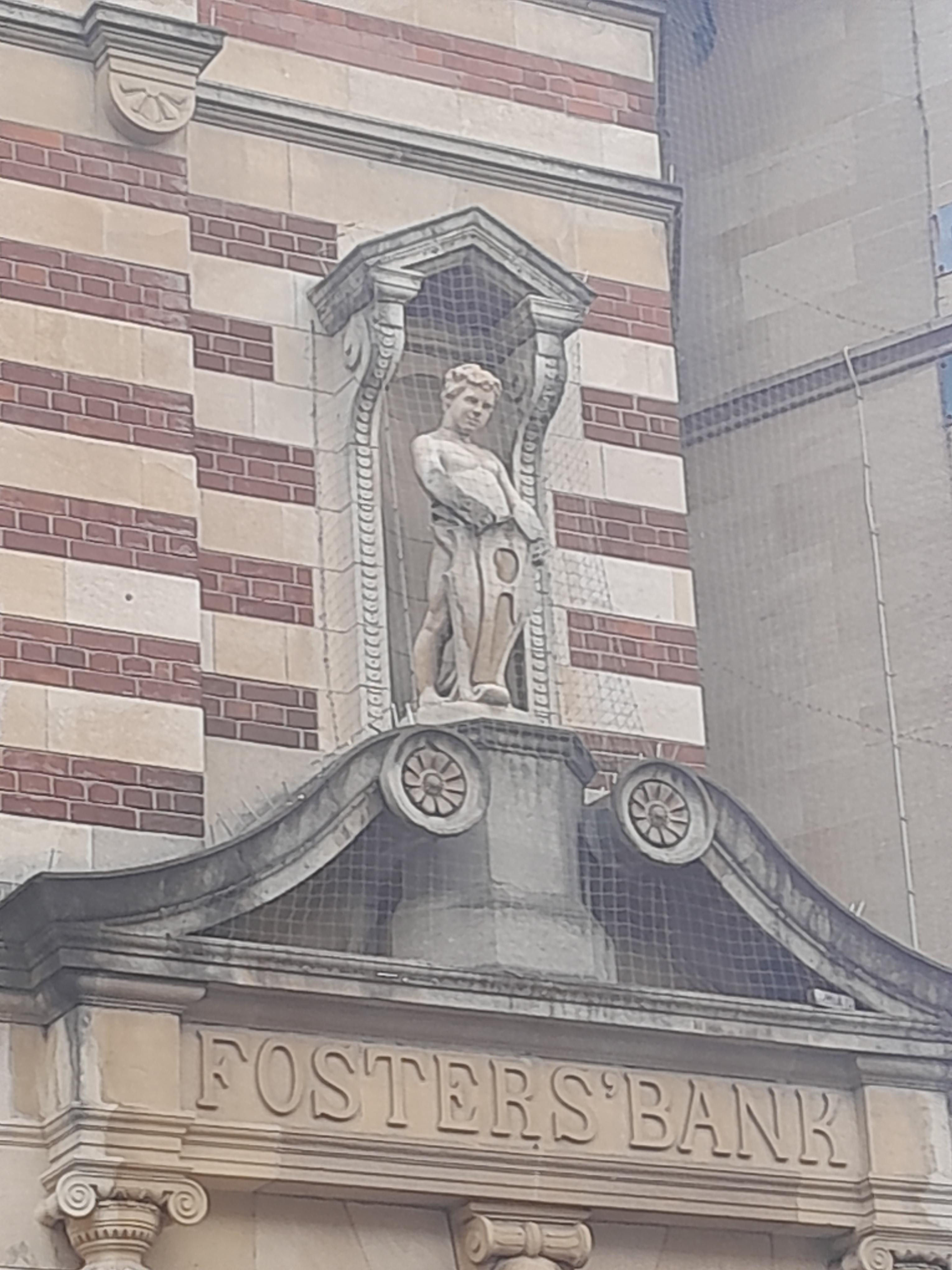
I remember when the statue of a boy other the entrance didn't have a head. They were doing some restoration work, and one restorer asked a passing boy to model for him, and produced a new head.
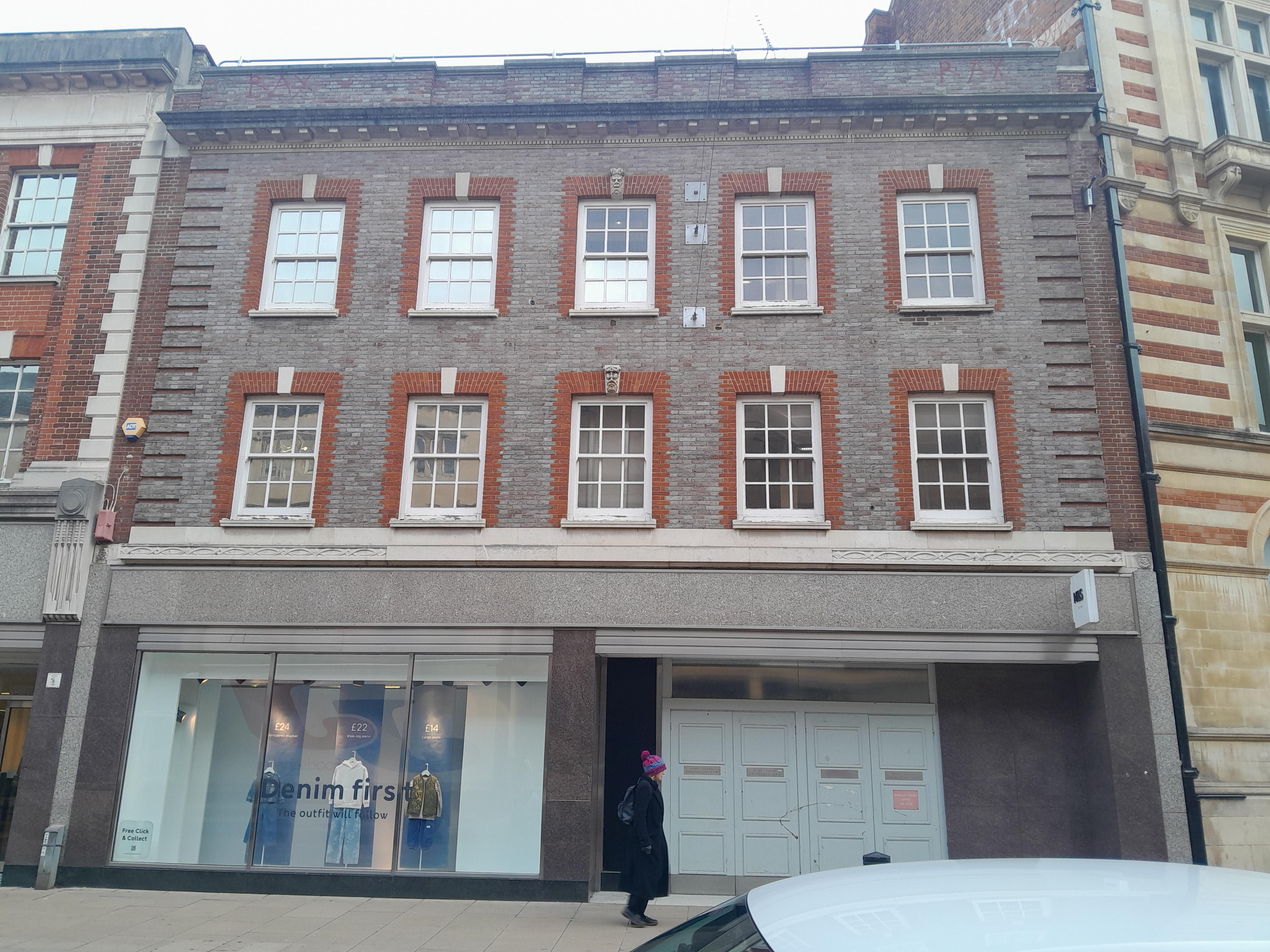
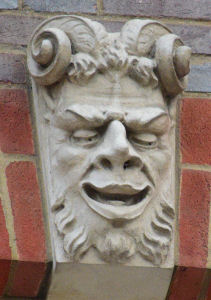
6 Sidney Street was built, I think, in late 19C. It has two faces above its windows. This house used to be owned by the Miller family, who founded Millers, the music shop in Sussex Street.

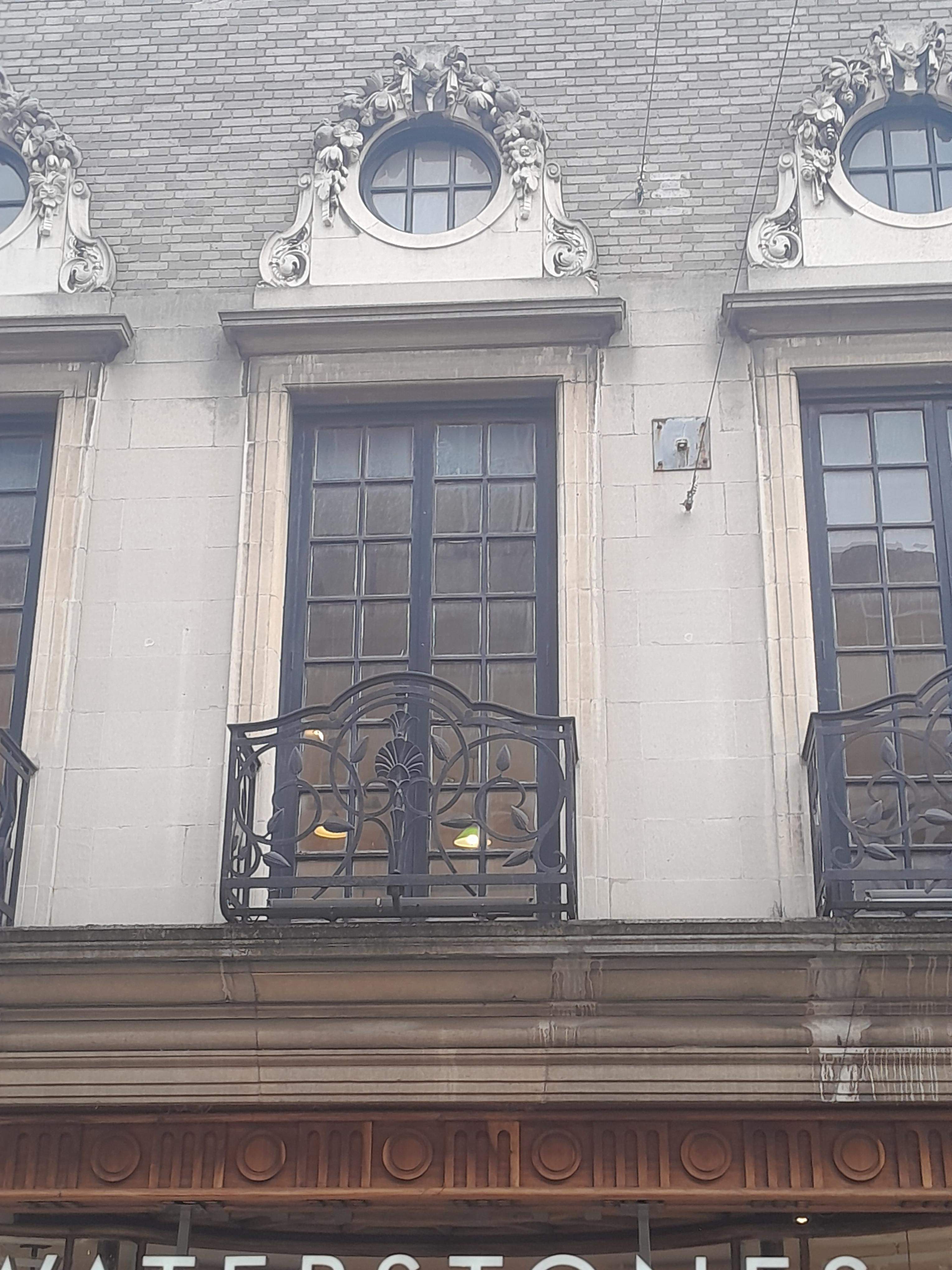
22 Sidney Street stretches back to Hobson Street. It is in an Art Deco style. It was originally a dance hall called the Dorothy. It's not listed.

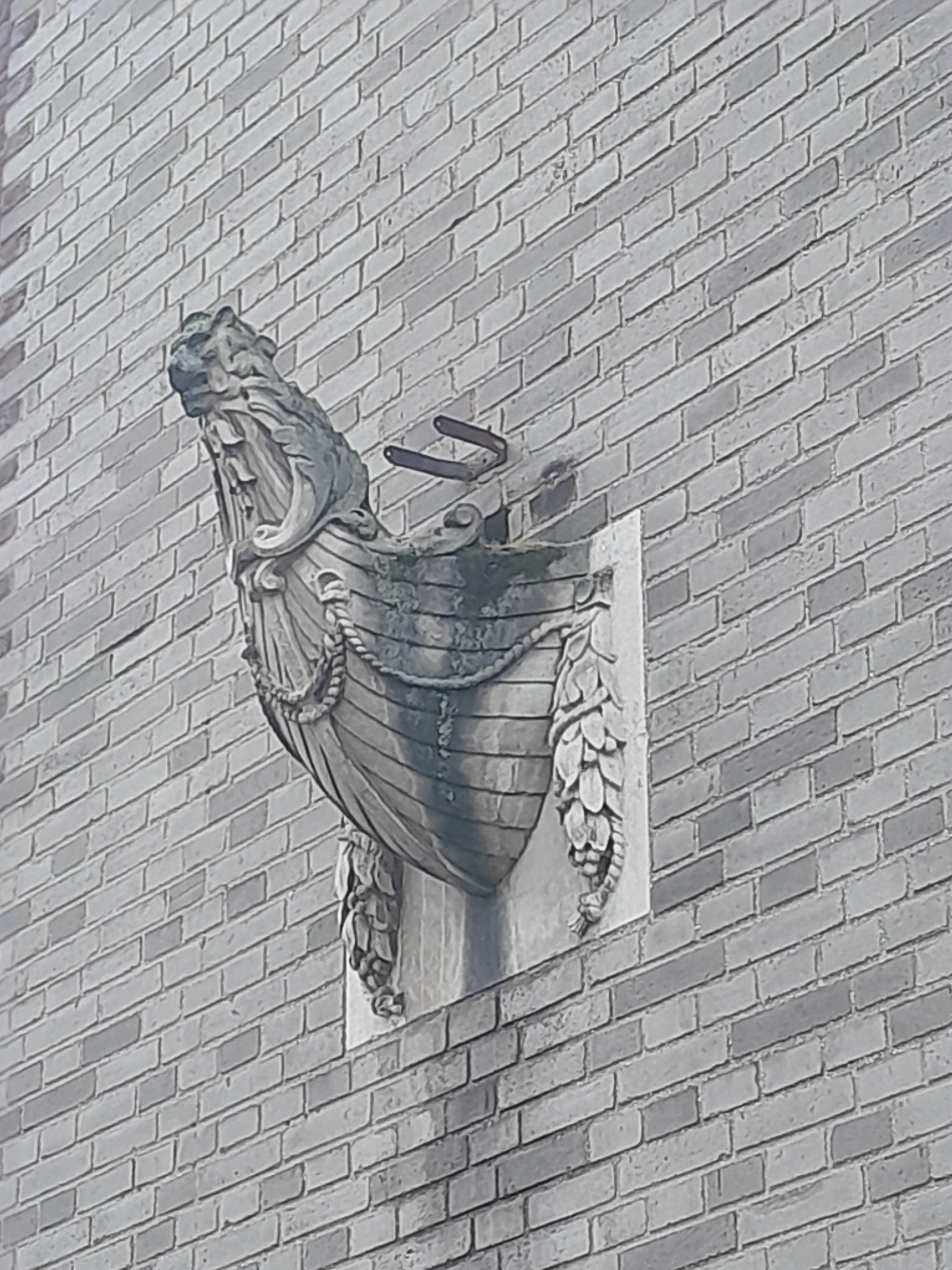

On the Hobson Street side, there is a feature of ship ends set into the wall. The "Rostra" was a large platform built in ancient Rome. It was called that because it was decorated with "rostra" (a form of bow on naval ships) from captured ships. I wonder if this is supposed to be a similar effect, as they flank the balconey.
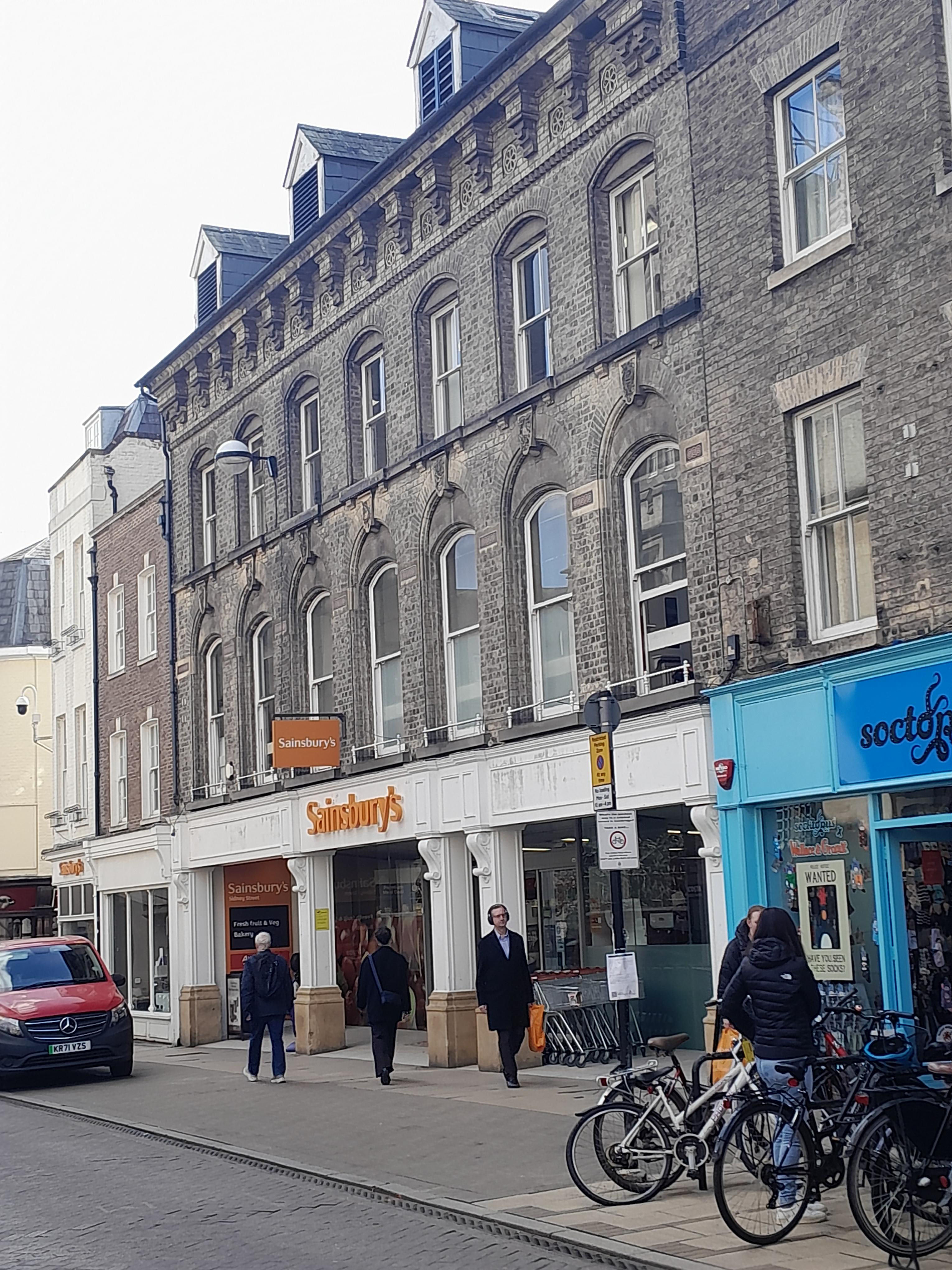


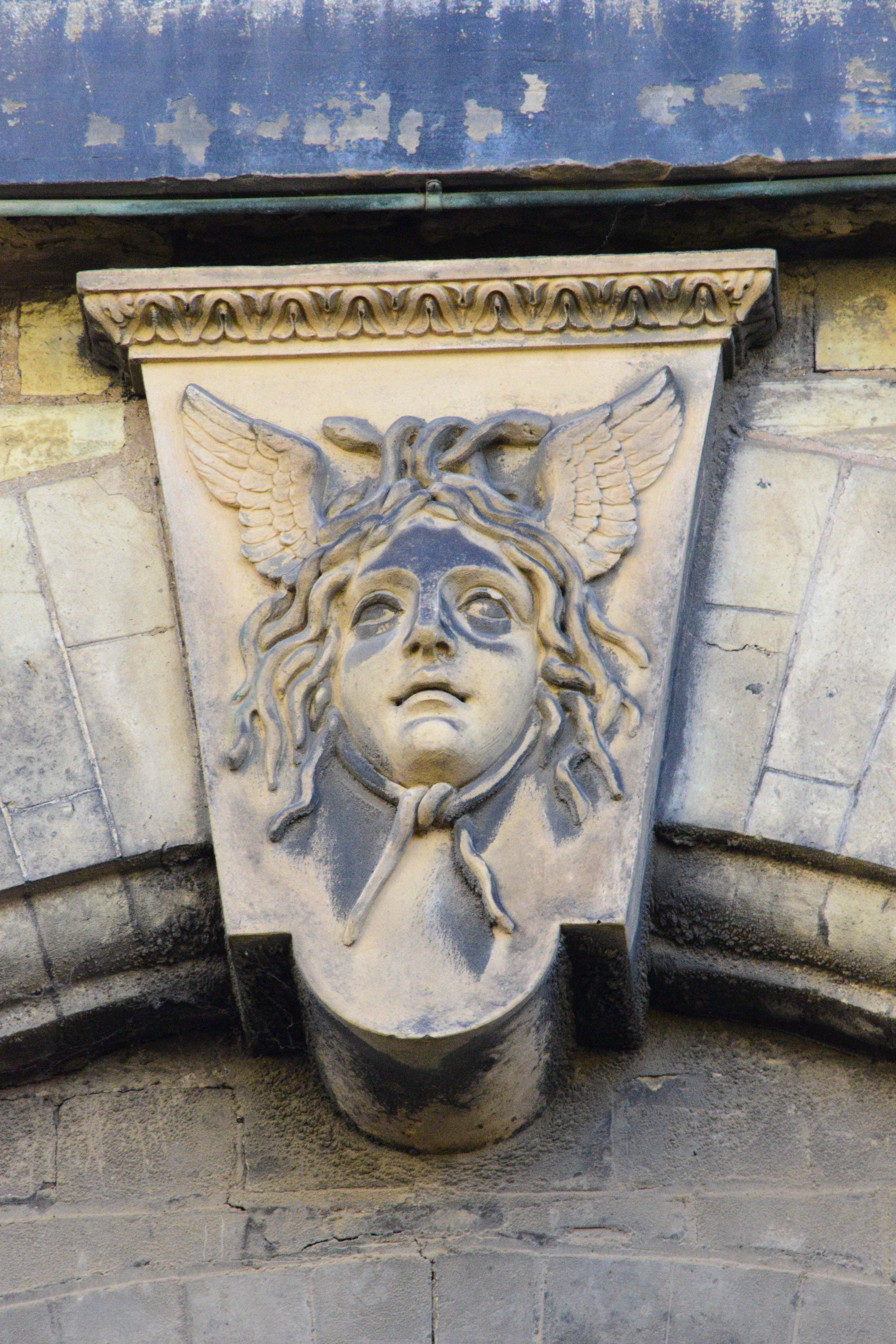


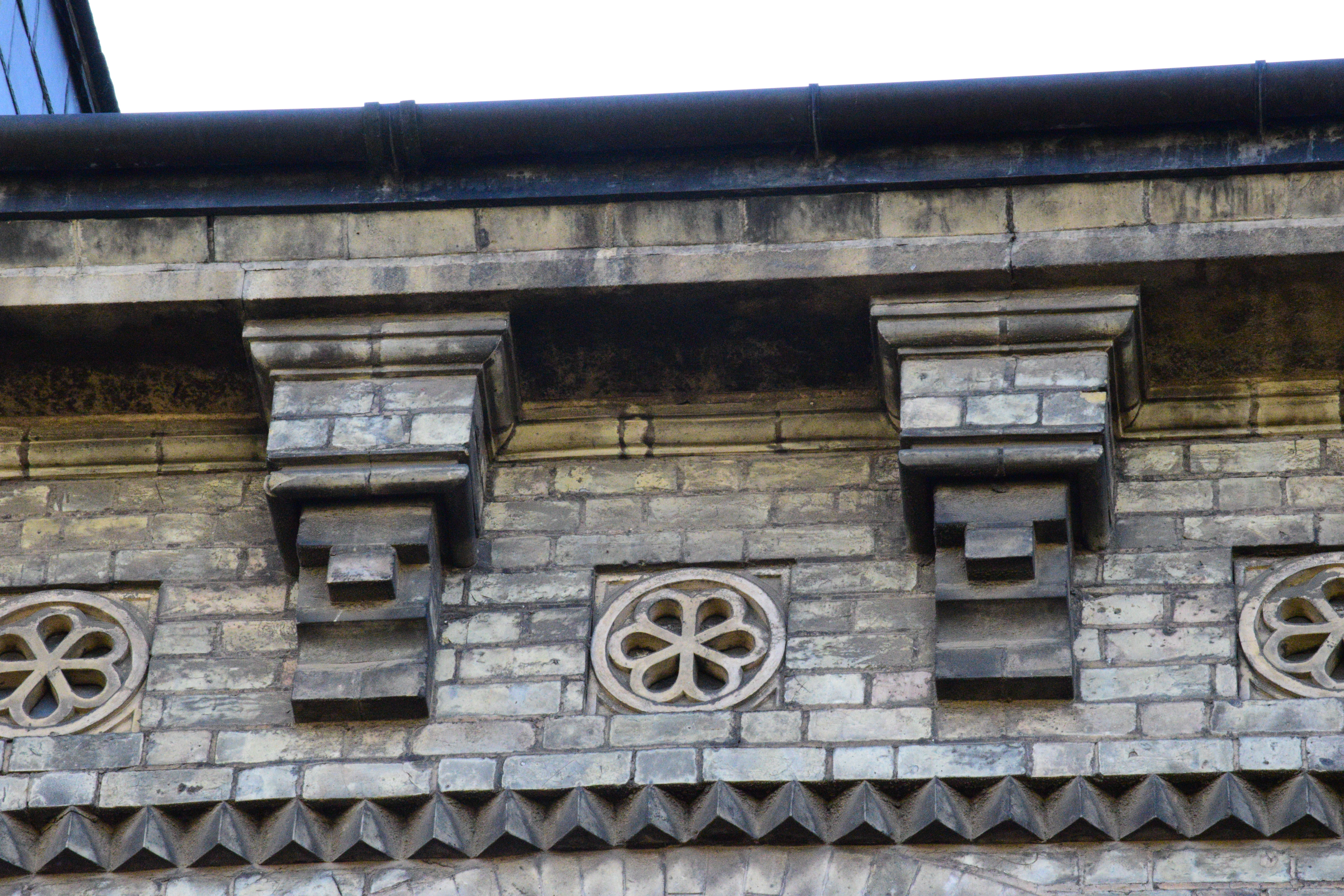

43 Sidney Street is now Sainsburys. There are various designs above the first floor windows, plus other features. In 1889, this house was owned by William P Spalding, stationer, publisher & bookseller, who created Spaldings Guides to Cambridge.
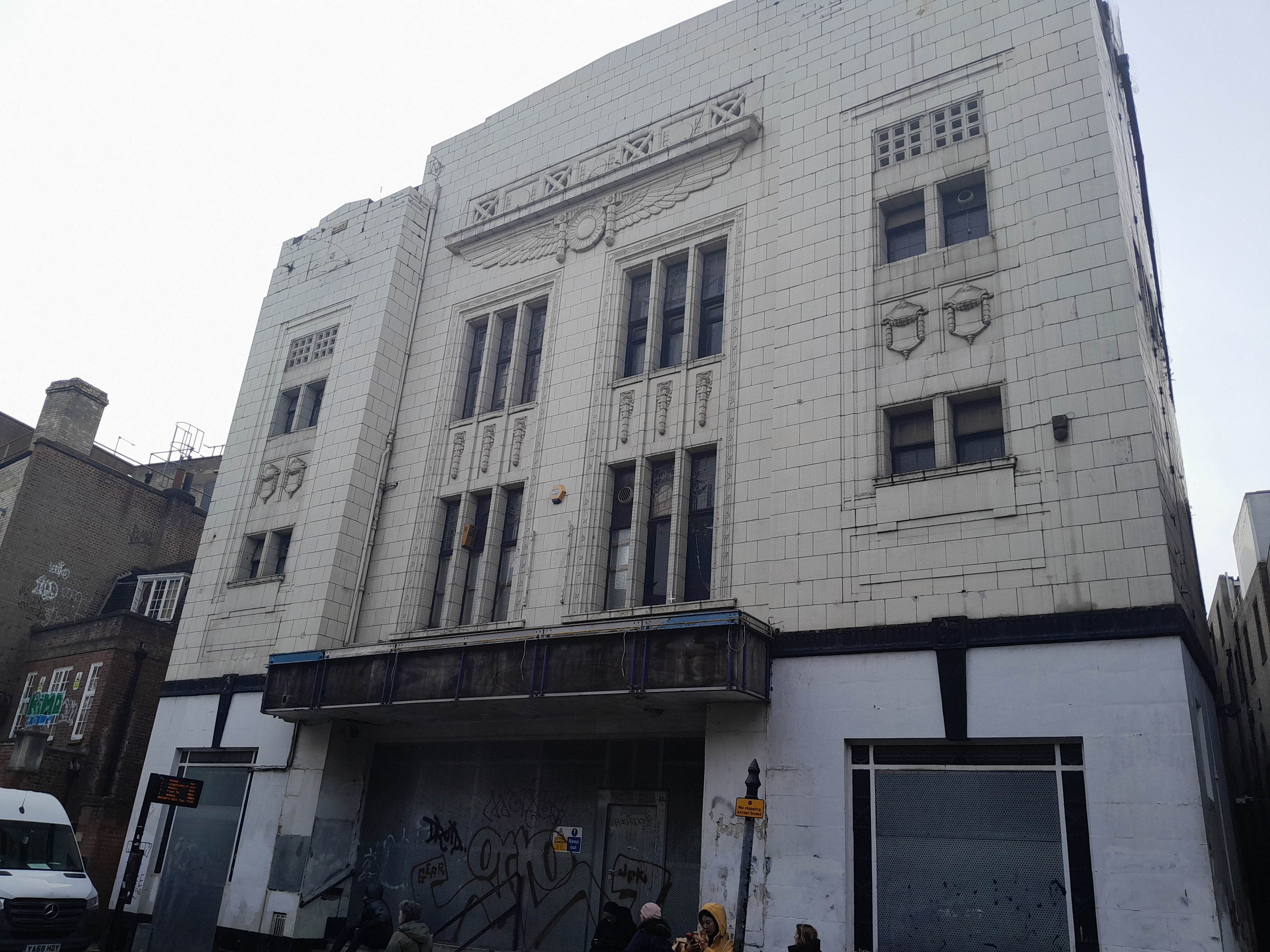

The Central cinema was built in Hobson Street, in 1930, with a facade in the Egyptienne style.


The tower of St Clements was added in 1821-22, from a bequest by William Cole. Pevsner (famous writer of guides to English architecture) called the tower "somewhat silly"! There used to be a steeple as well, but this got taken down in 1928. That is why the weather vane has to be on a spike. Cambridge Chronicle 8.3.1822 included the following little verse:
Since to Old Cole (Heaven rest his soul,
Who lov'd God's worship holy;)
This spire we owe, we've plac'd below
His motto "Deum Cole".
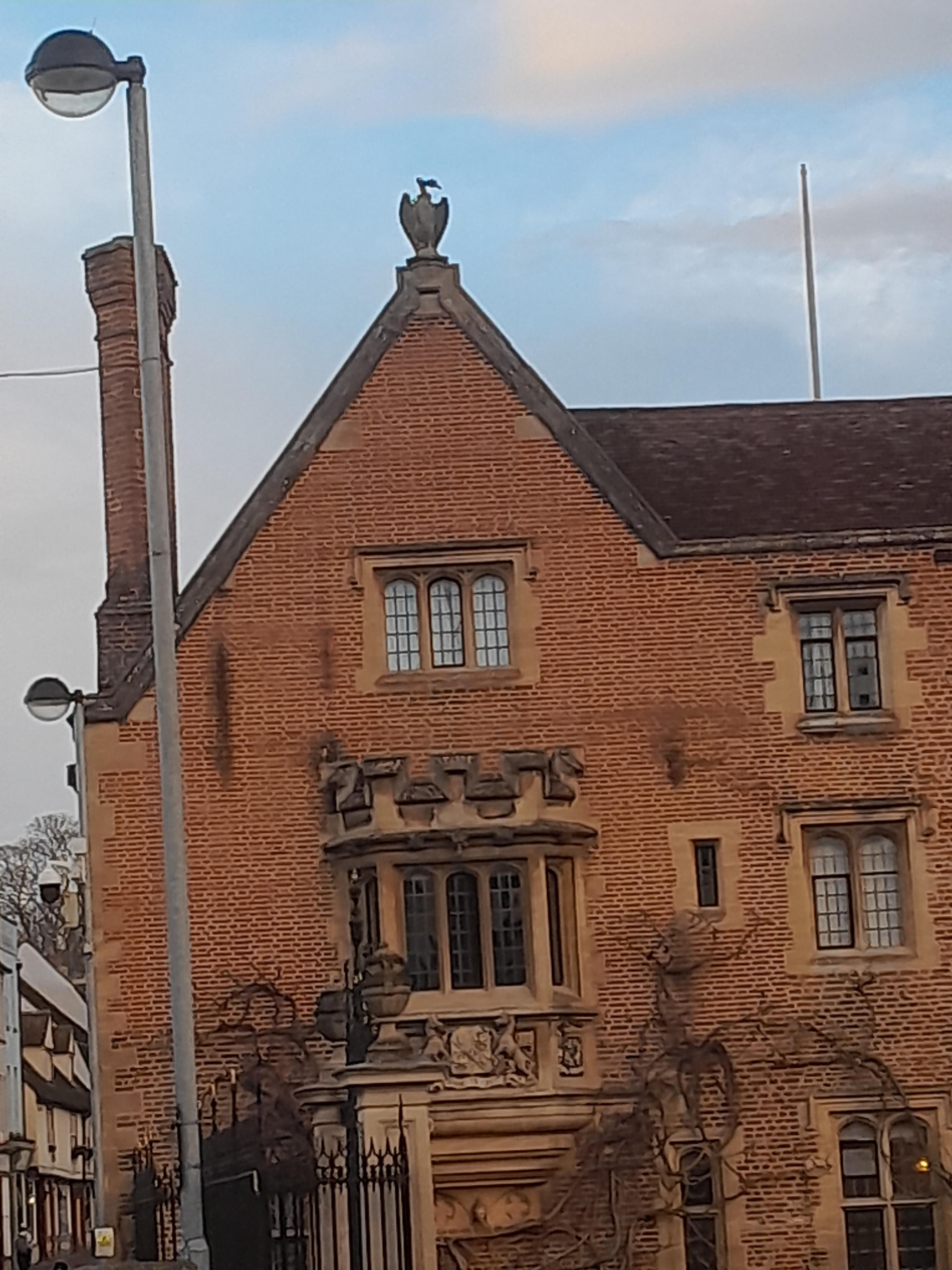

Magdalene College was originally Buckingham College, reflecting the patronage of Henry Stafford, 2nd Duke of Buckingham. However, this association proved unfortunate when the Duke was executed for treason in 1483 (by Richard III). The 3rd Duke of Buckingham was likely preparing to endow Magdalene generously, but his plans were cut short. In 1521, like his father before him, he was executed for treason (by Henry VIII).
You can see a chained swan on top of the building. This is part of the coat of arms of the Duke of Buckingham. I don't know whether it was put there by one of the Dukes, or whether in memory of them. That seems tricky, considering their deaths, but perhaps the college didn't care!
When Lord Audley refounded the College in 1542, he dedicated it to St Mary Magdalene. The choice of name appears to have been partly self-referential, as early documents often spell it phonetically as 'Maudleyn', echoing Audley's own name. The final 'e' was added in the mid-nineteenth century to help distinguish Magdalene College, Cambridge, from Magdalen College, Oxford, particularly with the advent of the postal service.


25 Magdalene Street (grade II) is early 17C. It has grotesques supporting the jetties. There is a local story that these used to advertise a brothel! However, it is more likely that these grotesques were a protection against witchcraft.

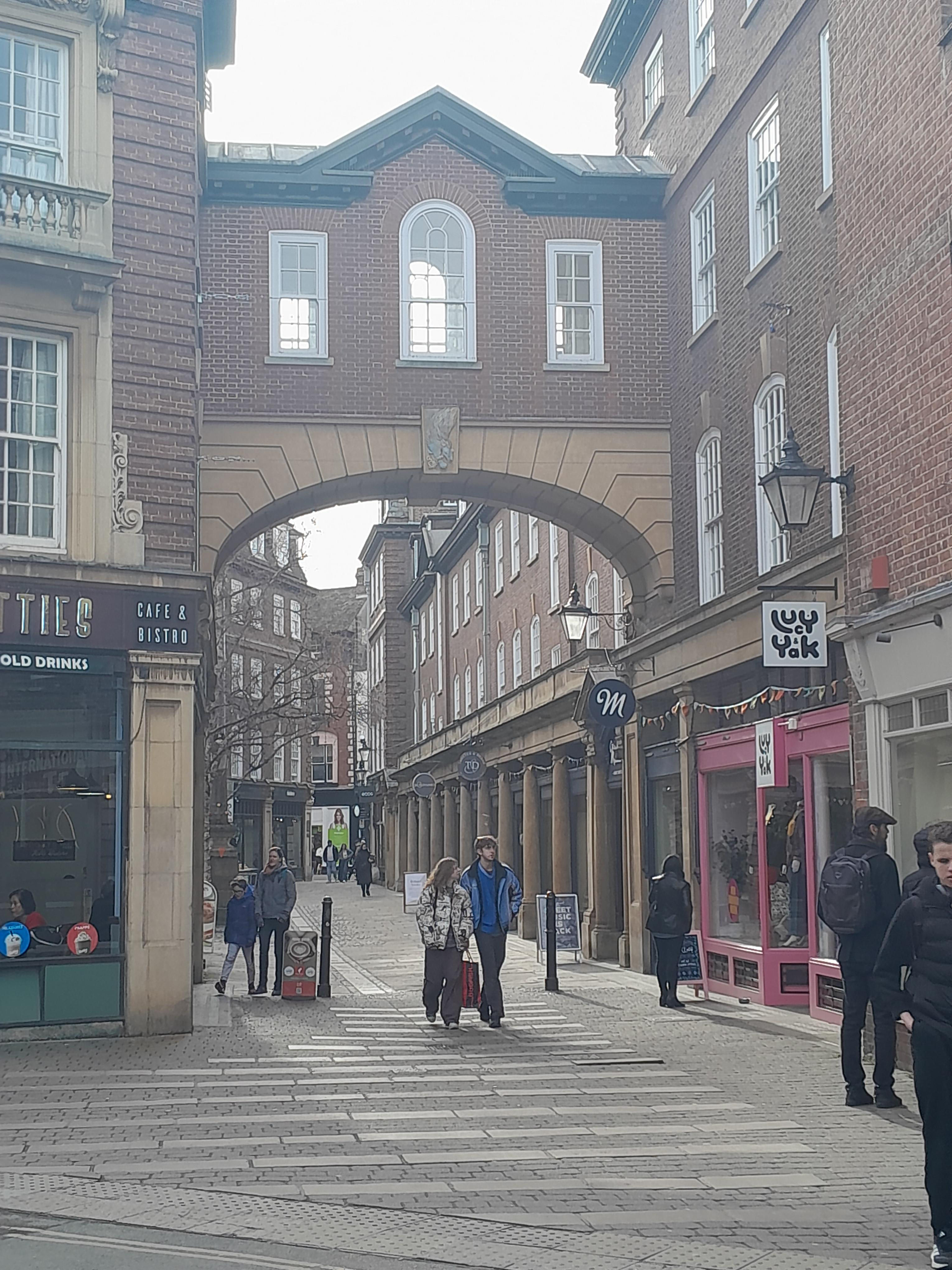

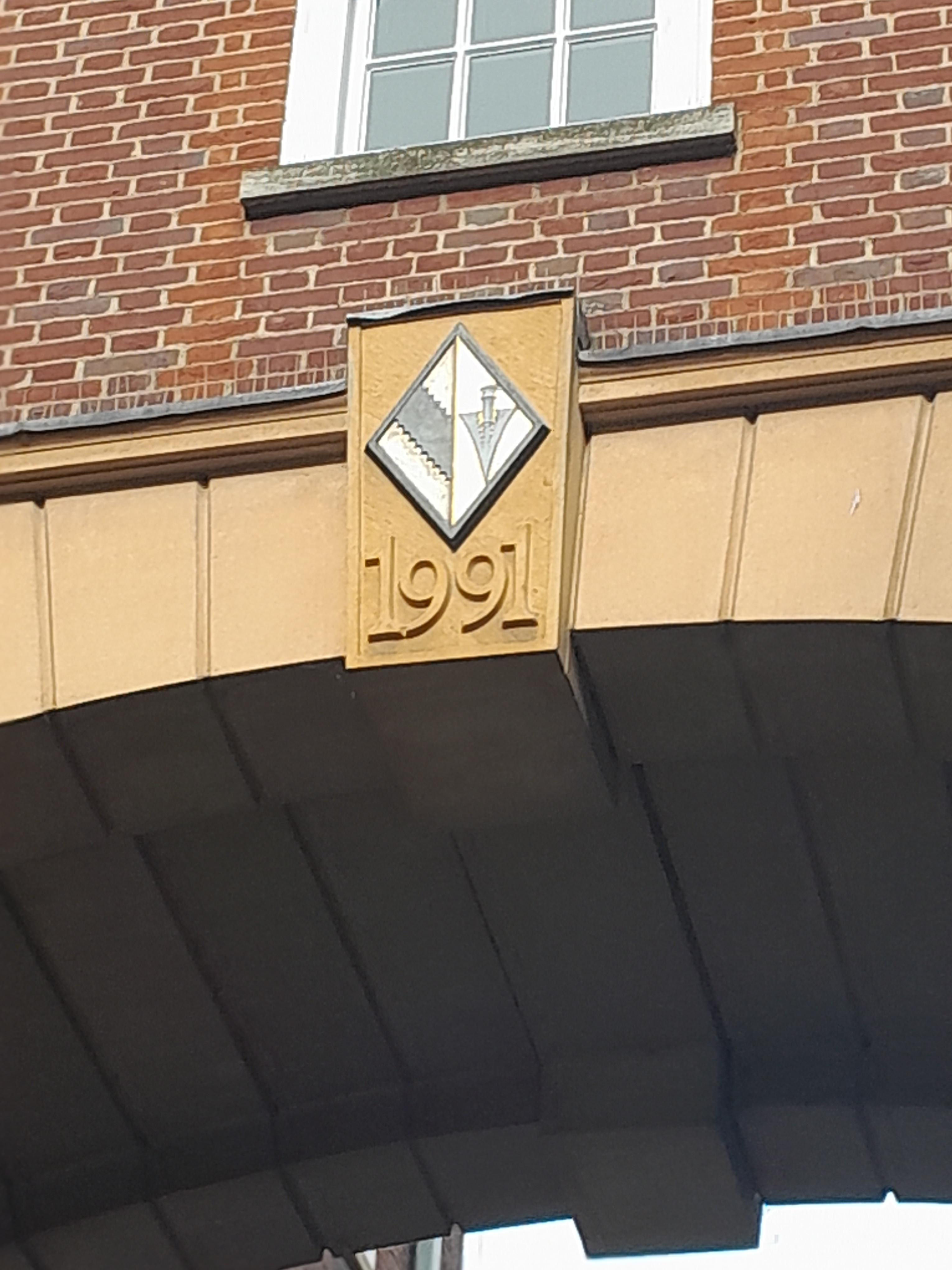
Sussex Street is listed grade II. It was built in 1928-39. At the end of Sussex Street, there is an archway over the street. This joins two parts of Sidney Sussex college. This archway was built in 1991. Walk under the arch, and turn round to look at the other side. There is a blue porcupine. Sidney Sussex College was founded by Frances Sidney, Countess of Sussex. The crest of her family is a blue and gold porcupine, and so this is the corporate seal of the college.
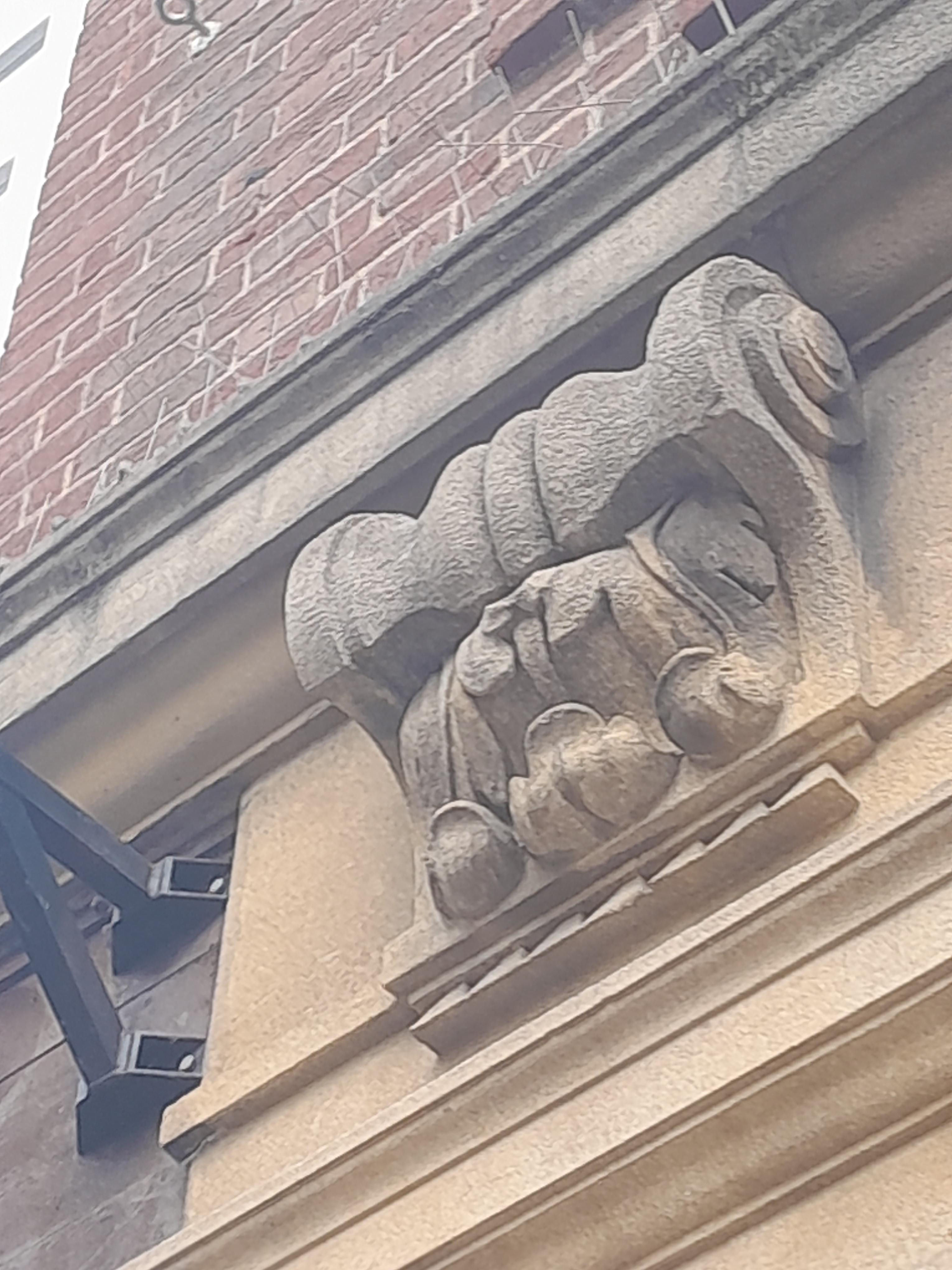
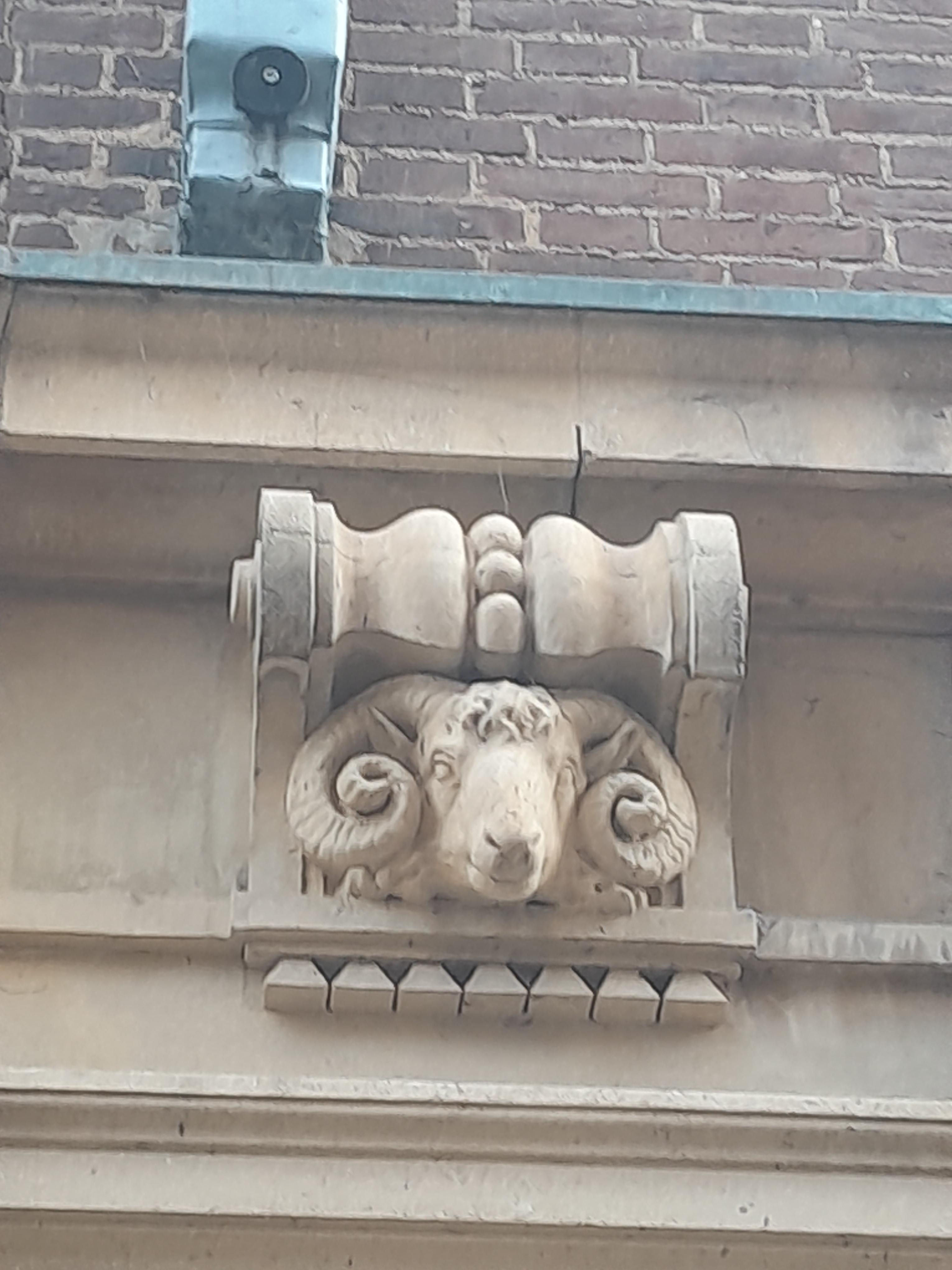

If you look up at the buildings on either side of Sussex Street, you will see carvings of either leaves or rams heads. I suspect that they are a joke. There are different types (or orders) of pillars. An Ionic pillar has spirals at the top, based on rams horns, and Corithinthian has acanthus leaves (and rams horns as well). Here we have the whole head or plant! There are more conventional pillar carvings as well.
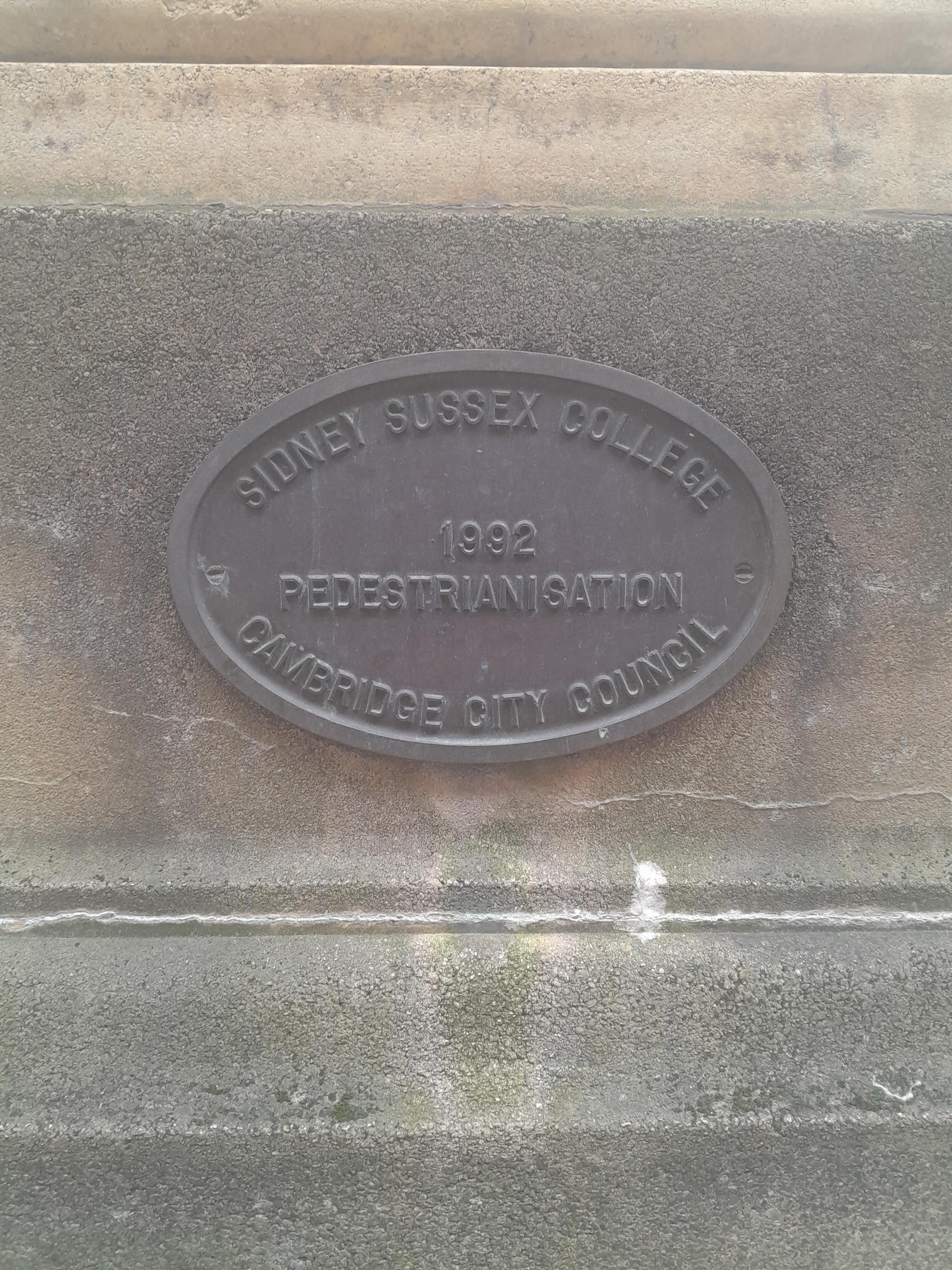
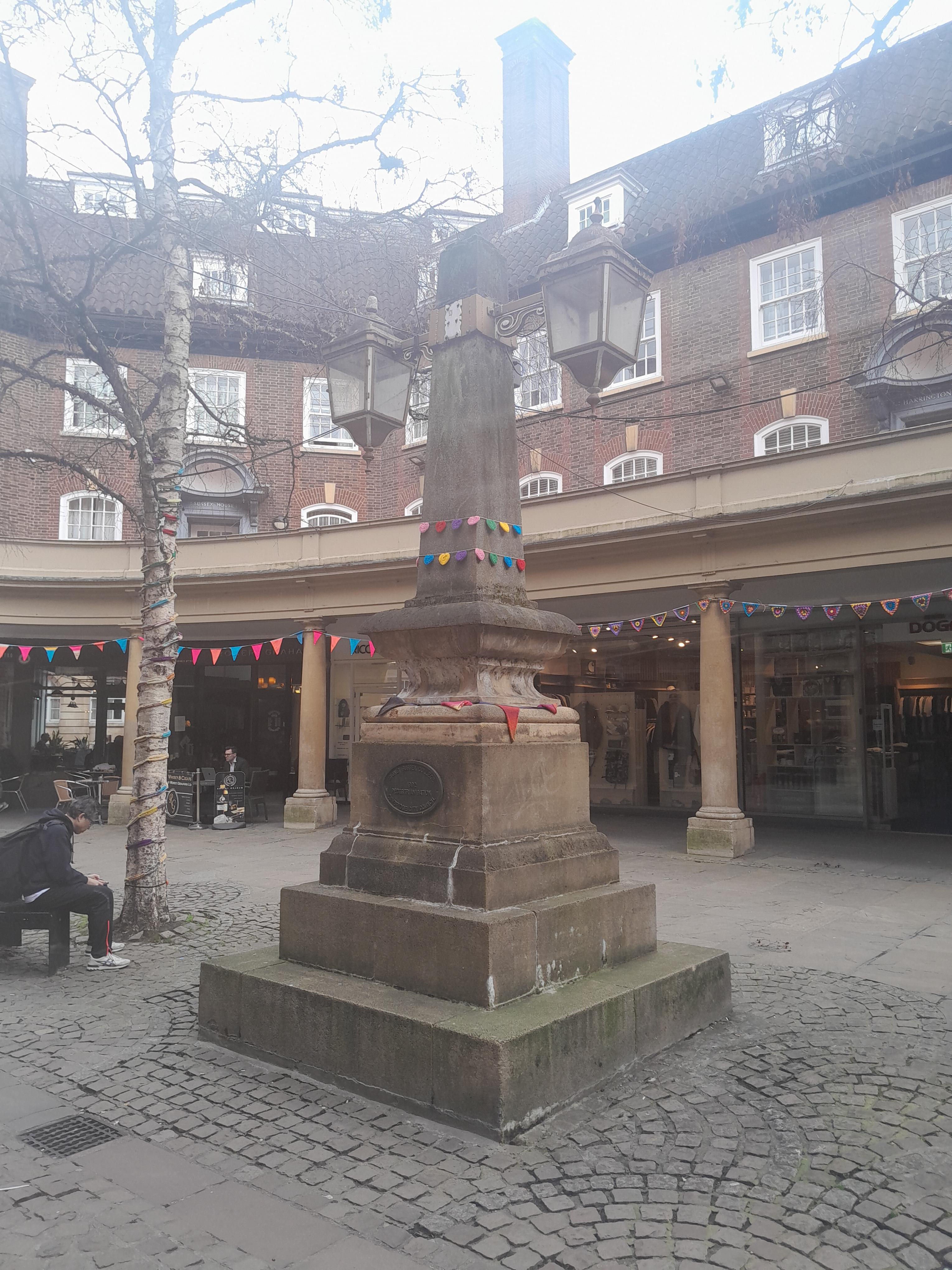
There is a grand lamp stand in the middle of Sussex Street, looking like an obelisk. Sidney Sussex and Cambridge City Council decided to fasten this plaque on it saying "Sidney Sussex College - 1992 - Pedestrianisation - Cambridge City Council".
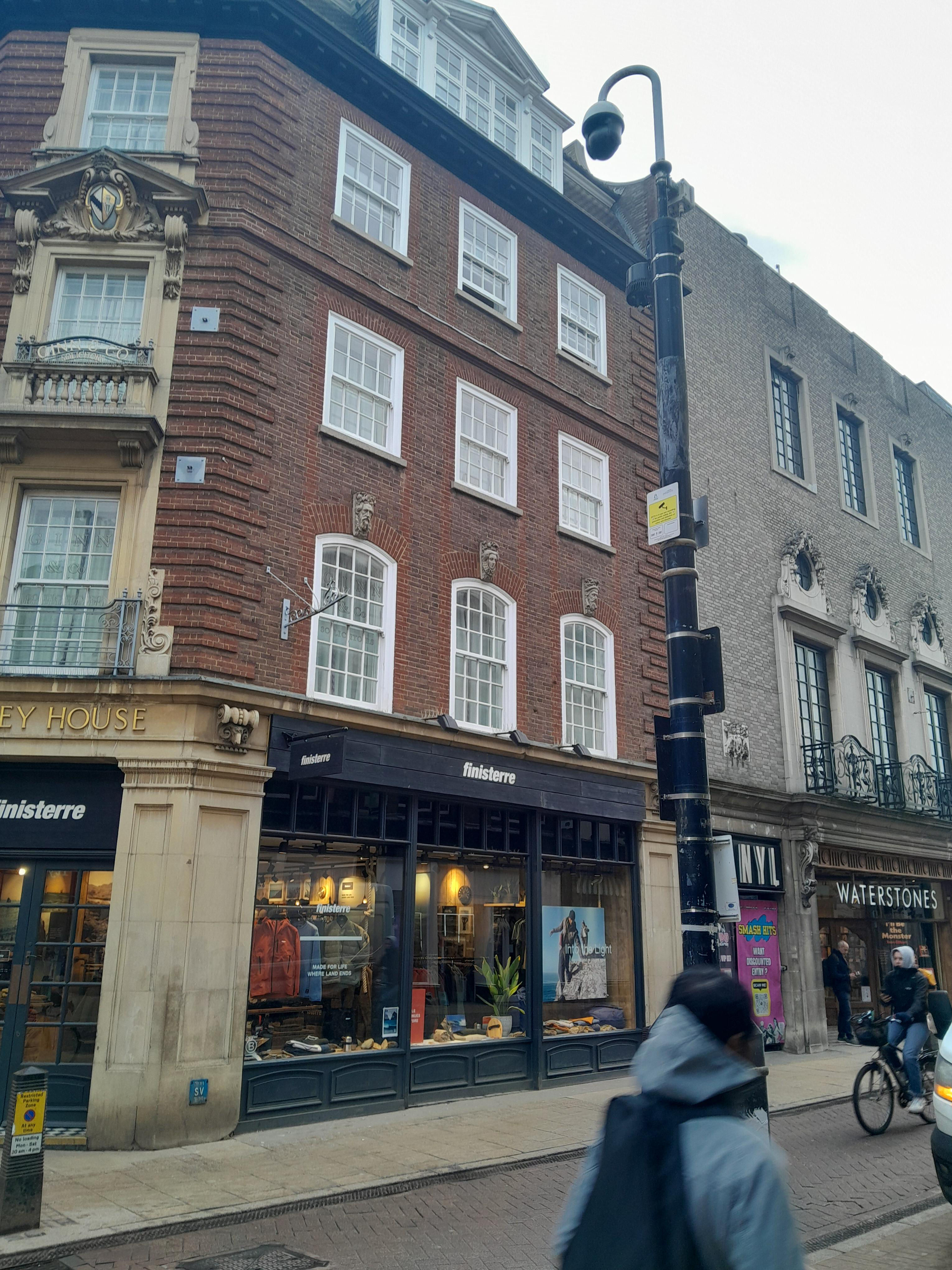
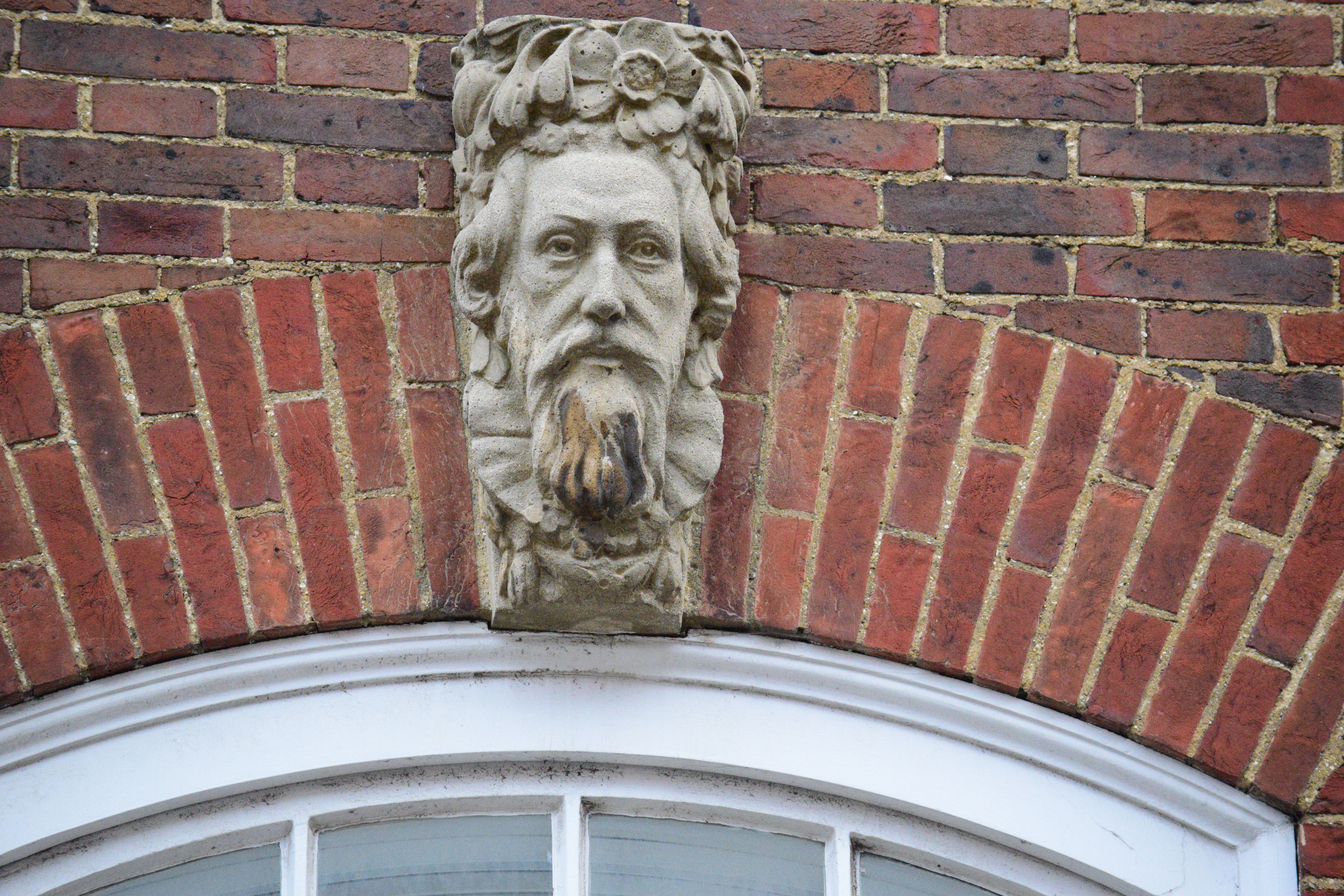


The end building of Sussex Street, on the corner with Sidney Street, is called Sidney House. There are three heads over the windows. I suspect that they are Lady Frances Sidney, who left a small sum in her will to found Sidney Sussex college, and the two executors of the will, Sir John Harrington and the lawyer Henry Grey, Earl of Kent.


Westcott House in Jesus Lane has a charming pair of footscrapers. They are a "rebus" - punning on a name. B.K.Cunningham was Principal of Westcott 1919-1943. His name is split into two, Cunning / ham, with cunning = coney = rabbit, and ham = pork = pig!
Flint is a common building material in areas without access to other stone, for example, in Norwich. Cambridge has a few buildings made of flint, but they are not old.
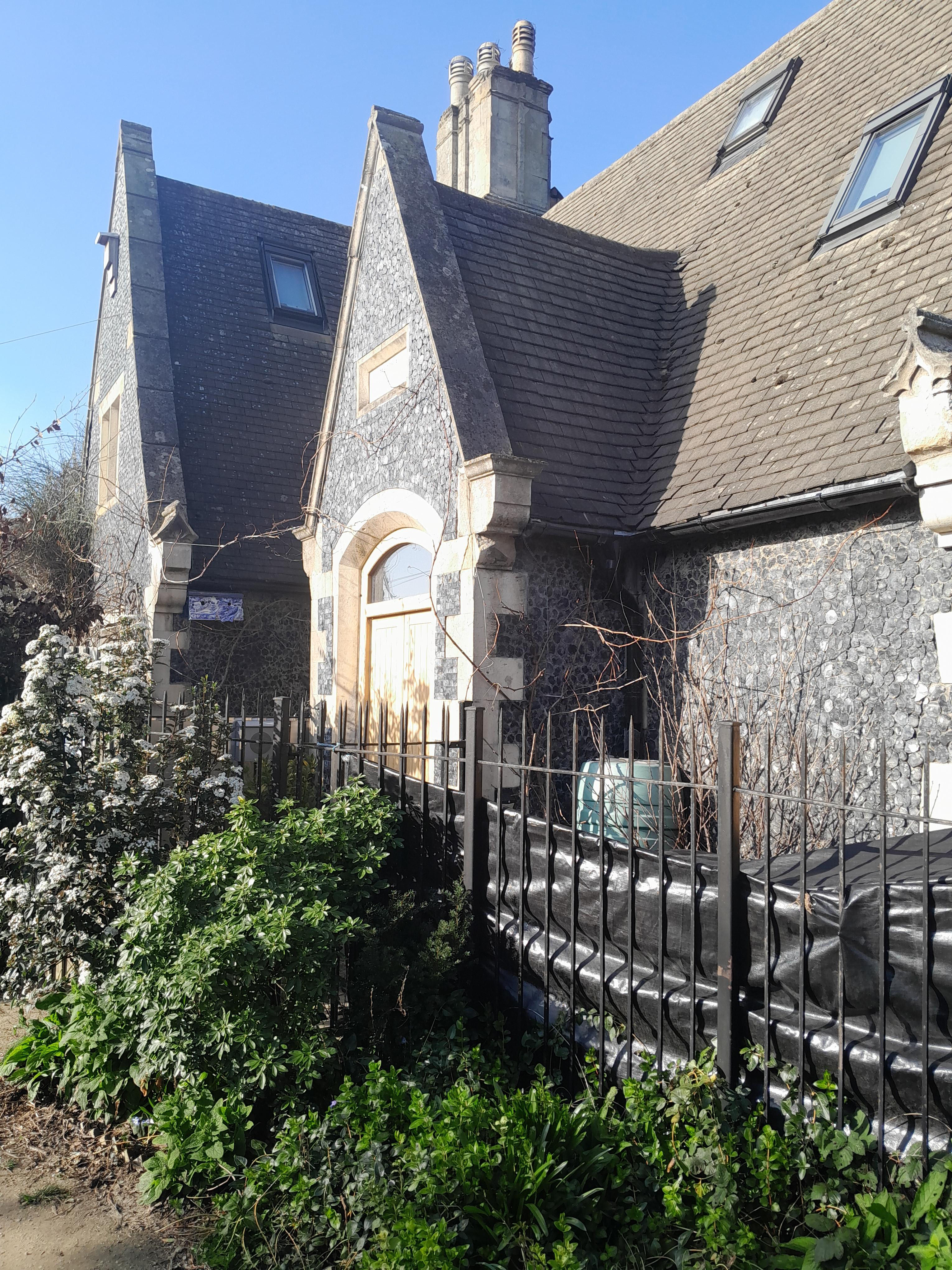

The old Custodian's House in Mill Road Cemetery (grade II) is made of shaped flint. It was built in 1848.

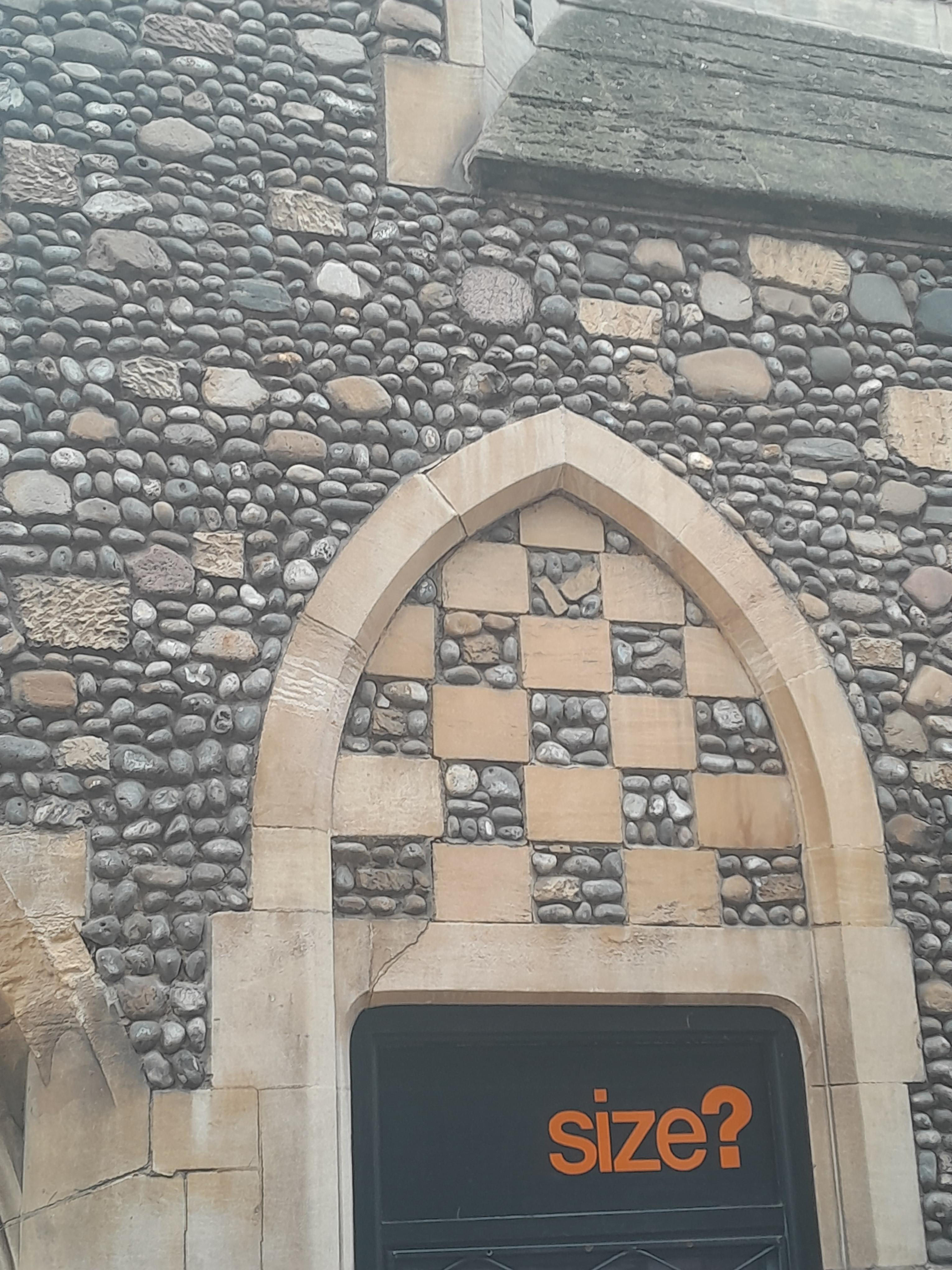
Henry Martyn Hall (grade II) is also made of pebbles and other stone pieces. The listing says flint, but I'm not sure! Henry Martyn Hall was built in 1887. It is in Market Street.

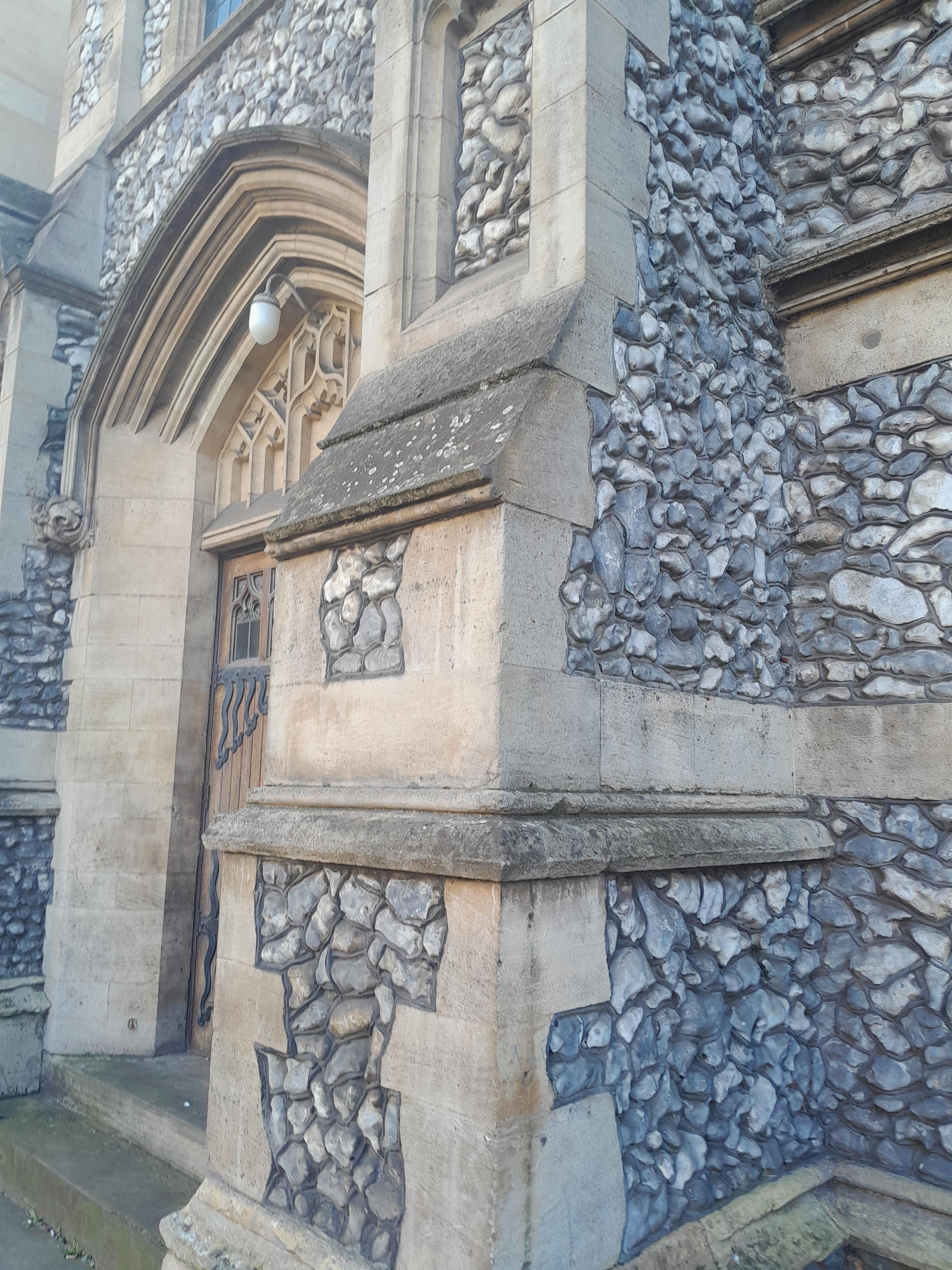
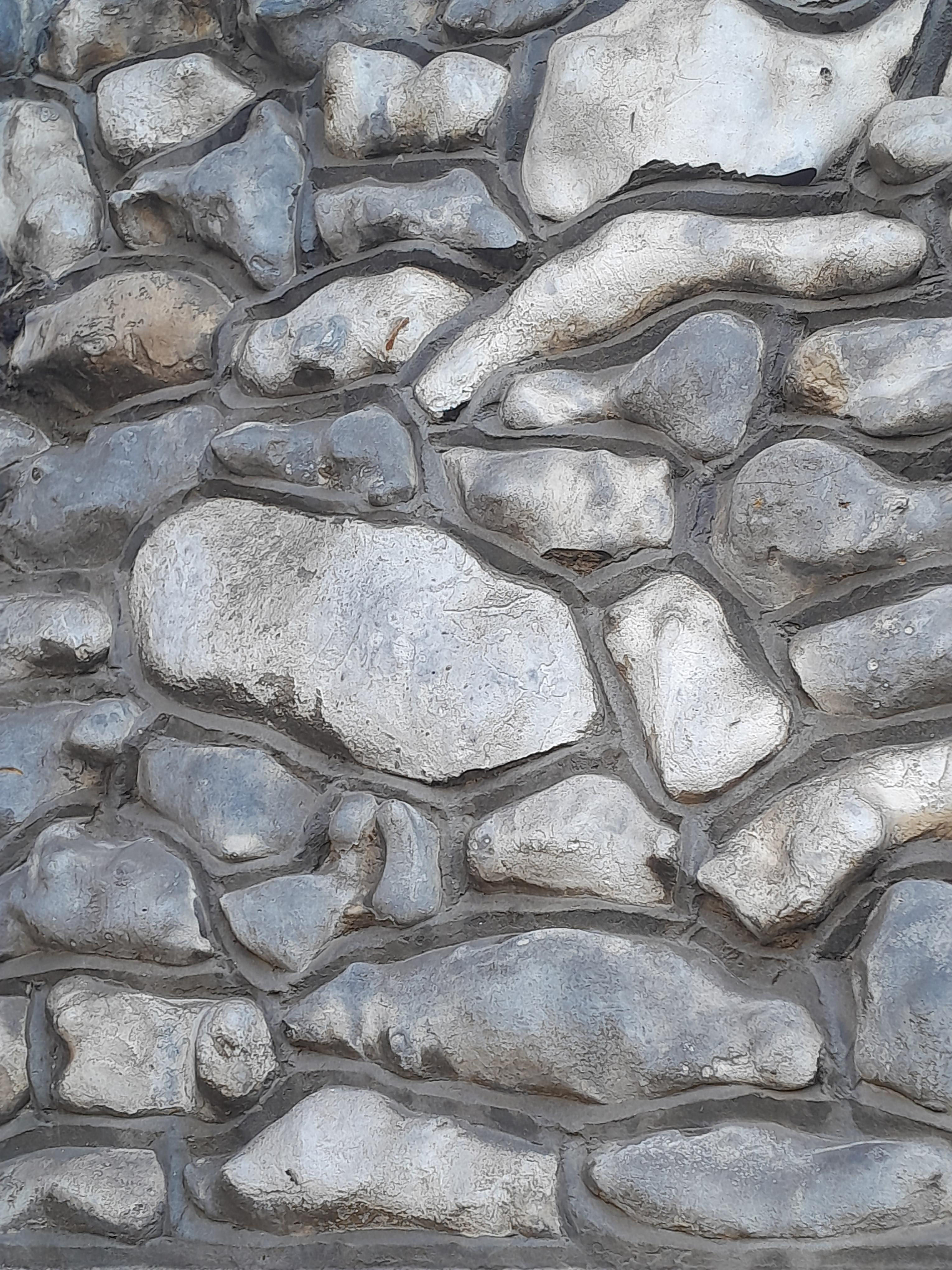
St Andrews Street Baptist Church in St Andrews Street is made of rounded flint. It was built in 1903.
Pargetting is patterned plaster, and there are some wonderful examples, such as in Saffrom Walden and Ipswich. Again, Cambridge has a few examples, but not old.

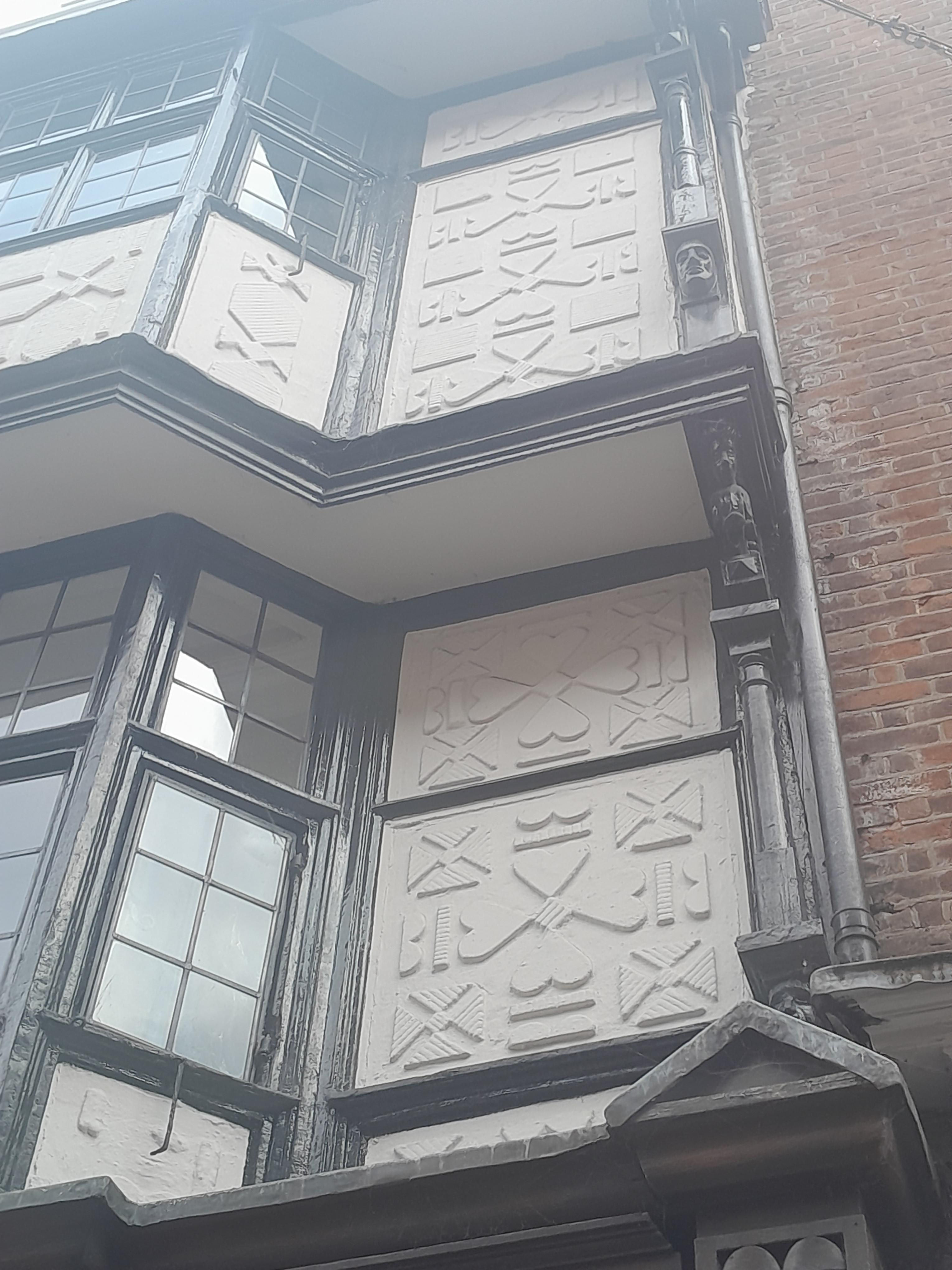
14 Trinity Street (grade II*) is late Cl6, but the pargetting is modern, according to the listing. Capturing Cambridge seems to suggest that there was pargetting in Victorian times, but I suppose it may have been replaced.
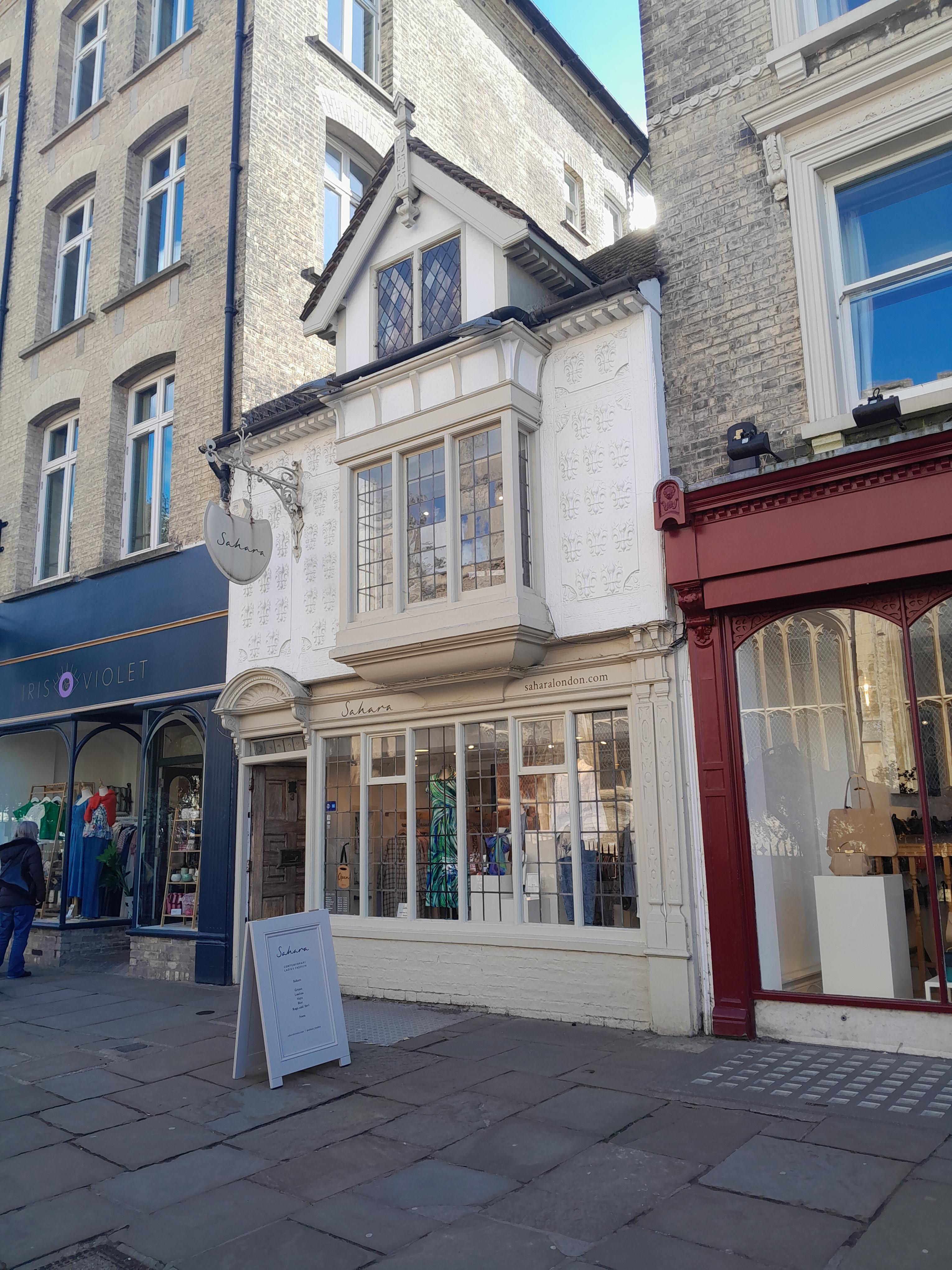
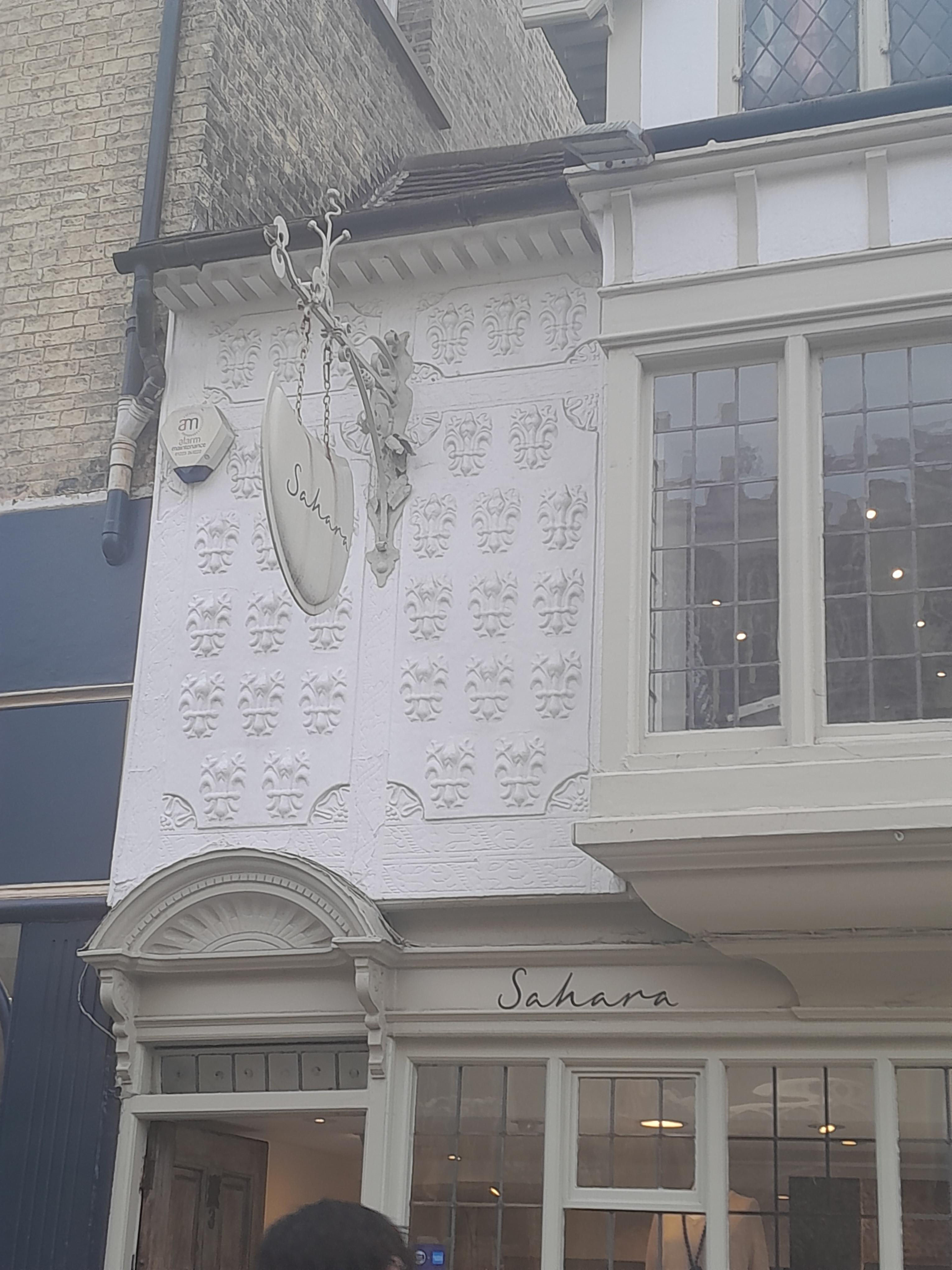
3 St Mary's Passage (grade II) is C17 timber-framed building adapted in the late C19 as the showroom of F R Leach & Sons, who were well-known for Cambridge building work, including Arts and Craft decoration. This is the original Victorian bracket with an elaborate design with scrolls, flowers and fleur-de-lys. (The sign itself has been replaced.)


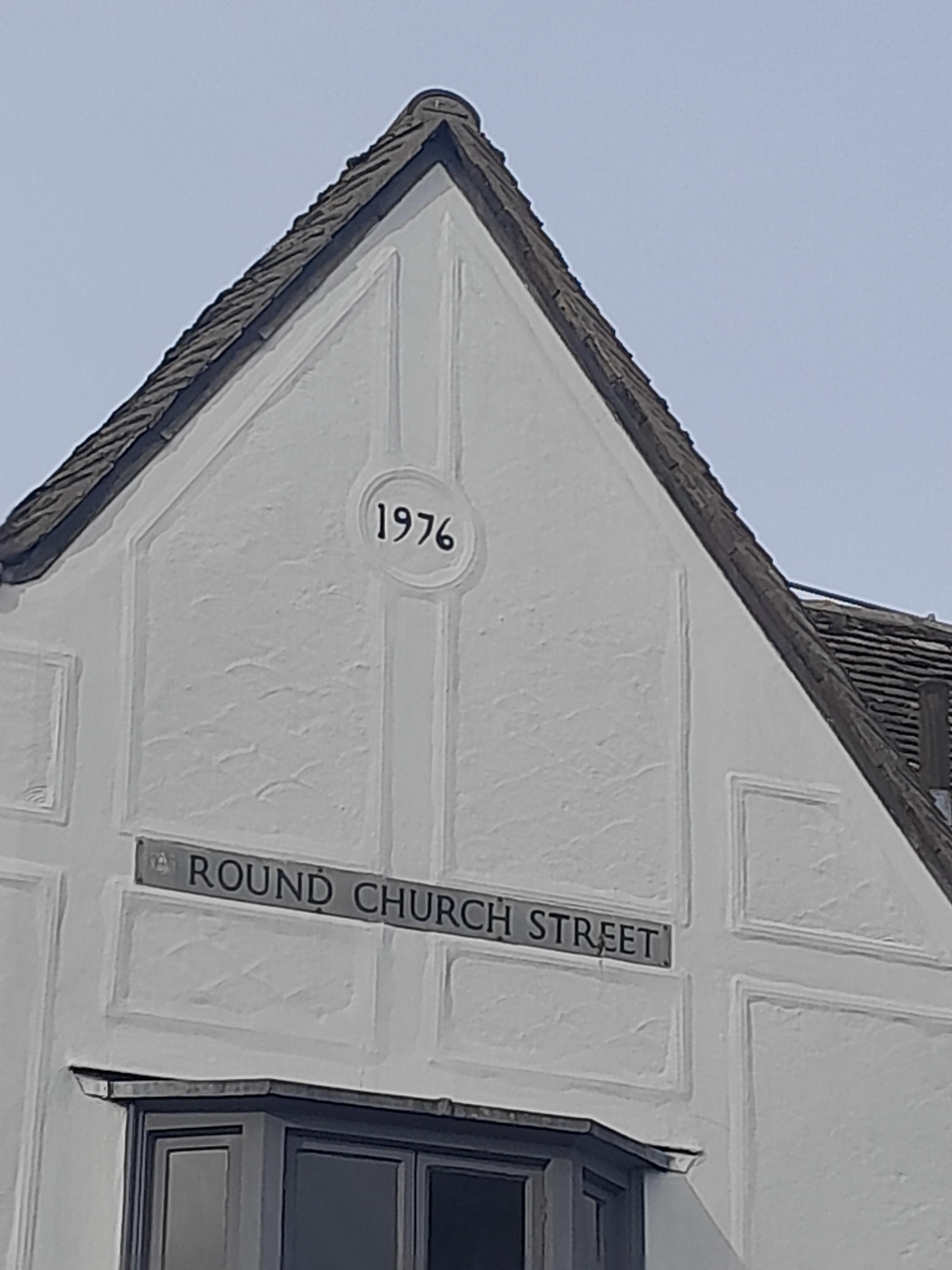
The houses in Bridge Street near the Round Church, on the way to Magdalene Bridge, are at least 17c. The pargetting is modern, and quite simple. It does give the date, 1976.


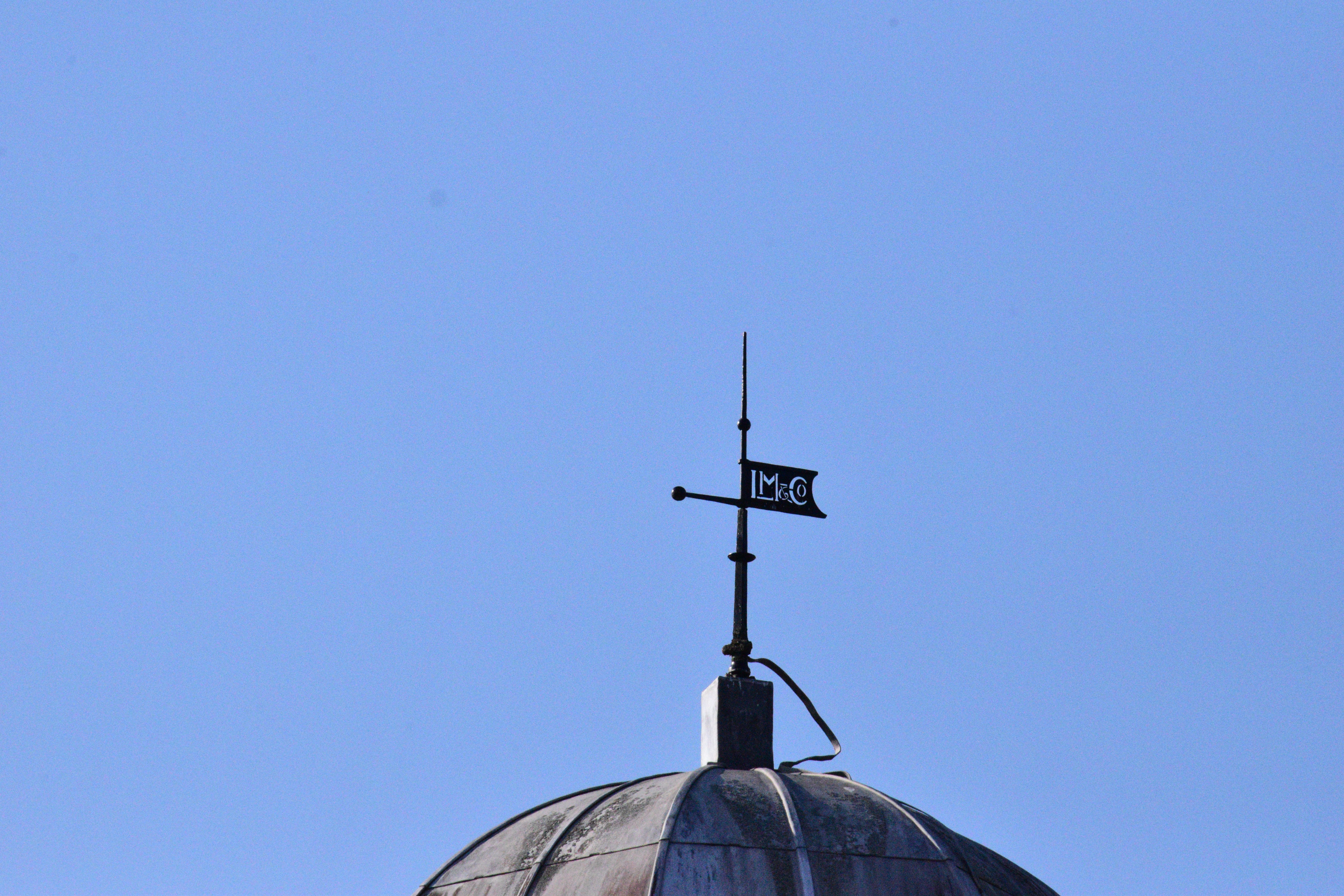
The former Laurie and McConnal department store in Fitzroy Street (grade II has a bandstand on top (with weather vane) and a decorated top window, with date (1903).
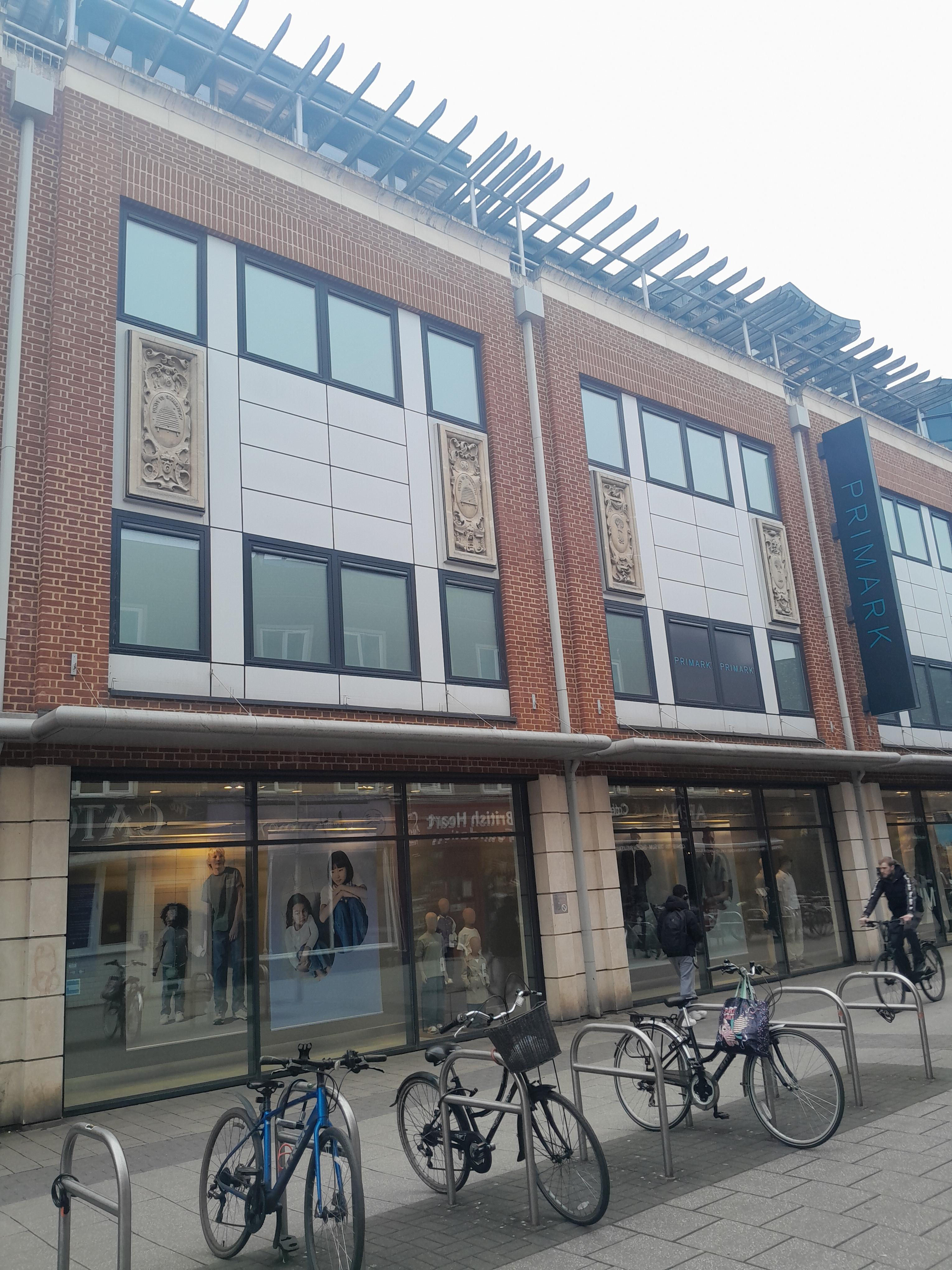
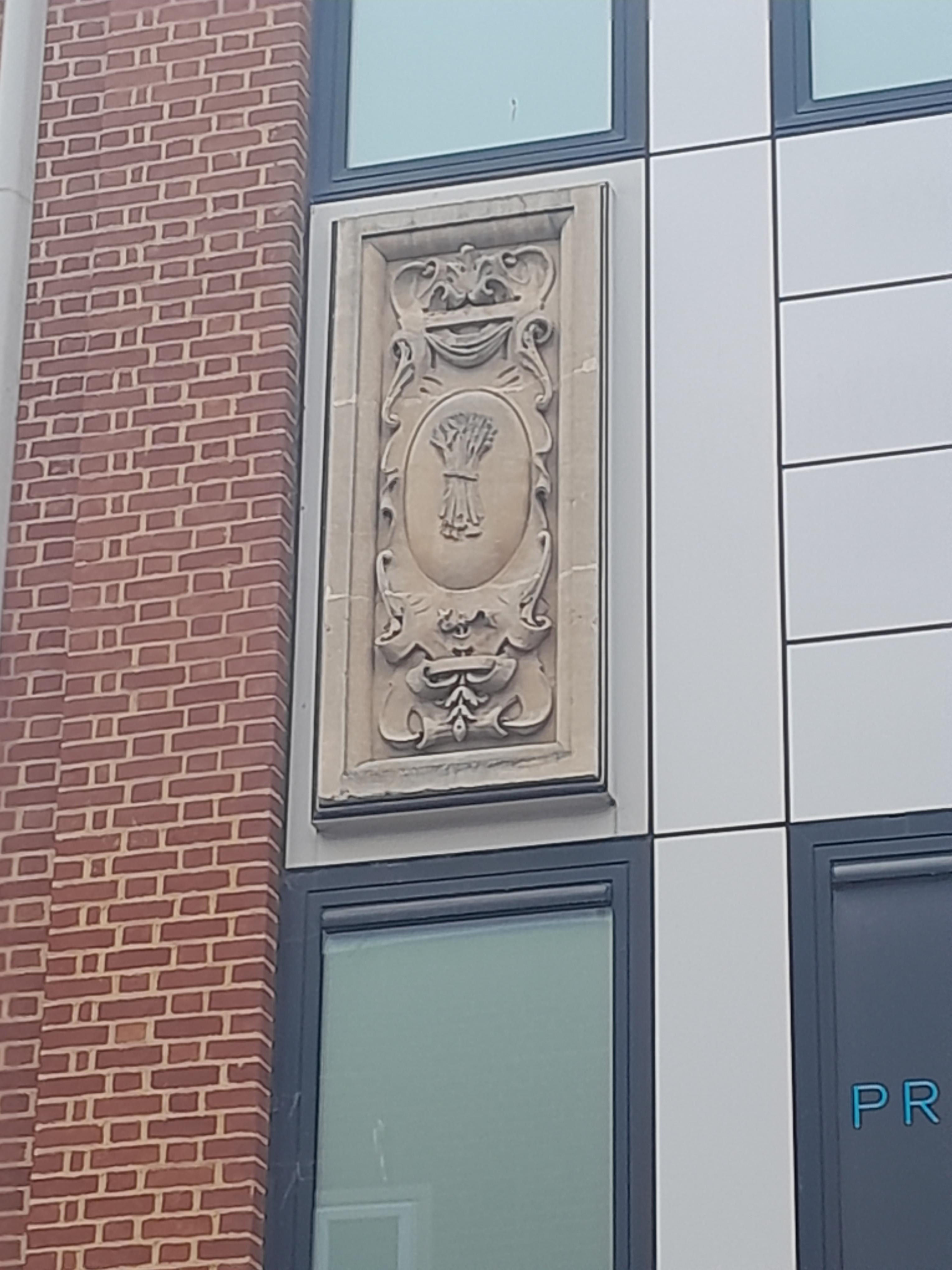
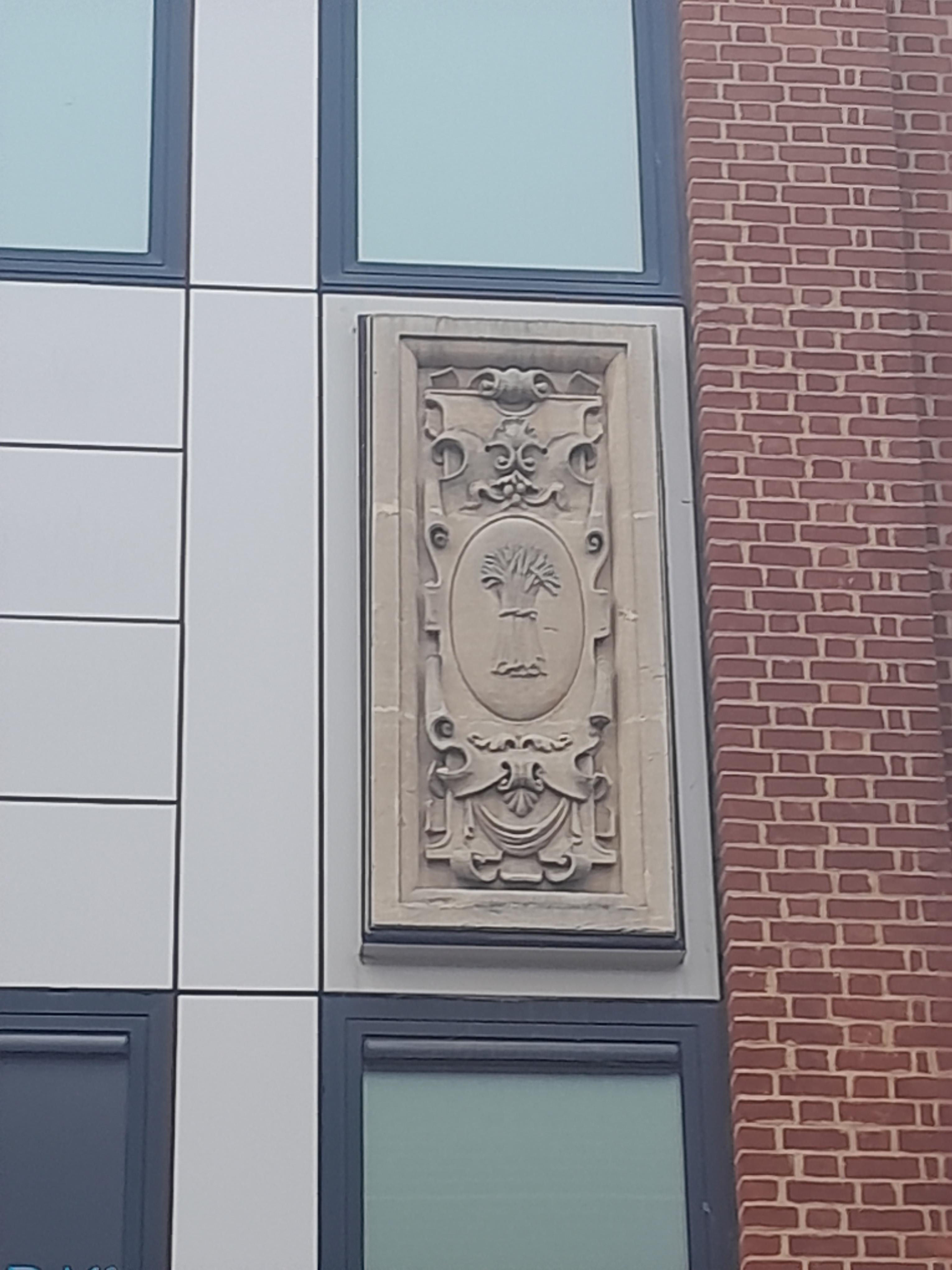
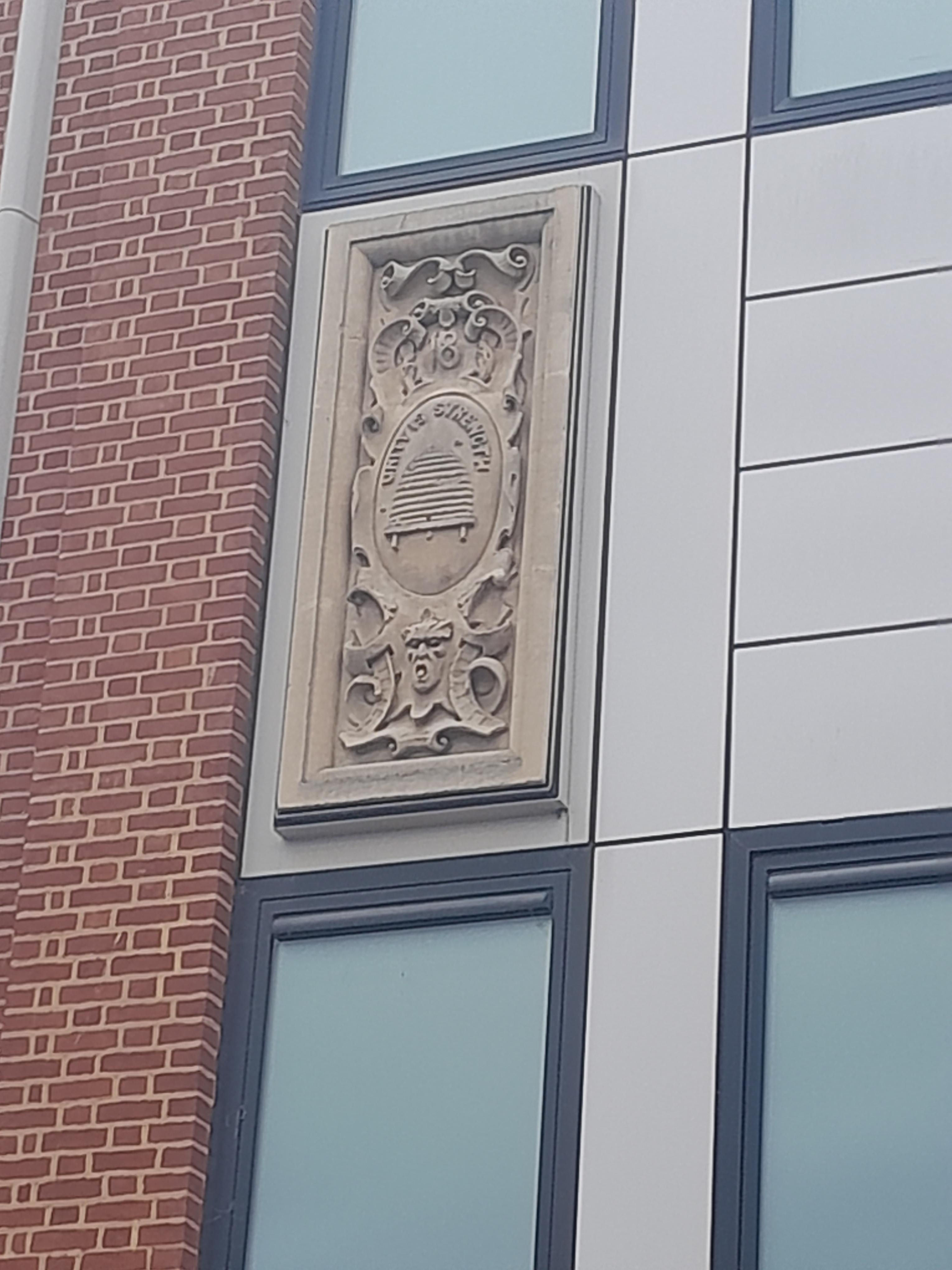

This site in Burleigh Street used to be a Co-op. When the old building was demolished, they kept these stone carvings for the new building. The beehive is a symbol of the Co-op, and their motto is Unity is Strength.
© Jo Edkins 2026 - Return to Walks index