
 Poems etc. - Cambridge
Duel of wit between Oxford and Cambridge
The Old Vicarage, Grantchester by Rupert Brooke
There has been an enormous amount of literature about Cambridge. Here, I wish to collect pieces that appeal to me, especially poems. But first, here are some novels about Cambridge, especially the university.
I recommend Susanna Gregory's books set in 14th-century Cambridge, featuring Matthew Bartholomew. He is a fictional physician, a master at the College of Michaelhouse at the University of Cambridge, where he teaches medicine. Michaelhouse became part of Trinity college. It is a pleasant way to learn about medieval Cambridge.
I also recommend Jill Paton Walsh's book about Imogen Quy, college nurse in the fictional St Agatha's College, situated where St Giles church is. These are modern detective stories, but use various quirks and fun stories about Cambridge Univesrity life.
For a more satirical view of Cambridge University, try Porterhouse Blue by Tom Sharpe, about another imaginary college.
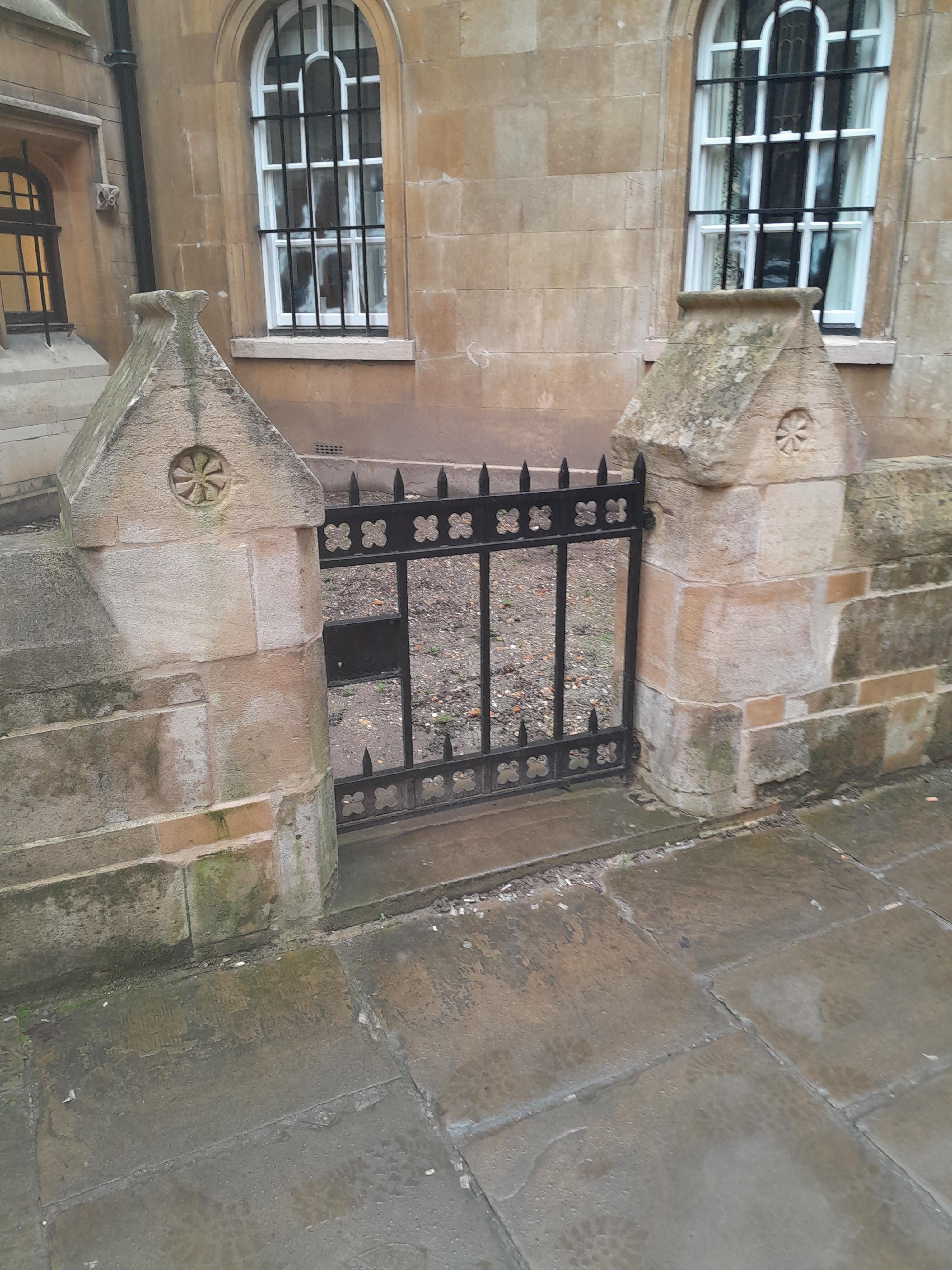
A little Garden little Jowett made
And fenced it with a little palisade:
But when this little garden made a little talk,
He changed it to a little gravel walk;
If you would know the mind of little Jowett
This garden doth a little show it.
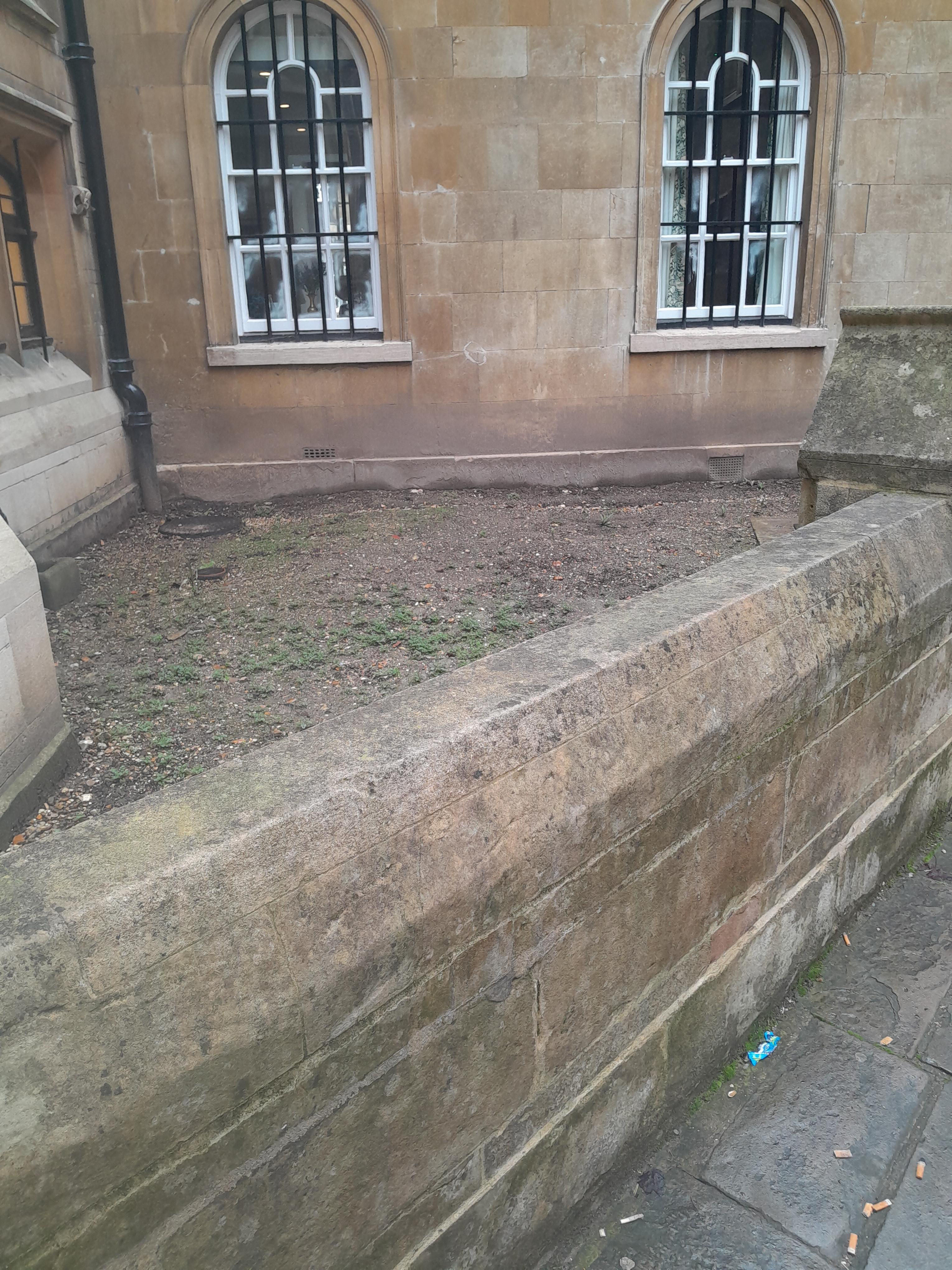
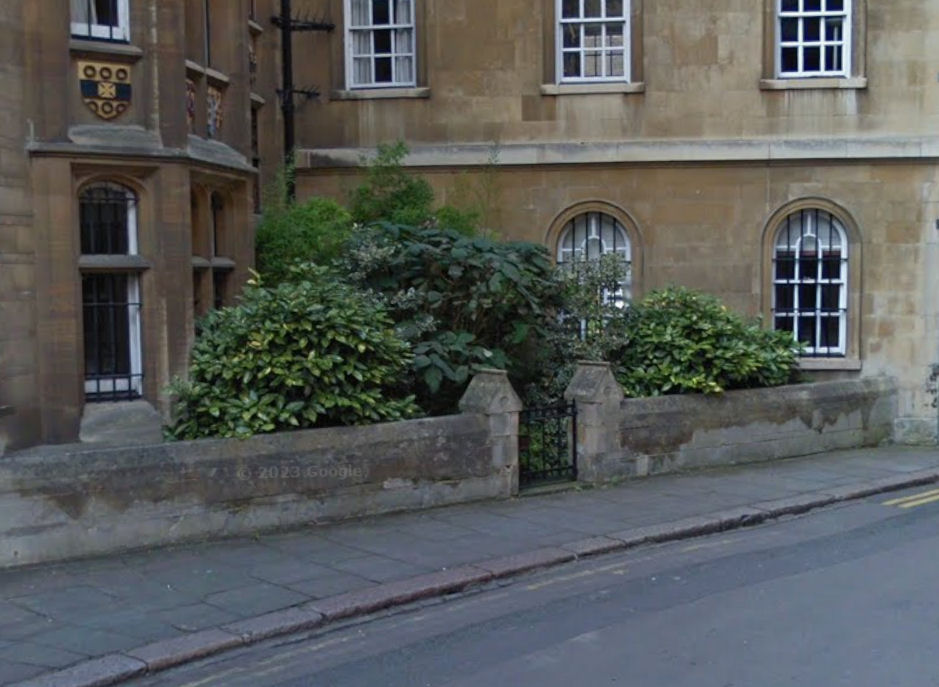
This garden is between Trinity Hall and Clare, on Trinity Lane. It now is just gravel, but Google StreetView 2014 shows there used to be plants there. Joseph Jowett (1752-1813) was Master of Trinity Hall. It's interesting that the garden seems to have had different forms in the past!
"Black care" is an echo of the Latin poet Horace, Odes 3.1.41: post equitem sedet atra Cura (black care sits behind the horseman). A 'fusee' is a match that stays alight even in a strong wind. A 'clay' is 'a clay pipe. It is tempting to say that "Confound such knavish tricks" is an echo from the second verse of the National Anthem (1745) "Confound their politics, Frustrate their knavish tricks".
On the corner of Market Street and Rose Crescent, the shop used to be a tobacconist called Bacon. There is a plaque on the wall in Rose Crescent with a light-hearted poem in praise of tobacco, mentioning Bacon. This was written in 1862 by Charles Stuart Calverley (1831-1884). He came to Christs College, Cambridge after being expelled from Oxford.

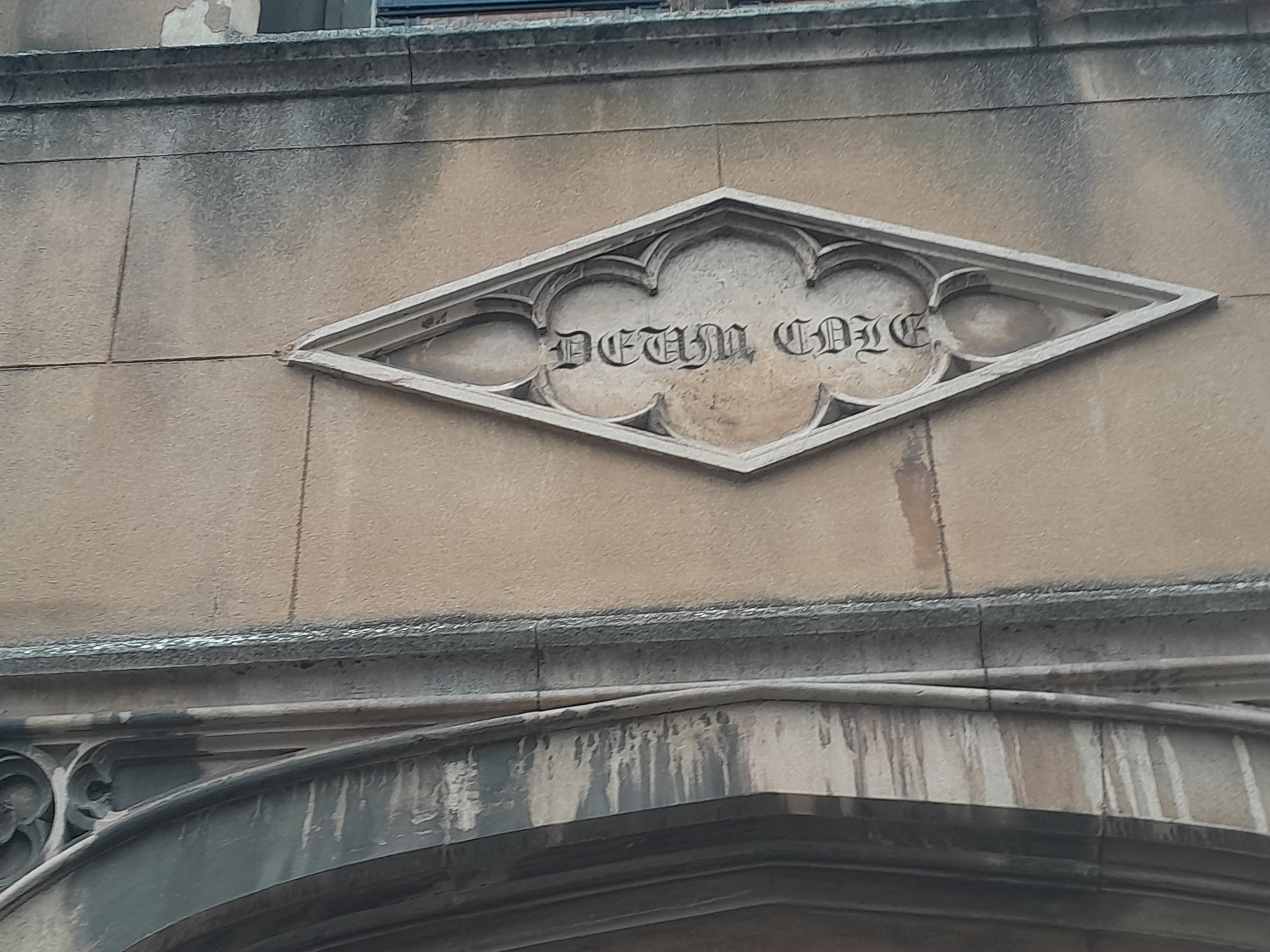
The tower of St Clements was added in 1821-22, from a bequest by William Cole. Pevsner (famous writer of guides to English architecture) called the tower "somewhat silly"! There used to be a steeple as well, but this got taken down in 1928. That is why the weather vane has to be on a spike. Cambridge Chronicle 8.3.1822 included the following little verse:
Since to Old Cole (Heaven rest his soul,
Who lov'd God's worship holy;)
This spire we owe, we've plac'd below
His motto "Deum Cole".
"Deum Cole" means "Worshop God". It is a rebus or punning motto.

In September 1715, King George I made a gift to Cambridge University Library. John Moore, Bishop of Ely, a voracious collector of books, had died the previous summer leaving an outstanding collection of over 30,000 books and manuscripts, and George was persuaded to reward Cambridge's loyalty by presenting these volumes to the university, more than trebling the size of the library overnight. This led to a witty poem from Oxford:
King George, observing with judicious eyes
The state of both his Universities,
To Oxford sent a troop of horse; and why?
That learned body wanted loyalty.
To Cambridge books he sent, as well discerning
How much that loyal body wanted learning.
by Joseph Trapp (of Oxford)
This led to a riposte from Cambridge:
The king to Oxford sent a troop of horse,
For Tories know no argument but force;
With equal skill to Cambridge books he sent,
For Whigs admit no force but argument.
by William Browne (of Cambridge)
The competition between Oxford and Cambridge is unrelenting, of course. One joke, by Oxford, is that learning is a closed book to Cambridge (referring to their coat of arms). Cambridge's reply is that Oxford can only read very large print!


John Milton, the famous poet, who studied at Christ's College, wrote this sonnet about Hobson. Apparently, Hobson was not allowed to travel freely because of the plague, and then he died. Milton imagines that since he was forced to stay still, Death was able to finally catch up with him! Hobson died in 1631, and Milton was born in 1608, so he was quite young when he wrote the poem.
On the University Carrier
Who sickened in the time of his Vacancy, being forbid to go to London by reason of the Plague.
Here lies old Hobson. Death hath broke his girt,
And here, alas! hath laid him in the dirt;
Or else, the ways being foul, twenty to one
He's here stuck in a slough, and overthrown.
'T was such a shifter that, if truth were known,
Death was half glad when he had got him down;
For he had any time this ten years full
Dodged with him betwixt Cambridge and The Bull.
And surely Death could never have prevailed,
Had not his weekly course of carriage failed;
But lately, finding him so long at home,
And thinking now his journey's end was come,
And that he had ta'en up his latest Inn,
In the kind office of a Chamberlin
Showed him his room where he must lodge that night,
Pulled off his boots, and took away the light.
If any ask for him, it shall be said,
"Hobson has supped, and 's newly gone to bed."
Hobson is now known in Cambridge mostly for Hobson's Conduit, running down part of Trumpington Street.


Walter Mildmay founded Emmanuel College in 1584. Queen Elizabeth I said "Sir Walter, I hear you have erected a puritan foundation". Mildmay replied: "No, madam; far be it from me to countenance anything contrary to your established laws; but I have set an acorn, which when it becomes an oak, God alone knows what will be the fruit thereof". This plaque is behind the Univesity Arms hotel.

This is an extract, being rude about Cambridgeshire locations. The full poem (click here) is mostly about how wonderful Grantchester is.
God! I will pack, and take a train,From Wikipedia: "The Prelude or, Growth of a Poet's Mind; An Autobiographical Poem is an autobiographical poem in blank verse by the English poet William Wordsworth. Intended as the introduction to the more philosophical poem The Recluse, which Wordsworth never finished, The Prelude is an extremely personal work and reveals many details of Wordsworth's life." Book 3 is about Cambridge. Here is some of it.
---
It was a dreary morning when the wheels
Rolled over a wide plain o'erhung with clouds,
And nothing cheered our way till first we saw
The long-roofed chapel of King's College lift
Turrets and pinnacles in answering files,
Extended high above a dusky grove.

Kings College Chapel

Magdalene Bridge and the river Cam

4 Bridge St used to be the Hoop Inn.
My spirit was up, my thoughts were full of hope;
Some friends I had, acquaintances who there
Seemed friends, poor simple schoolboys, now hung round
With honour and importance: in a world
Of welcome faces up and down I roved;
Questions, directions, warnings and advice,
Flowed in upon me, from all sides; fresh day
Of pride and pleasure! to myself I seemed
A man of business and expense, and went
From shop to shop about my own affairs,
To Tutor or to Tailor, as befell,
From street to street with loose and careless mind.
I was the Dreamer, they the Dream; I roamed
Delighted through the motley spectacle;
Gowns grave, or gaudy, doctors, students, streets,
Courts, cloisters, flocks of churches, gateways, towers:
Migration strange for a stripling of the hills,
A northern villager. As if the change
Had waited on some Fairy's wand, at once
Behold me rich in monies, and attired
In splendid garb, with hose of silk, and hair
Powdered like rimy trees, when frost is keen.
My lordly dressing-gown, I pass it by,
With other signs of manhood that supplied
The lack of beard. - The weeks went roundly on,
With invitations, suppers, wine and fruit,
Smooth housekeeping within, and all without
Liberal, and suiting gentleman's array.

St Johns gatehouse
The Evangelist St. John my patron was:
Three Gothic courts are his, and in the first
Was my abiding-place, a nook obscure;
Right underneath, the College kitchens made
A humming sound, less tuneable than bees,
But hardly less industrious; with shrill notes
Of sharp command and scolding intermixed.
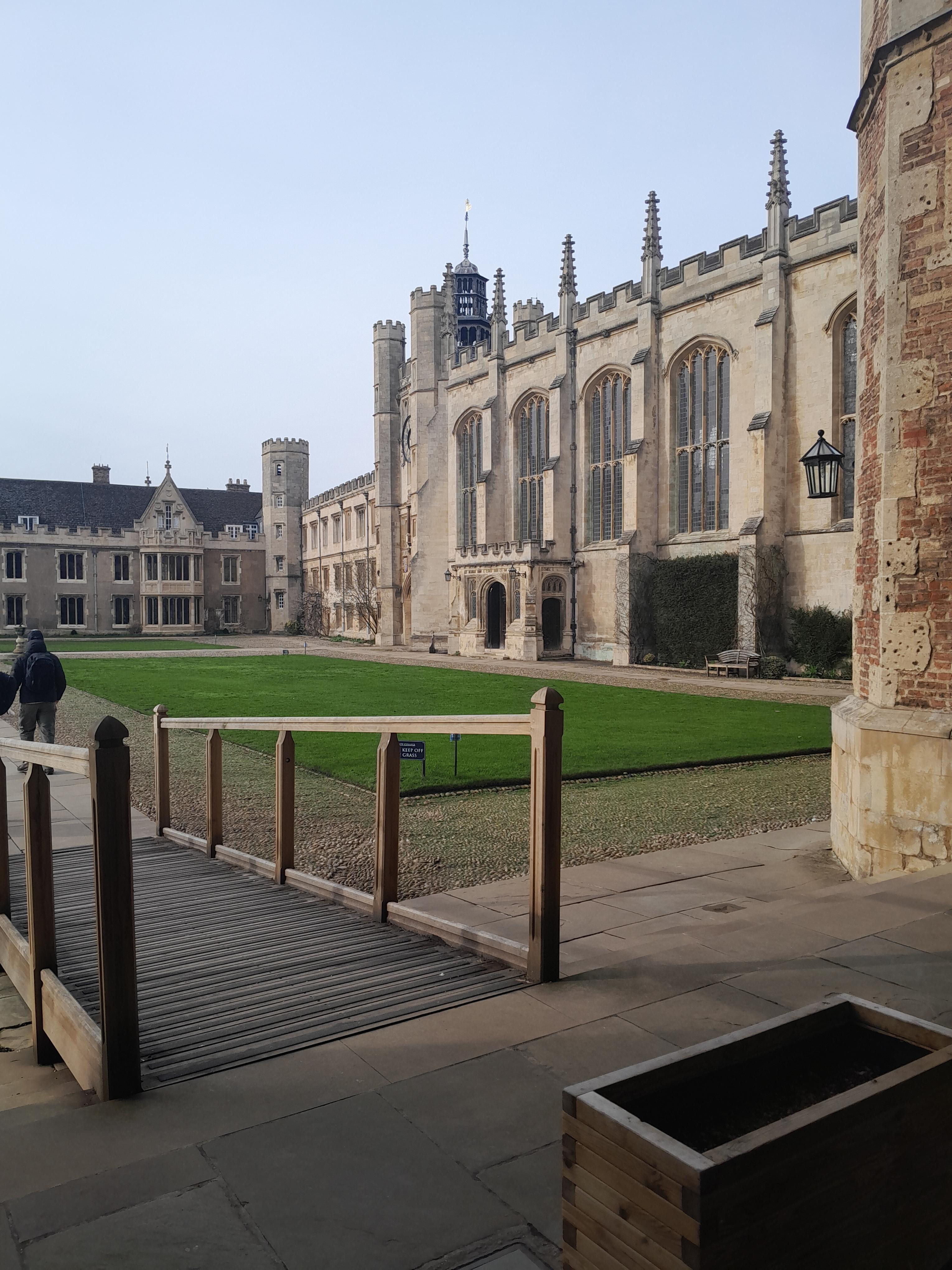
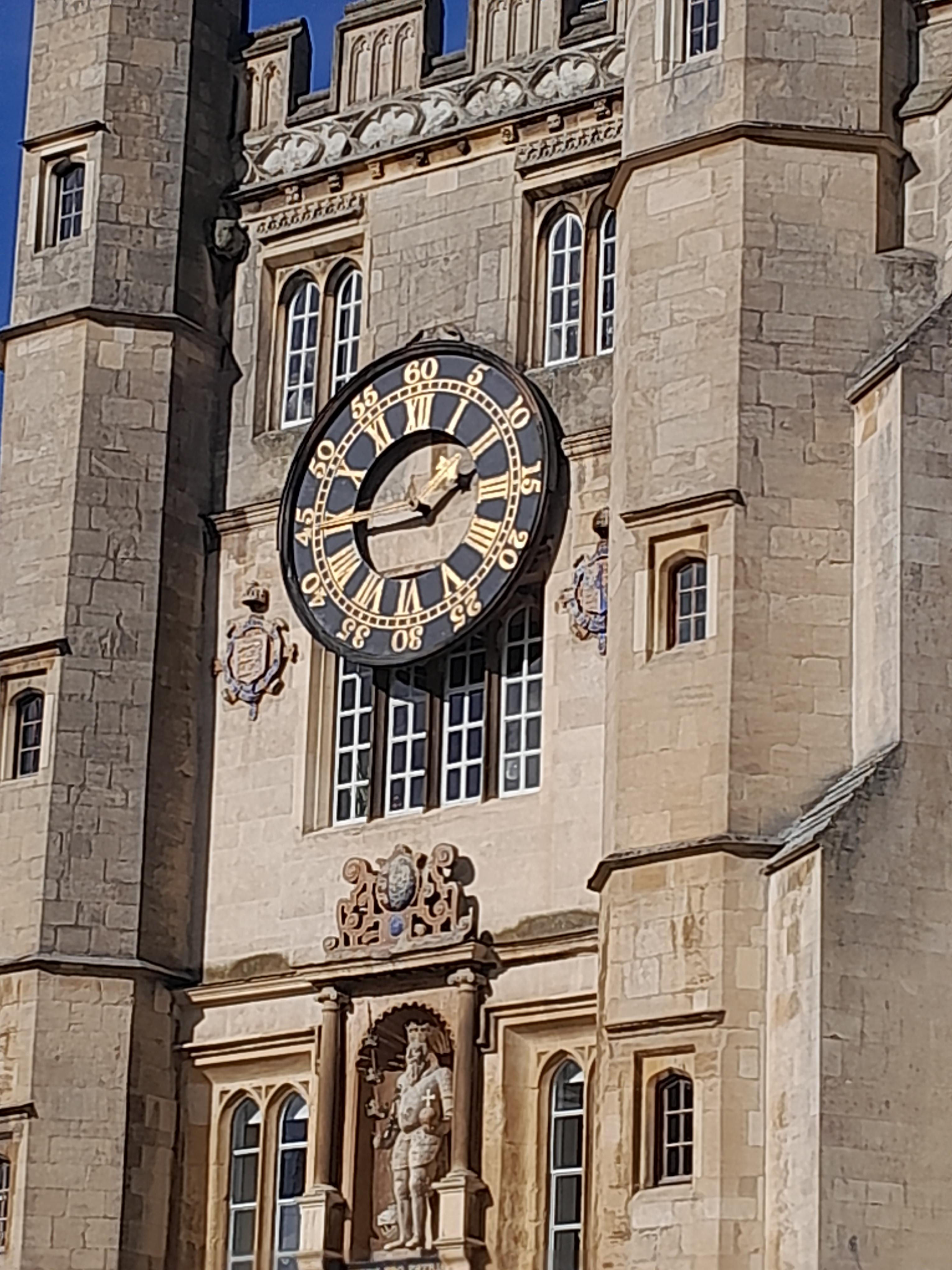
Trinity Great Court, with the loquacious clock

Trinity chapel, with St Johns behind
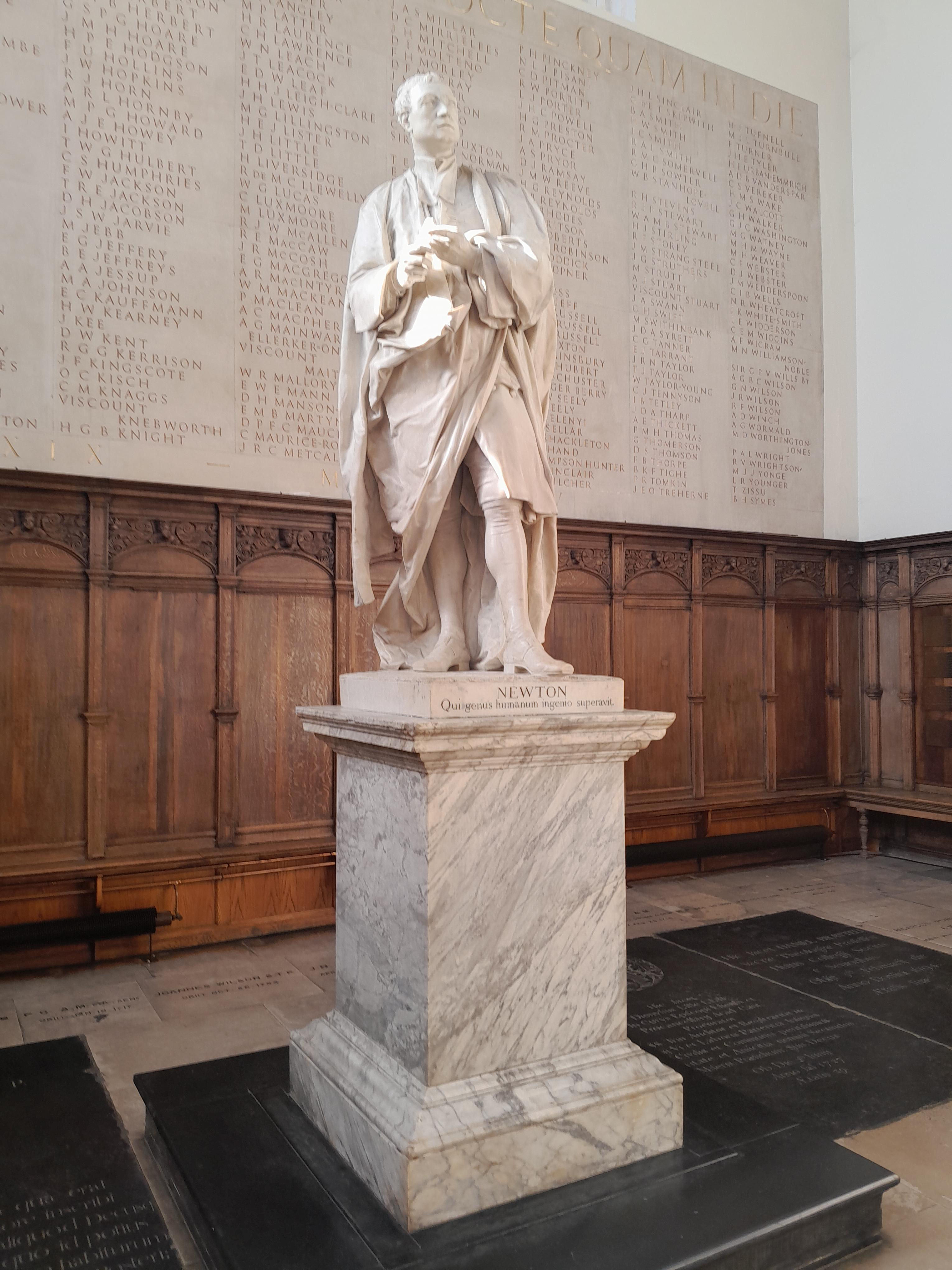

Isaac Newton's statue, in Trinity college chapel

Midsummer Common
... Companionships,
Friendships, acquaintances, were welcome all.
We sauntered, played, or rioted; we talked
Unprofitable talk at morning hours;
Drifted about along the streets and walks,
Read lazily in trivial books, went forth
To gallop through the country in blind zeal
Of senseless horsemanship, or on the breast
Of Cam sailed boisterously, and let the stars
Come forth, perhaps without one quiet thought.

Punting on the River Cam
There's a lot more of it! Click here for the whole of book 3.
© Jo Edkins 2026 - Return to Walks index