
| U3AC walks | U3AC walk - Mill Road art |
Route: Corner of Parkers piece, down Mill Road, turn left by the old library, through Ironworks, Hooper Street, Ainsworth St, Sleaford St, Sturton St, Milford St, through workshops, Mill Road cemetery
Length: under 2 miles Start: corner of Parkers Piece near swimming pool Finish: Mill Road cemetery
Introduction: Looking at art along Mill Road to the railway bridge, both official and more informal
On Parker's Piece, near the swimming pool, there is a statue celebrating the Cambridge Rules. Before 1848, there were no accepted national rues for Association football (or soccer). Public schools each had their own rules. When these school boys came to study at Cambridge University, this caused problems! So they drew up a set of "Cambridge Rules", and these are given on the statue. These were influential in the future national rules for football. The Football Association (The FA) was formed in 1863. When drawing up the rules for the sport, there was much debate between those who wished to run with the ball and "hack" (hit the shins), and those who did not, such as the Cambridge Rules. The "non-hackers" won, and the Cambridge Rules became highly influential in the FA rules. The Sheffield Rules were published in 1858 and were the first detailed set of rules of football to be published by a football club (as opposed to a school or university). But the Cambridge Rules came first!
The artwork gives the rules in different languages, to show the international spread of football. It is teamed with Street Child United which uses sport to give a voice to street children. So this is only part of the artwork. Other parts are located around the world. The website of the sculpture is here. It says "One large stone cut into nine, engraved with the laws of the game in different languages. Four stones stay on Parker's Piece, the others travel to five countries across the planet in a cultural exchange."
The artists are Alan Ward and Neville Gable, and it was "unveiled" in 2018 (by taking off the football scarves in the third photo.)


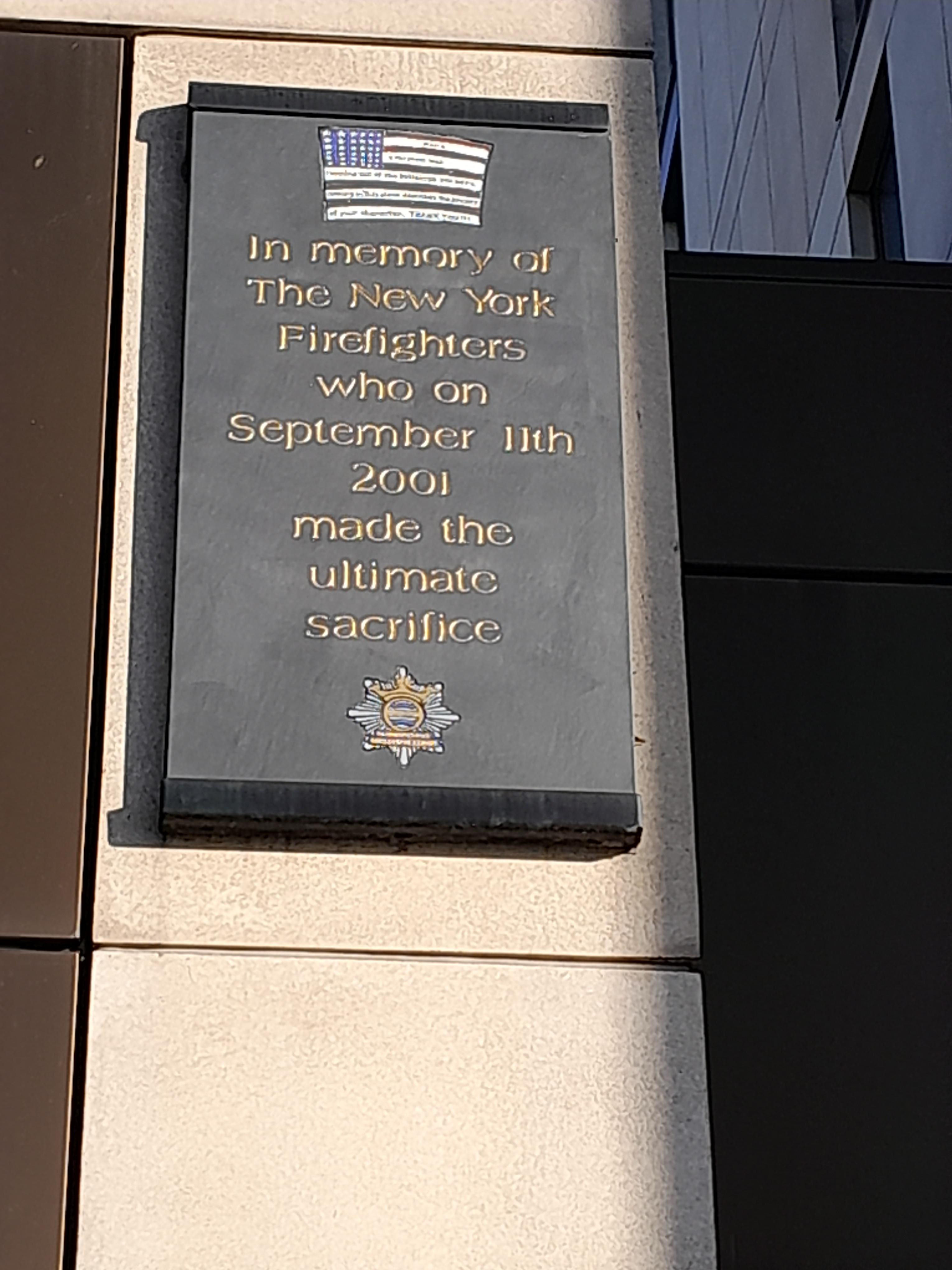
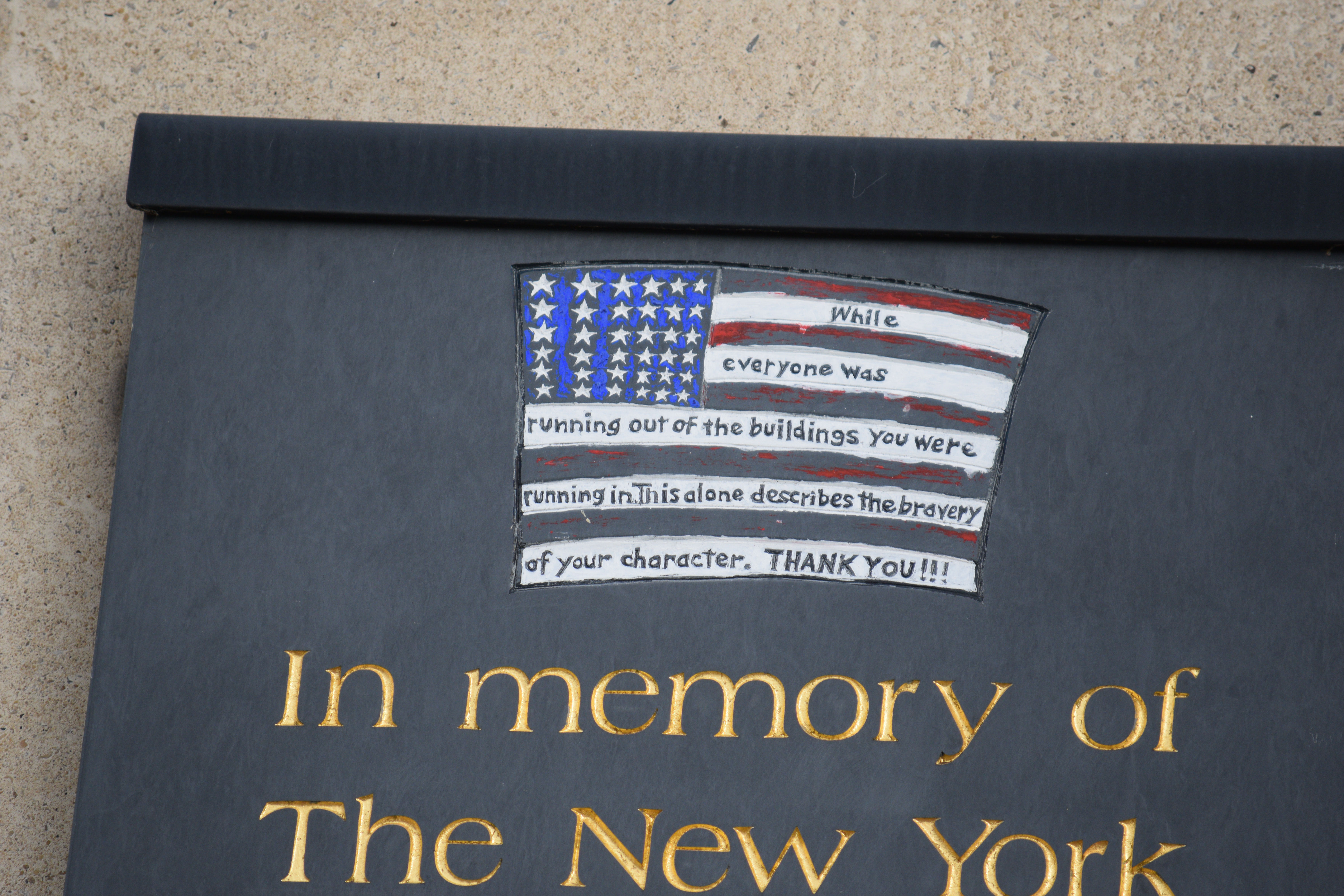
There is a memorial on the fire station to the firemen who died in the 911 attack, by the Cambridgeshire fire service. It is . There is some writing on the representation of the US flag. It says "While everyone was running out of the buildings you were running in. This alone describes your bravery of your character. THANK YOU!!!"

To one side of Parker's Piece, there is a patch of green called Donkey's Common, with the swimming pool. This has an attractive roof, like a wave. Tucked behind it, among some bushes, is a statue of some swimmers.
It has a plaque which says "Swimmers: from the design of the late Betty Rea (1904-1966), by John W. Mills, unveiled in May 1966 by J.B.Collins Esquire, who as Mayor of Cambridge 1963-1964 launched an appeal to pay for the commission of this work."

I'm not sure whether this mural is temporary or permanent. It says: "The Human Touch" Fitzwilliam Museum. Thanks to Nelly Duff Gallery, Giacomo Run 2021"

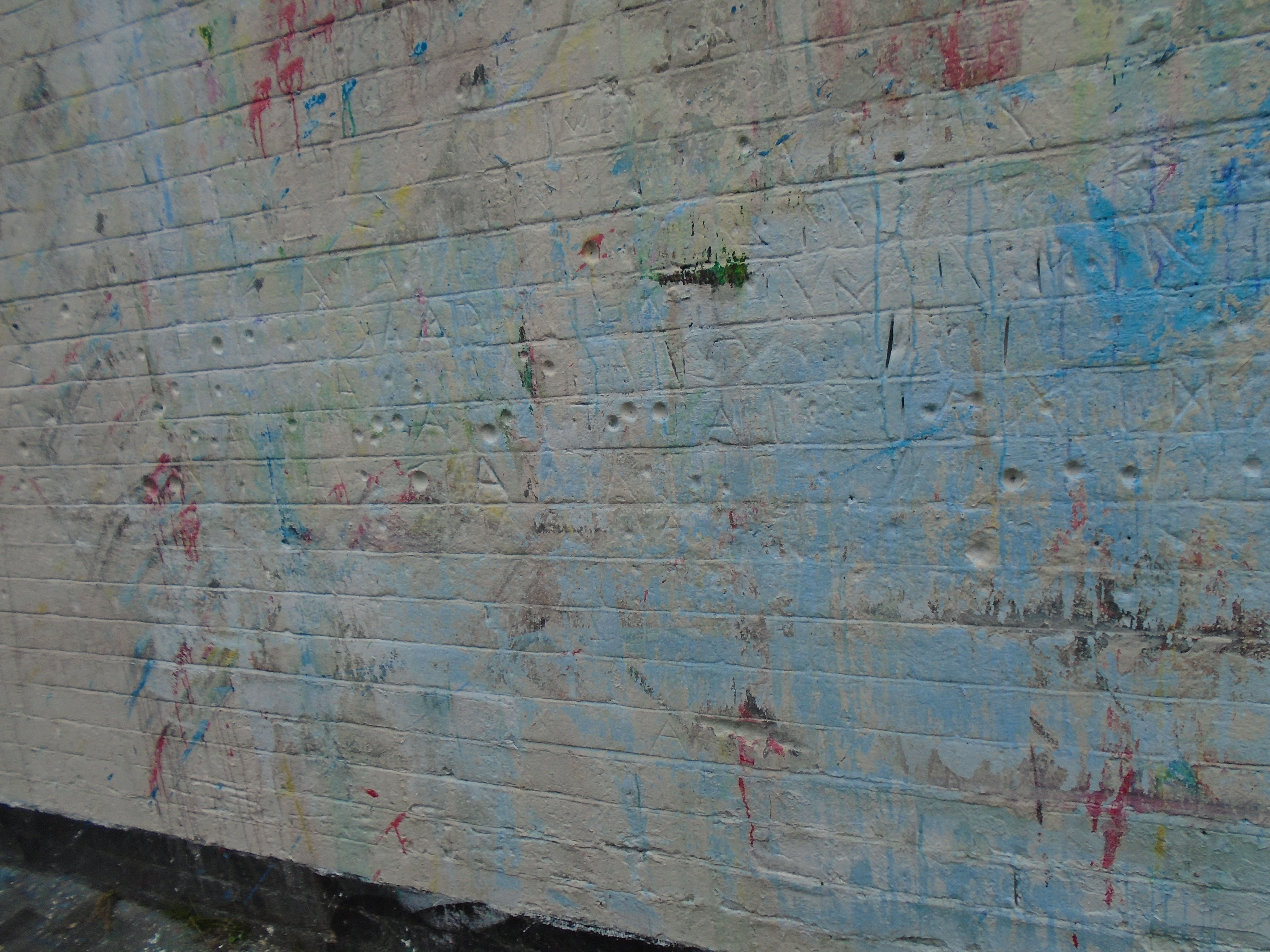
Walk along Mill Road until you see a Co-op, on the corner of Covent Garden. This building used to be a cinema (see second photo). The children attending used to queue along the wall in Covent Garden, and while holding their coins to pay to get in, they couldn't resist pushing a coin into the wall, and swivelling it, to gouge out a circular dent.
The Playhouse Cinema, built in 1913, was Cambridge's first purpose built cinema. It closed in 1963.

This archway came from the Bharat Bhavan, the Hindu temple which used to be housed in the old library, near the railway bridge on Mill Road. It was carved by hand in Rajasthan, a feat that took five years. It was created specifically for Cambridge and arrived here in 2006. in 2019, the old library was taken over for another use, and the archway was about to be thrown in a skip. However, Mr D'Angelico, who is part of the Mill Road Traders' Association, bought it from the council for £1. He wished to save it as he came from a family of stonemasons and recognised the quality of the carving. Funds were raised from local residents to install the arch in its current position outside Ditchburn Place. It was "opened" in 2023. The website about the project is here.


If you look down Kingston Street, you will see a mural advertising a record shop. The shop disappeared some time ago, but the mural has survived. There is a coffee shop called Hot Numbers in Gwydir St.

The library on Mill Road (listed Grade II) was built in 1897, by the railway bridge. It used to be the Bharat Bhavan and housed a Hindu Shrine. See the archway, above.

IronworksIronworks is a new housing development. The main entrance is by the Mill Road Library, Headly Street, but there is pedestrian (and cycle) access from Hooper Street. The artworks are described here.
In the past, this location has been home to a number of industrial activities, including a coprolite mill, a coal depot and an iron foundry, called the Eagle Foundry. The Eagle Foundry was one of the first businesses to capitalise on the arrival of the railway, relocating from Market Hill to Mill Road in 1847. The only locomotive ever to be built in Cambridge was made there. Then the area was occupied by the council depot and included some council offices. Many of the artworks are by Tom Pearman. He is fascinated by switches, knobs and levers. These are outside the new community centre. The knobs are labelled Open, Join, Receive, Respond. These may be the PYE radio switches. The website says "The 'PYE Radio Switches' reference the radios and TVs, manufactured at the former Cambridge based PYE factory, having been in the homes surrounding the development and many of the PYE workers, local residents of Petersfield and the surrounding areas'. Note that the artist has also carelly labelled the entrance intercom!
Walk towards the railway, then turn right into a small court.
This memorial is in the same area, installed in 2023. The plaque says "In memory of Allan Brigham 1951-2020. Road sweeper for Cambridge City Council, trade unionist, historian, tour guide and community enthusiast. Allan loved Mill Road and Mill Road loved him. Broom designed and made by Scott bailey & Tas Claydon of McKays, Cambridge. Concept: Mill Road History Society." This is wonderful! It looks as if Allan has just left his broom propped up against a wall while he investigated something more interesting. The Council Depot where he worked from has been replaced by the Ironworks development.
I suspect that these aren't artworks! Very attractive, though. They are in the same outdoor area. I hope the bees don't get confused and go into the bird box!
Timekeeper, IronworksThe Ironworks website says of the following: "Jo Chapman's 'Timekeeper' piece has been installed. Our thanks to the local community members who took part in the workshops and helped create this piece and the poem it contains." The poem is on one end. It says
What is a piece of land called
This is close by. I don't know whether it is an artwork or not!
This one is easy to overlook. It is close to the previous artworks, but you need to look between two buildings, and look up. It is Train Signal Switch by Tom Pearman. The ironworks website says "Train Signal Switch references the Eagle Foundry, which occupied the central part of what was to become the council store yard." One of the levers says "EAGLE FOUNDRY - G.E.R MAIN LINE". The railway line is close by.
The correct name for this artwork is "Steam Power". It is by Tom Pearman, and was installed in 2022. The signs are part of the artwork, but tend to get overlooked. The artworks' website says "'Steam Power' is a piece referencing the site's use in the 1850s. Under the partnership of Headly and Manning, The Eagle Foundry manufactured a wide variety of steam-powered machinery and engines including engine boilers, gasometers and pumps for use on the land or for fen drainage. "
Pye StoolsThey look like TV knobs. Pye was a local manufacturer, mainly based over the river in Chesterton, but with factories throughout Cambridge. It made radios and TVs, as well as other electrical equipment.
These seem to be controls for scientific instruments. They are in the same square, near the buildings, in the coner.
Geldart muralsCarry on walking to get into Hooper Street. Turn right, then left, into Ainsworth Street. Carry on walking until you can see the Geldart, on the corner with Sleaford Street. This has some murals, painted during the pandemic. Originally the musician had a mask, but this has been removed.
Alex bike ringsSome jinking right and left takes us to Milford Street. On the corner with Gwydir St, there is the Alex, with rings for parking your bike.
Queen Victoria plaqueBy the bollards, there is the Gwydir Enterprise centre, and on the wall, there is this Victorian plaque celebrating Queen Victoria's Diamond Jubilee.
Walk through the Gwydir Enterprise centre into the cemetery. Bird Stones, Mill Road cemeteryIn Mill Road cemetery, there are a number of sculptures called Bird Stones. These are by the sculptor Gordon Young in 2014. His website describes the artwork. It says "The work was inspired by the cemetery's bird life. Each of the sculptures celebrates a species and their location found within the space, each work features bird poetry and a description of their calls." There are perches for the birds, and a groove along the top is intended to hold rain water, for the birds to drink. Most of the sculptures are stones, but one is made of wood, from the tree that used to be outside Holy Trinity in Cambridge City centre.
For other interesting things in Cambridge, try my Walks round Cambridge website, which covers other subjects as well. I have indexed all the walks that I have done for the U3AC (including this one) here. © Jo Edkins 2024 - Return to Walks index |


