
 Celtic knot II
Parts of a Celtic knot
Draw a double strand knot
Dots method
Pictures
Celtic Knots website
handout
In Celtic knots I, we looked at knots in illuminated manuscripts, and a technique which might have been used. But knots were also carved in stone, and that technique might cause problems. When you paint a knot, you can paint over what you have done already. Once you can carved a line, you can't stick the stone back again! To look at this problem, we need to specify words for different parts of the knot.
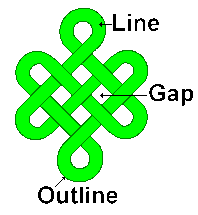
The first technique drew the line (with the thick pen with pale colour), then the outline (with the thin pen, in dark colour). But stone carving only draws the outlines. That suggests to me that they used a different technqiue.
There is a problem with drawing out the outlines. Here are simple symmetrical loops.

A line has an outline either side. Imagine the above is one side. Now try drawing the other side. It ends up assymetrical.

I first became interested in Celtic knots in the Isle of Man. There are many splendid carved stones there in a museum. I tried copying the patterns (before we were allowed to take photos in museums!). I drew simple lines, showing the general pattern of the knot, but then I tried to redraw it as outlines, and found problems, as above. However, there were some knots which didn't have one strand, but two.
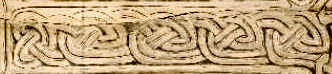
Naturally I assumed that this would be harder to copy, but to my surprise, I found it easier. With double strands, you can draw a line showing what the knot looks like. Then you draw two more lines, either side, to make the double strands. These two lines keep the knot balanced.
An example. Draw a weaving pattern. Leave gaps at the end of the lines.

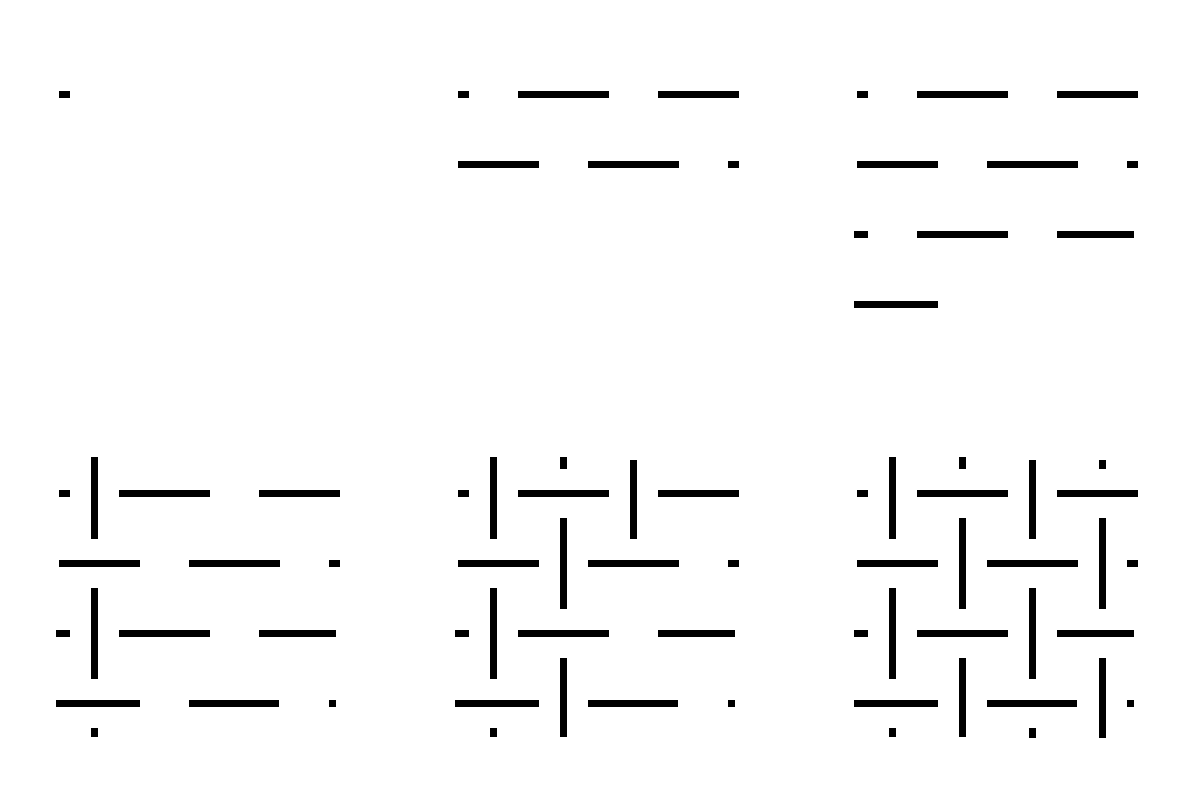
Draw lines either side. Tidy up as you go.
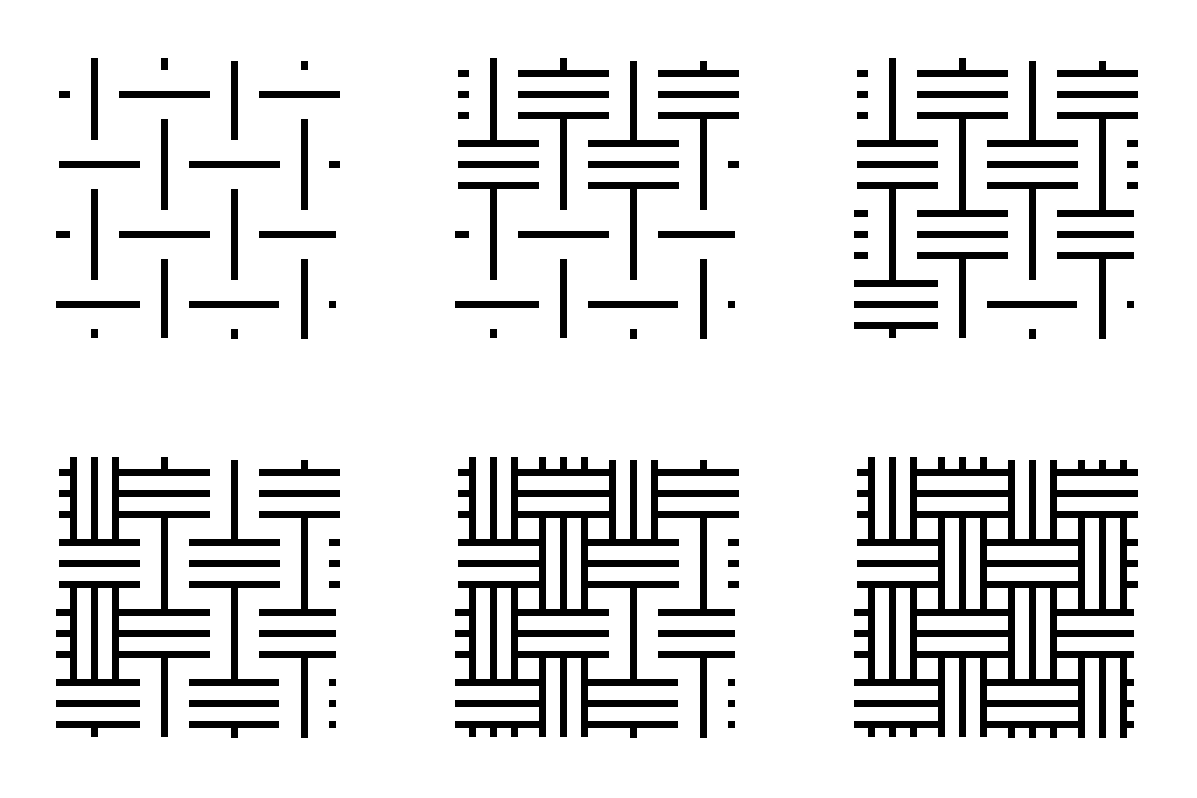
Add the edge bits.
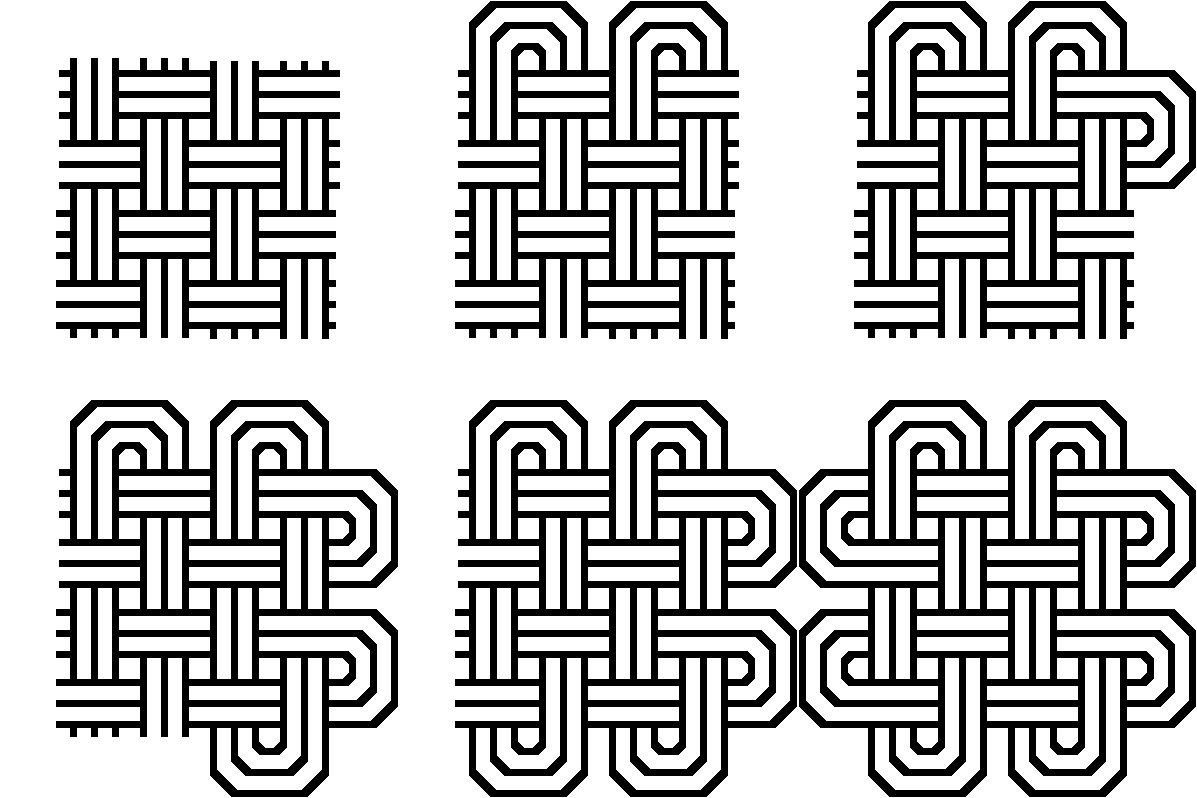
There is no evidence that this is what they did, but it seems logical.
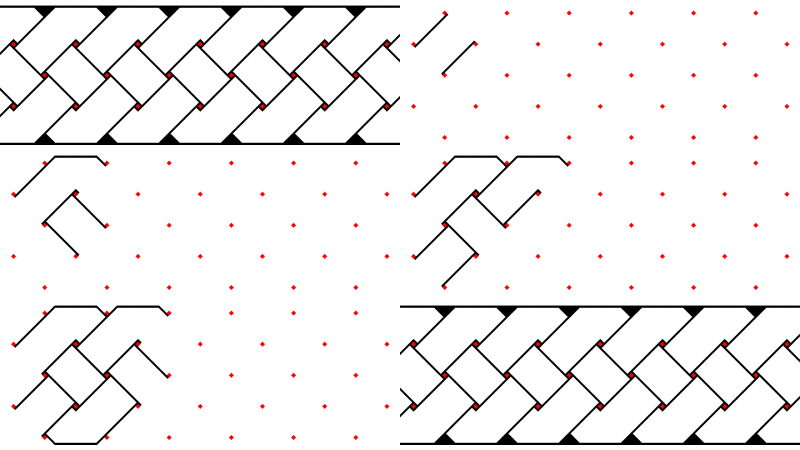
Not all carved stone knots are like this! So how did they do the single strand knot? I suspect that they drew the initial line, in charcoal, perhaps. Then they could carve the lines either side to keep the whole knot balanced. perhaps the origin of the double strand knot was someone decided to carve the middle line as well!The first method of drawing knots started with the line, then outlined it. The second method concentrated on the outlines. This third method starts with the gaps. It is a method used in illuminated manuscripts, and we know they did use it, as there are half completed knots.
You start by drawing in the gaps as little diamonds. Then you draw lines joining two diamond, but inside them. Go around the top if necessary. Then you draw the lines the other way. Carry on until the whole knot is completed. I suspect that you need to know what you are doing for this method! It only works for tightly packed, regular knots. The animations show a simple plait, plus some more complicated knots.
Simple knot:
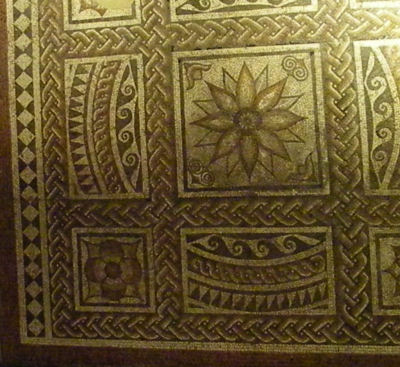
The Romans often used knots in their mosaics. They enjoyed shading the strands.
Fishbourne Palace 2C

Verulamium (St Albans) 3C

The Romans often used the design as a border. This leads to corners and junctions. These can cause problems. This Verulamium mosaic has an OK corner.
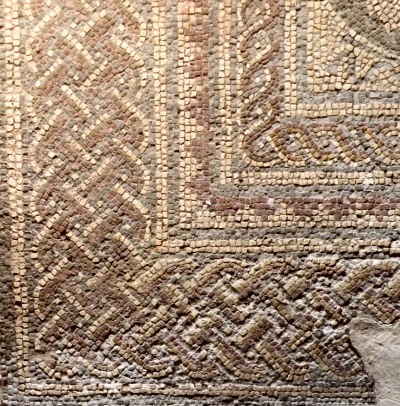
This Verulamium mosaic has dodgy junctions!


Celtic knots are not necessarily Celtic! There are Anglo Saxon examples, as well as Viking and Scottish ones.
Anglo Saxon buckle, Sutton Hoo 7C

Anglo Saxon sarcophagus, Derby 8C

Anglo Saxon cross, Gloucester, 9C
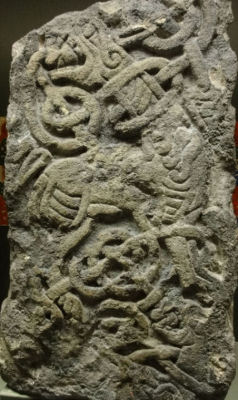
Kirkyard stone, Aberlemo, Scotland 8C
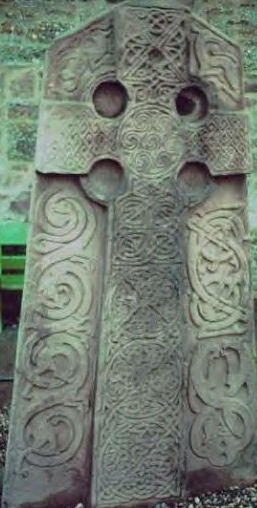
Maughold cross, Isle of Man
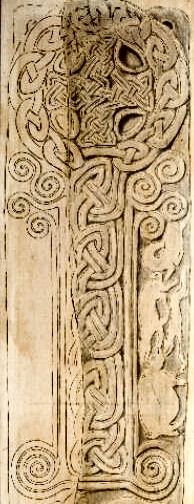
Dragon cross, Isle of Man 11C
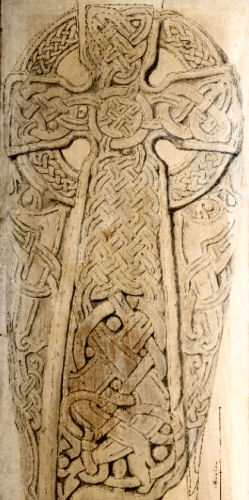
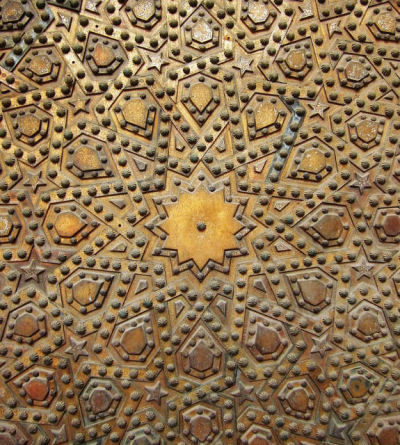
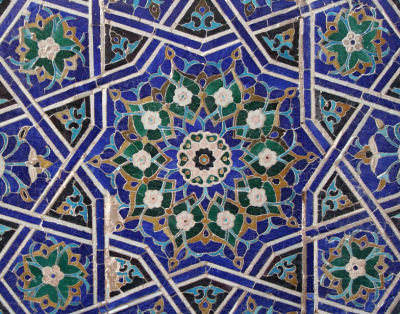
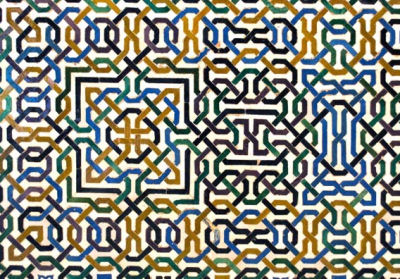
Since most of Islamic pictures shunned human or animal forms, they enjoyed complex decorations such as interlace (Celtic knots). Their name is girih (Persian for knot).
Qur'an 12C

Sultan Hassan mosque, Cairo 14C
Samarkand, 14C
Alhambra, 14C
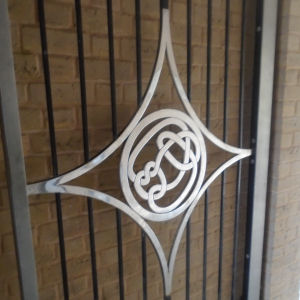
The Isaac Newton Institute in West Cambridge, on Clarkson Road, has a pair of gates featuring mathematical knots each with eleven crossings. The knots are distinct from each other but you will need to look very closely at both gates to see the subtle difference between the two knots. The south gate shows the knot discovered by J H Conway, a Cambridge mathematician in 1970. The north gate shows a knot studied earlier by Kinoshita and Terasaka.

© Jo Edkins 2025 - Return to Patterns index
