Churches in Cambridge
This is not an exhaustive list of all the churches in Cambridge. Also, I have not included the college chapels. Some of these churches are elsewhere on this website as well. I give a link to the churches' listing information, which gives details of dates, etc. Dating churches is hard since the old ones have been restored, often more than once. Some churches are listed A, B or C rather than I, II* or II. They are equivalent grades.
This is not a walk. The churches on this page. are arranged in rough chronological order. You could start at Little St Marys and walk north ending at St Peters, making a brief forray to see St Benets, and that would cover most of the city centre churches. Otherwise, visit these buildings when you are close to them or go to see any that interest you. There is a scale at the bottom of the map. A kilometre is just over half a mile. Things worth looking at are marked in red. Click on them, or on the links, for descriptions and pictures.
These churches are mostly Church of England, and mostly in the Diocese of Ely.
Click here for a website covering nearly all of the Cambridge churches, as well as others in Cambridegshire, with quite a bit of information.
| Church | Earliest Date | Connection with university |
|---|---|---|
| St Benet | 11C | Chapel of Corpus Christi until Tudor times |
| Church of the Holy Sepulchre (Round Church) | 12C | |
| St Peter | 12C | |
| St Edward, King and Martyr | early 13C | North chapel originally used by Trinity Hall and South chapel by Clare Hall |
| St Andrews the Less | early 13C | |
| St Clement | 13C - 14C | |
| Little St Mary | 14C | Chapel of Peterhouse until 1632 |
| St Andrews, Chesterton | 14C | |
| St Michael or Michaelhouse | 14C | South aisle first used as chapel by Michaelhouse and north aisle by Gonville Hall |
| St Botolph | 14C - 15C | Queens' College have been patron since the 15th Century |
| Holy Trinity | Early 14C | |
| Great St Mary | 15C | University church |
| Great St Andrew | 19C (18C monuments) | |
| All Saints | 1864 | |
| St Matthew | 1866 | |
| St Giles | 1875 | |
| Our Lady and English Martyrs (Roman Catholic Church) | 1887 | |
| Unitarian Church | 1927 |

I meant this page to be only about churches, but I took some photos of Trinity Chapel, and wanted somewhere to put them!
| Chapel |
|---|
| Trinity Chapel |
Click on the photos for a bigger version.
St Benets church is on Benet Street. The church is listed Grade I. St Benets is the oldest building in Cambridge and the oldest church in Cambridgeshire. The tower is Saxon, built around 1033. The church is usually open. It is still a parish church. Click here for more, on this website.

The Church of the Holy Sepulchre is usually known as the Round Church. It was built around 1130 and is listed Grade I. The original congregation of the Round Church found the building too small, and now use Great St Andrews.This church is usually open, but you may have to pay. Click here for more on the Round Church in this website.

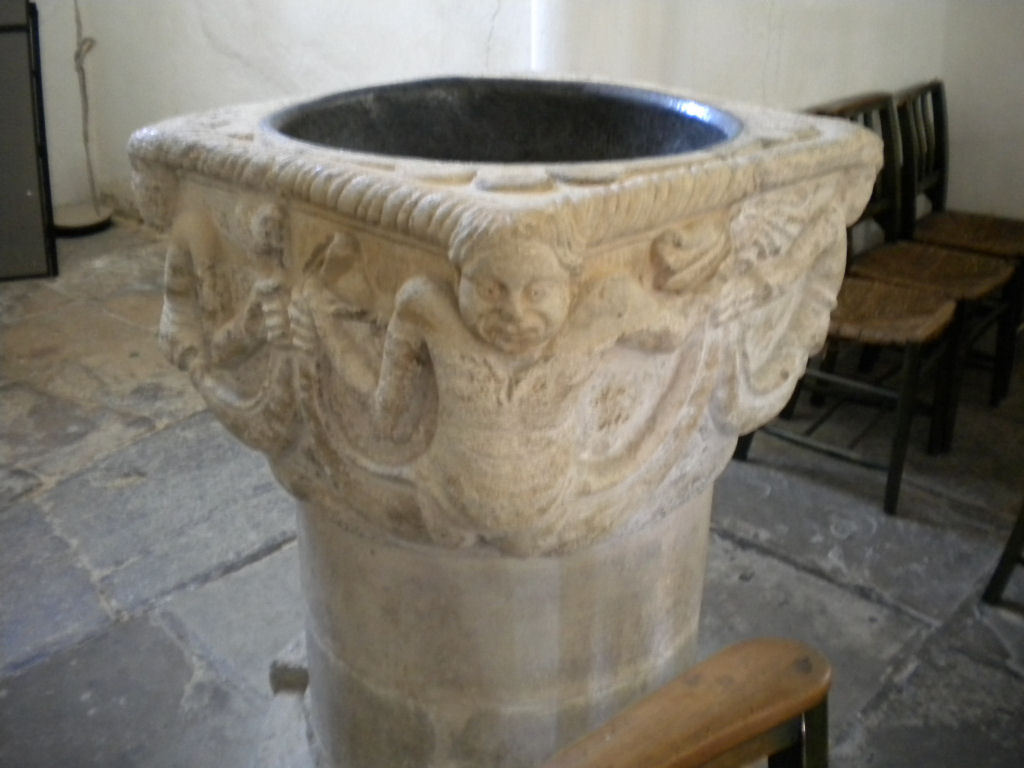
St Peter is on Castle Street, to the north of Cambridge. It is listed Grade II*. It dates back to Norman times, but has been largely rebuilt using original material. Click here for more on St Peter's Church in this website.
|
|
12th century font with mermen |
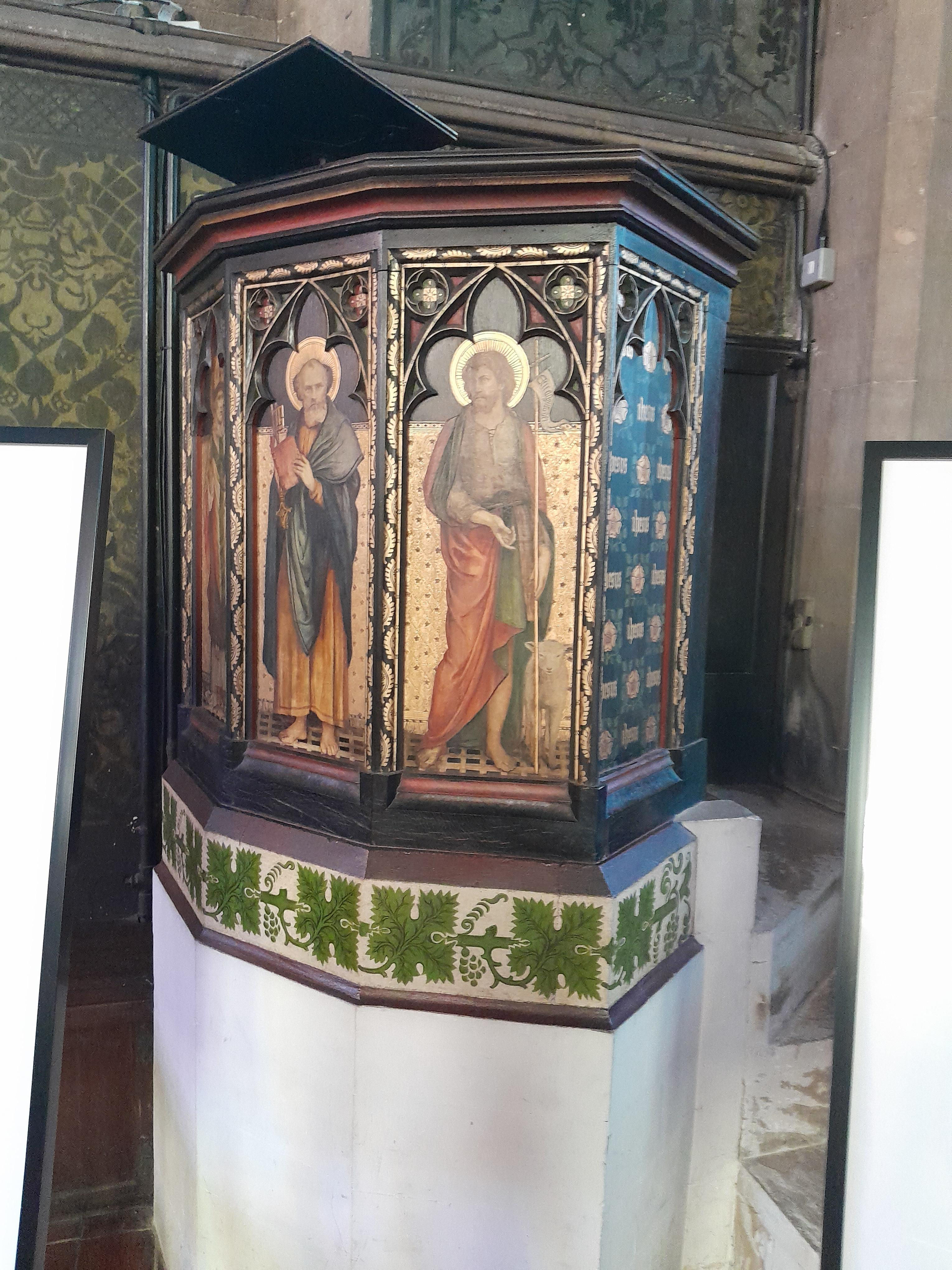
St Edward's church backs onto Peas Hill. Its entrance is in St Edwards Passage. It is listed Grade II*. Despite the rather startling brick parapet on top of the tower, it dates back to the early 13th century. The church is usually open. Inside, there is Latimer's pulpit. The pulpit dates from around 1510 and has linenfold woodwork. It is said that Thomas Cranmer preached here regularly from this pulpit. Hugh Latimer and Thomas Cramner were notable figures in the English Reformation, and were both burnt at the stake at Oxford under Queen Mary. There is a plaque in Kings Parade marking the sire of the White Horse, where Cambridge scholars debated the works on Martin Luther in the early sixteenth century. This church is often open.
|
|
Latimer's pulpit |
This church used to be known as St Andrew the Less, but is now called Abbey church. It is on Newmarket Road (listed Grade II). It is early 13th century, built by Barnwell Priory. The church was restored in the 19th century. The parish of St Andrews the Less has been taken over by Christchurch close by, and this church is used by a Polish congregation. It is kept locked. Click here for the other buildings of Barnwell Priory, and click here for more information on Barnwell Abbey.
 |
 |
 |
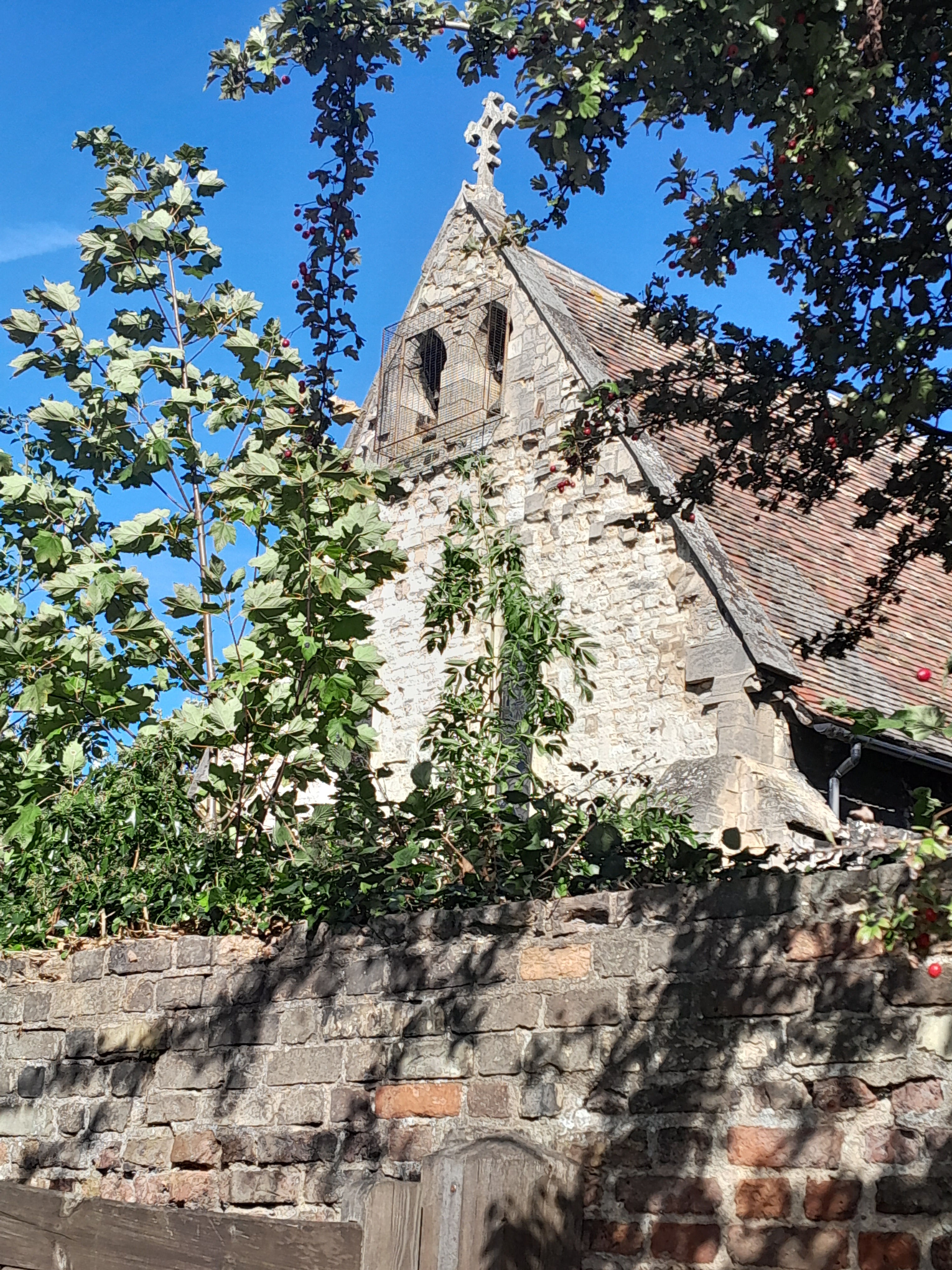 |
St Clement is on Bridge Street and is listed Grade II*. It was built in the second half of the C13 but restored several times since. St Clement is patron saint of mariners, and is connected with Danish churches (such as St Celements Dane in London). Cambridge was in the Danelaw, and the Danes settled round Quayside. Click here for the church's website.


The hexagonal font dates from the 15th century.

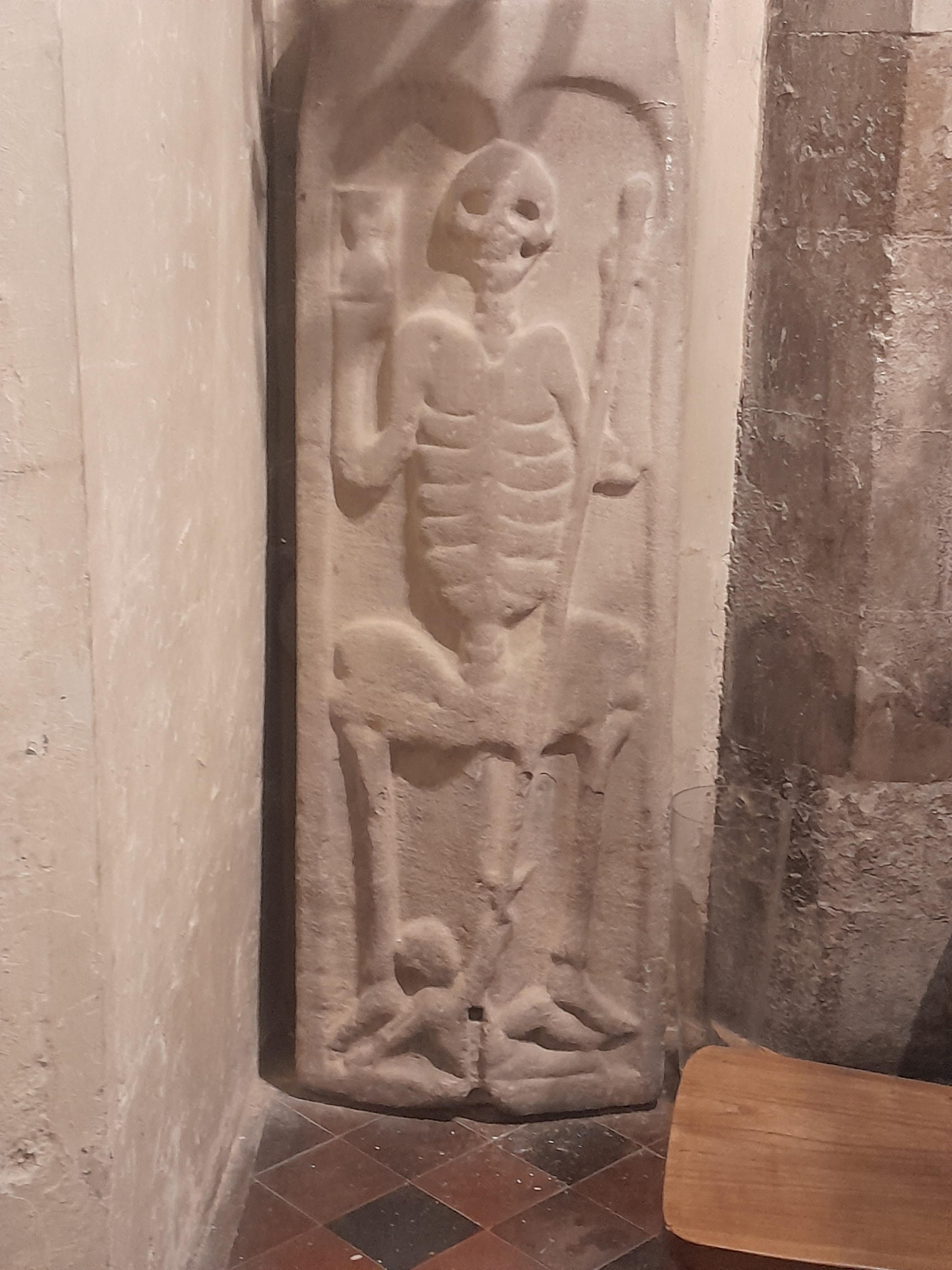
This stone sarcophagus lid shows death as a "Memento mori". It used to be outside, but has been moved inside the church.
Various descriptions of the church say "The church has the oldest memorial to a Mayor of Cambridge; the French inscription on the tombstone of Eudo of Helpringham who died in 1329 during his sixth mayoralty gives an early version of the modern form of the name of the town 'Caunbrege'." I couldn't find this. However, this link says "Rob Kinsey explained how one church not included in the tour, St. Clements, may contain a now inaccessible very early town brass. This had the indent of a foliated cross, commemorating Mayor Eudo de Helpringham, with a carved Lombardic inscription in a double border which required the reader to walk round the stone twice."
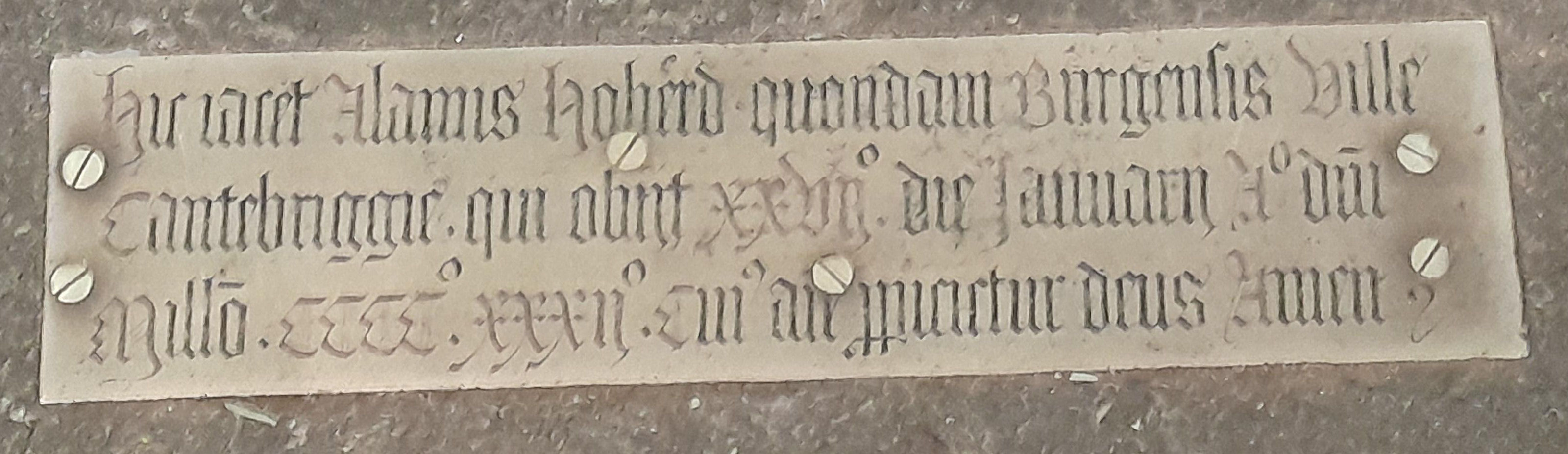
However, there is an early brass memorial, just by the font. The translation is "Here lies Alamis Hoherd (?) formerly Burgess of Town of Cantebriggie, who died 27th of January the year of our Lord CCCCXXXII (1432)" (although I'm not quite certain of the name).
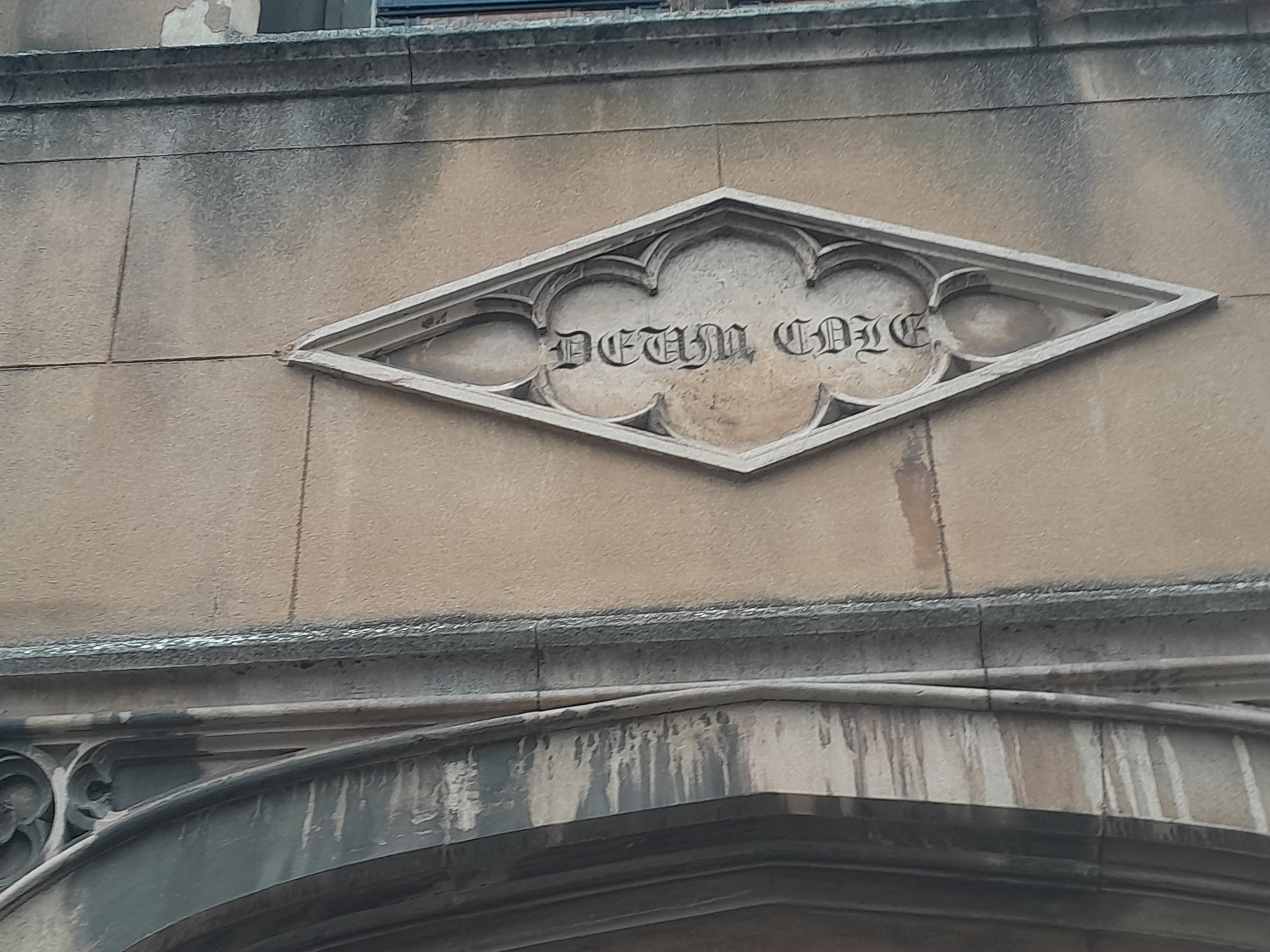
The tower was added in 1821-22, from a bequest by William Cole. Pevsner (famous writer of guides to English architecture) called the tower "somewhat silly"! There used to be a steeple as well, but this got taken down in 1928. That is why the weather vane has to be on a spike. Cambridge Chronicle 8.3.1822 included the following little verse:
Since to Old Cole (Heaven rest his soul,
Who lov'd God's worship holy;)
This spire we owe, we've plac'd below
His motto "Deum Cole".
"Deum Cole" means "Worshop God". It is a rebus or punning motto.

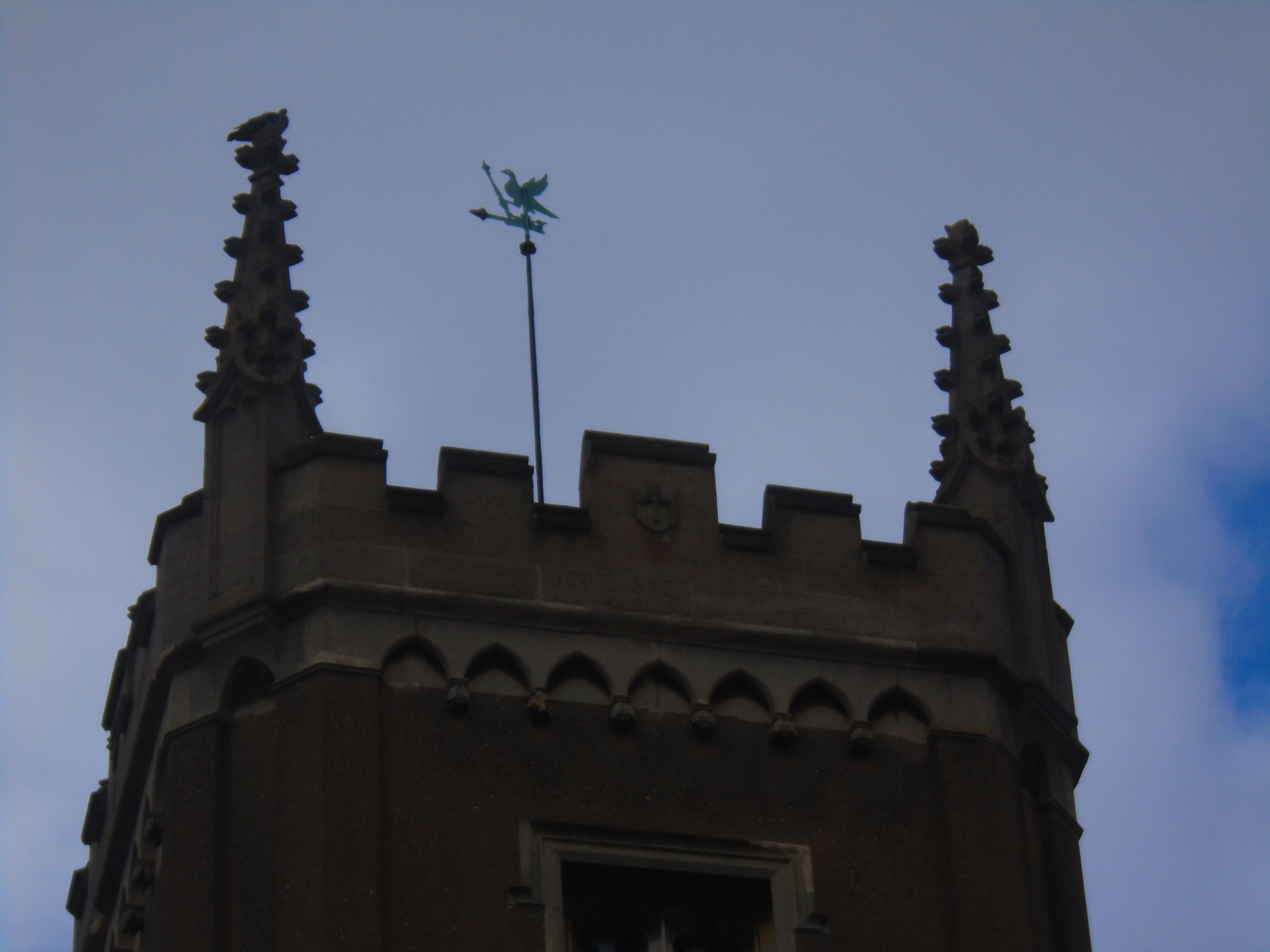
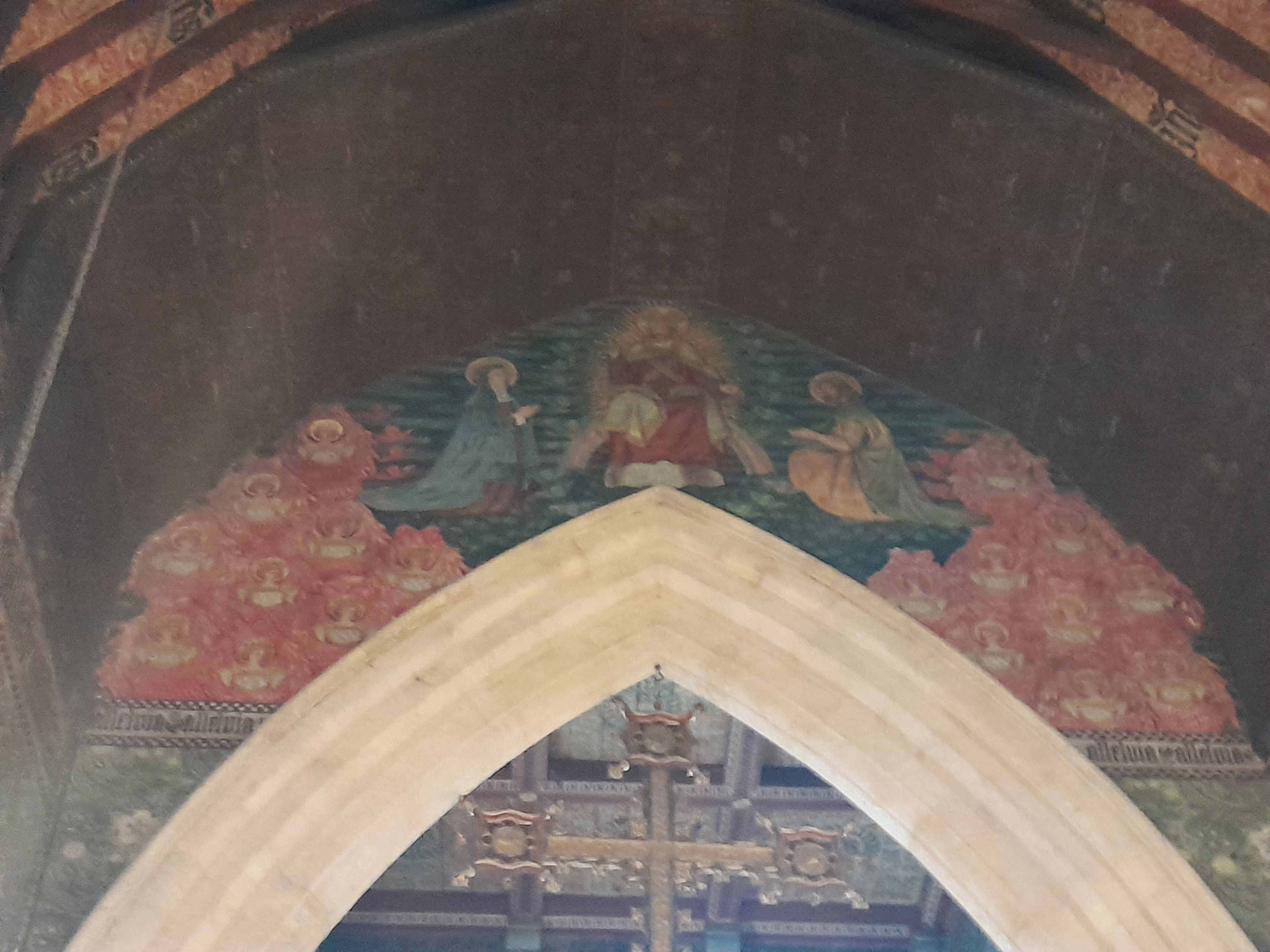
In 1872 the leading church artist, Frederick Leach, painted a mural on the east wall, showing Christ in heaven surrounded by the saints. It is widely regarded as Leach's finest piece. The roof of the chancel is also painted.


Little St Mary is in Trumpington Street and is listed Grade II*. There is a Great St Mary in Cambridge as well, see below. This church was mostly built between 1340 and 1352. It is a parish church. Originally it was dedicated to St Peter, and was the college chapel of Peterhouse.


The font has a cover which is suspended from the ceiling. The font dates from the 15C. The reproduction oak cover contains fragments of the original (1632).


This is a memorial to Godfrey Washington, priest of the parish, and great-uncle to President george Washington. The eagle and red stripes on the coat of arms might have inspired the American regalia.


This stone on the floor has a skull and cross bones as a "memento mori" (reminder of death).

The history of Little St Mary says "There has probably been a place of worship on the current site, just outside the original town walls, since before the Norman Conquest. Surviving fragments of typically Anglo-Saxon carved interlace from the original church can be seen inside the north entrance porch." I wouldn't call it interlace, myself.

The churchyard of Little St Mary is maintained as a wild garden.

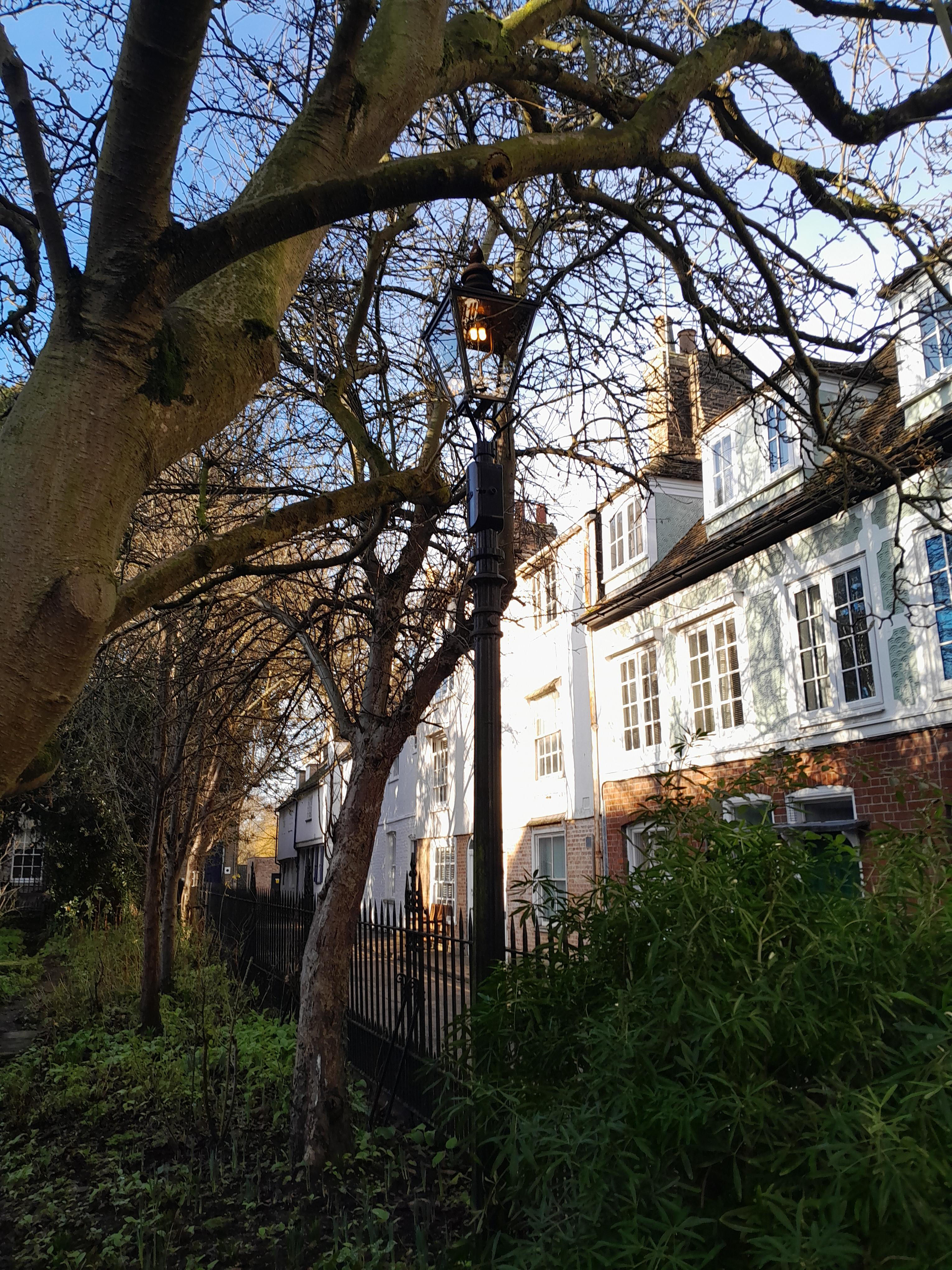
There are various gas lights around Cambridge, but most of them has been converted to electricity. However, there are two working gas lights in Little St Marys Lane, one near Trumpington Street and one on the other side of the road, in Little St Mary's churchyard.
This St Andrew's church is in Church Street, Chesterton (listed Grade I). The original church was 13th century, but the present church is principally 14th and 15th century, with 19th century alterations.


In the churchyard, by the church entrance, there is a gravestone with a skeleton on it, holding an hour glass, and, I think, an arrow. This is a memento mori (reminder of death).
Outside the church, to the left of the entrance, there is a plaque to the daughter of Gustavus Vassa (see above). Olaudah Equiano or Gustavus Vassa was living in what is now Nigeria when he was captured from his village at the age of 11 and sold into slavery. He was taken to Virginia as a slave. He was eventually sold to a ship's captain and travelled widely. After 16 years as a slave he managed to save enough money to buy his freedom. He came to England and wrote a book about his experiences, called The Interesting Narrative of the Life of Olaudah Equiano or Gustavus Vassa the African, written by himself. It was published in 1789 and became a best-seller. It turned many people against slavery. The plaque says:
Near this Place lies Interred ANNA MARIA VASSA Daughter of GUSTAVUS VASSA, the African. She died July 21 1797 Aged 4 Years.
|
Should simple village rhymes attract thine eye, Stranger, as thoughtfully thou passest by, Know that there lies beside this humble stone A child of colour haply not thine own. Her father born of Afric's sun-burnt race, Torn from his native field, ah foul disgrace: Through various toils, at length to Britain came Espoused, so Heaven ordain'd, an English dame, And follow'd Christ; their hope two infants dear. But one, a hapless orphan, slumbers here. To bury her the village children came. And dropp'd choice flowers, and lisp'd her early fame; And some that lov'd her most, as if unblest, Bedew'd with tears the white wreath on their breast; But she is gone and dwells in that abode, Where some of every clime shall joy in God. |
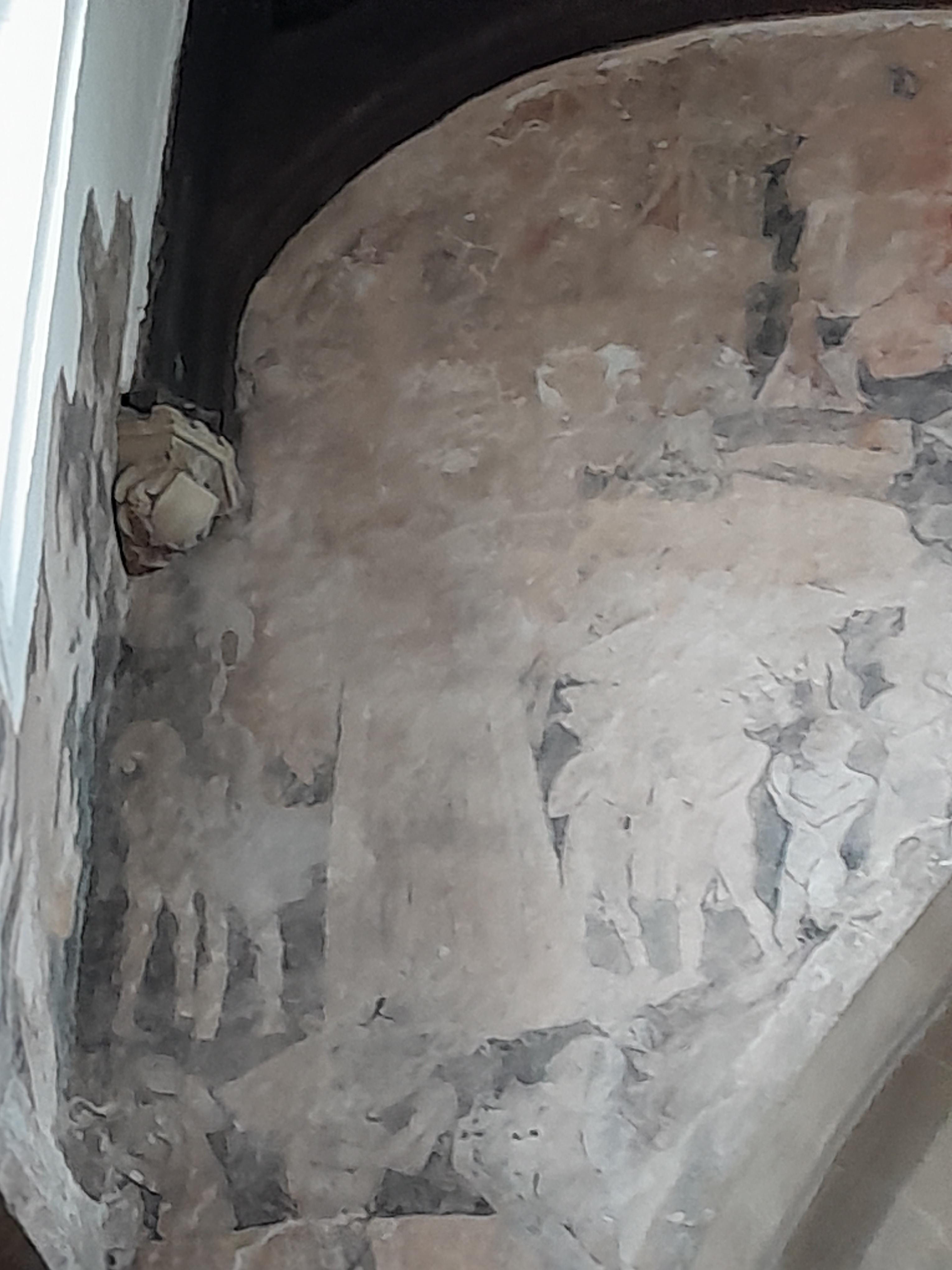
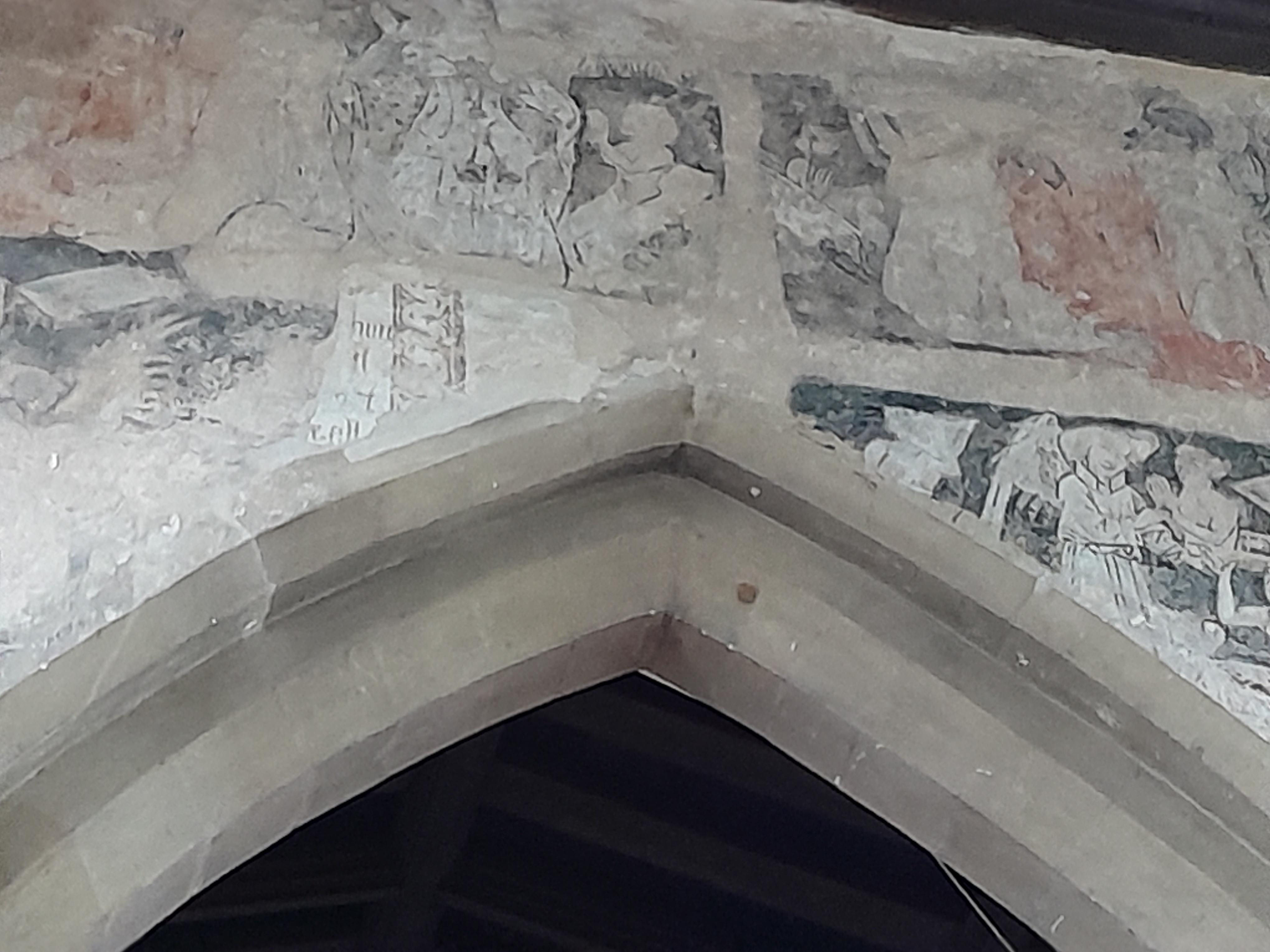
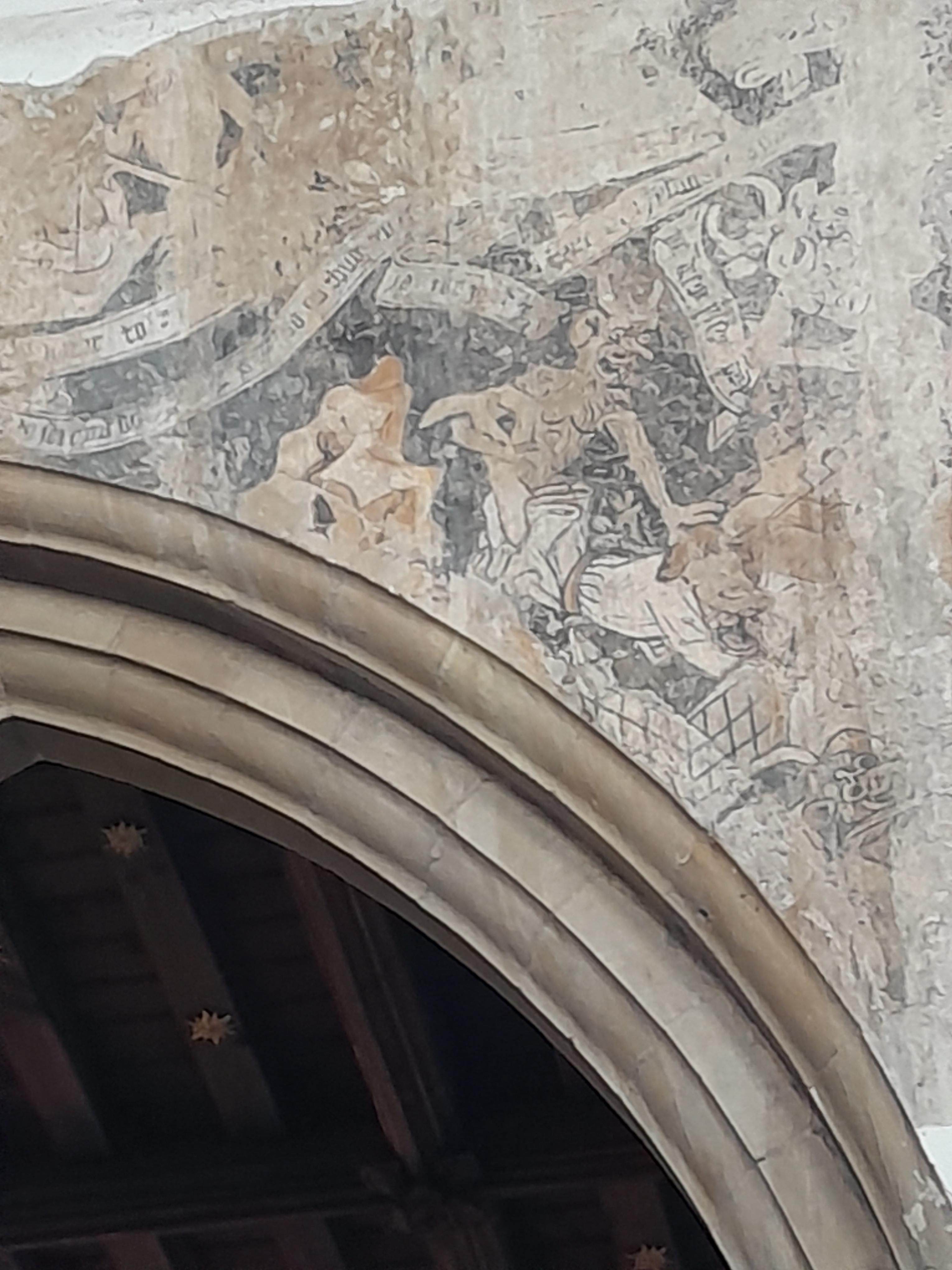
Inside the church there is a well preserved medieval wall painting of the Last Judgement. These Doom Paintings were common in medieval churches, but they considered to be 'graven images' during the Reformation. This picture was painted over, which preserved it. While it is faded and incomplete, you can still make out saints and demons. On the left of the arch there is a picture of the new Jerusalem, with its towers and walls, and the souls of the righteous are rising to everlasting heaven. On the right of the arch a number of devils are pulling people from their graves (including kings, popes and monks) and dragging them off to punishment. There is even a picture of a devil wearing reading glasses and ticking off names on his list. Click here for more information and some more pictures.


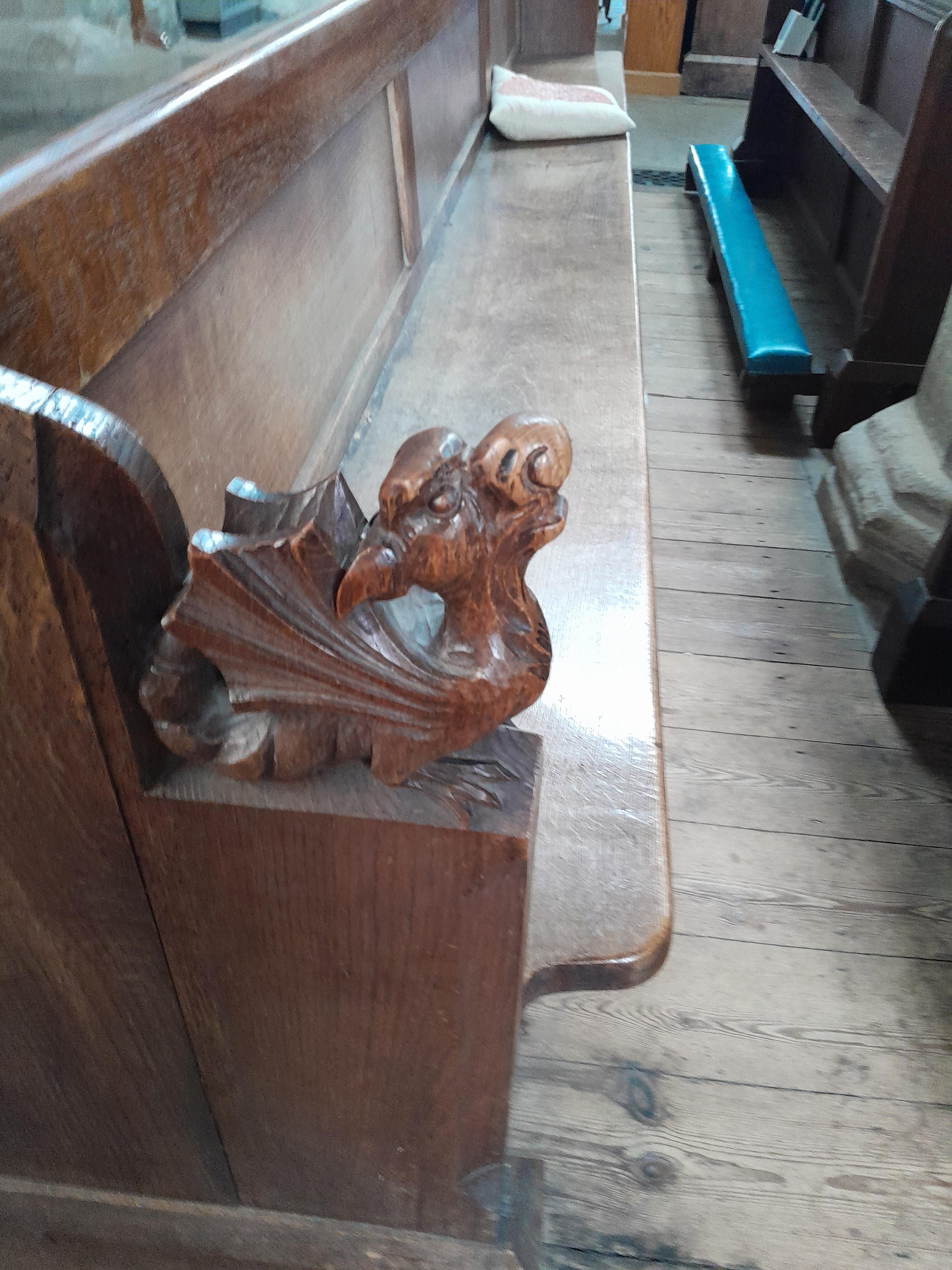
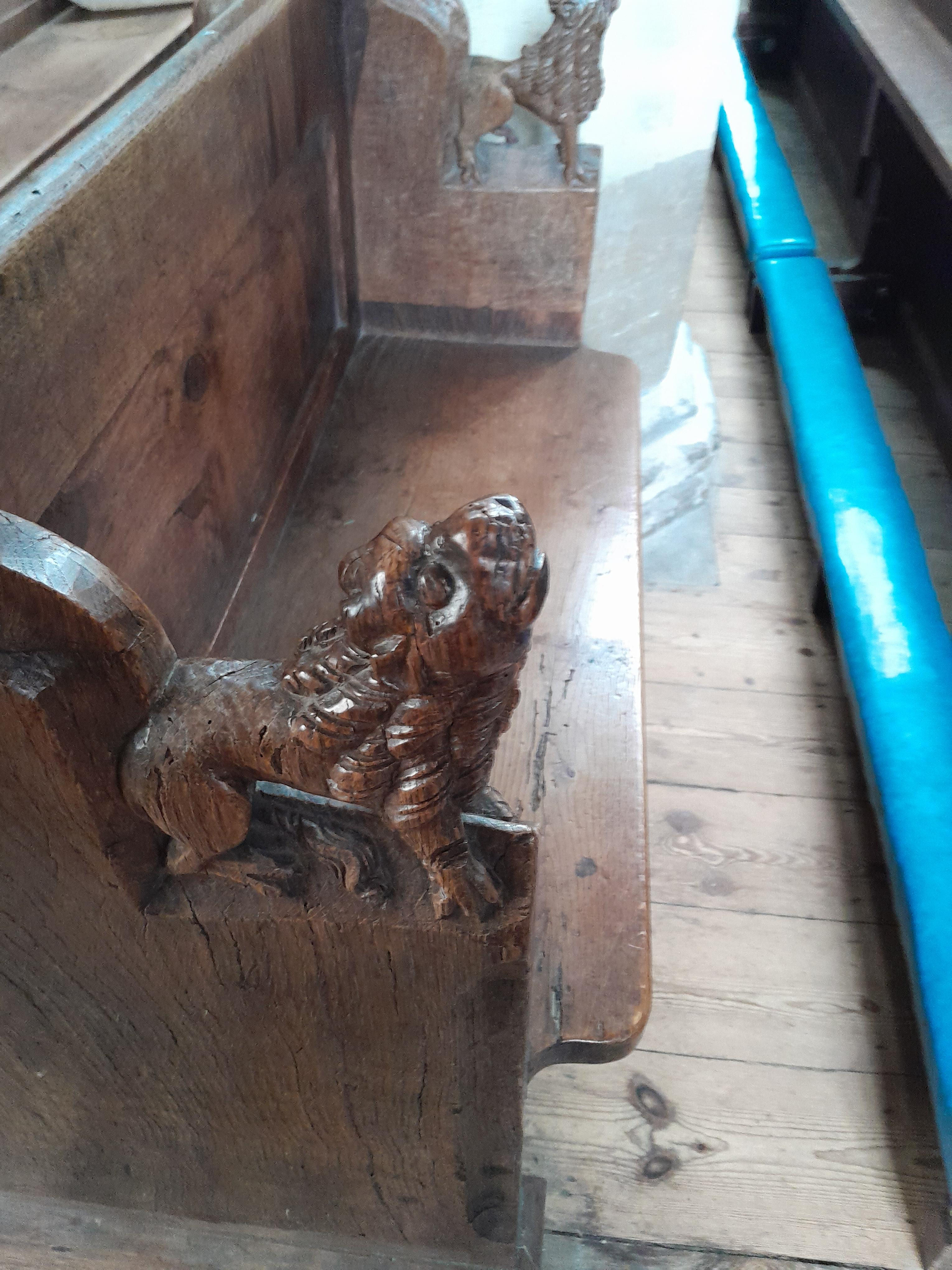
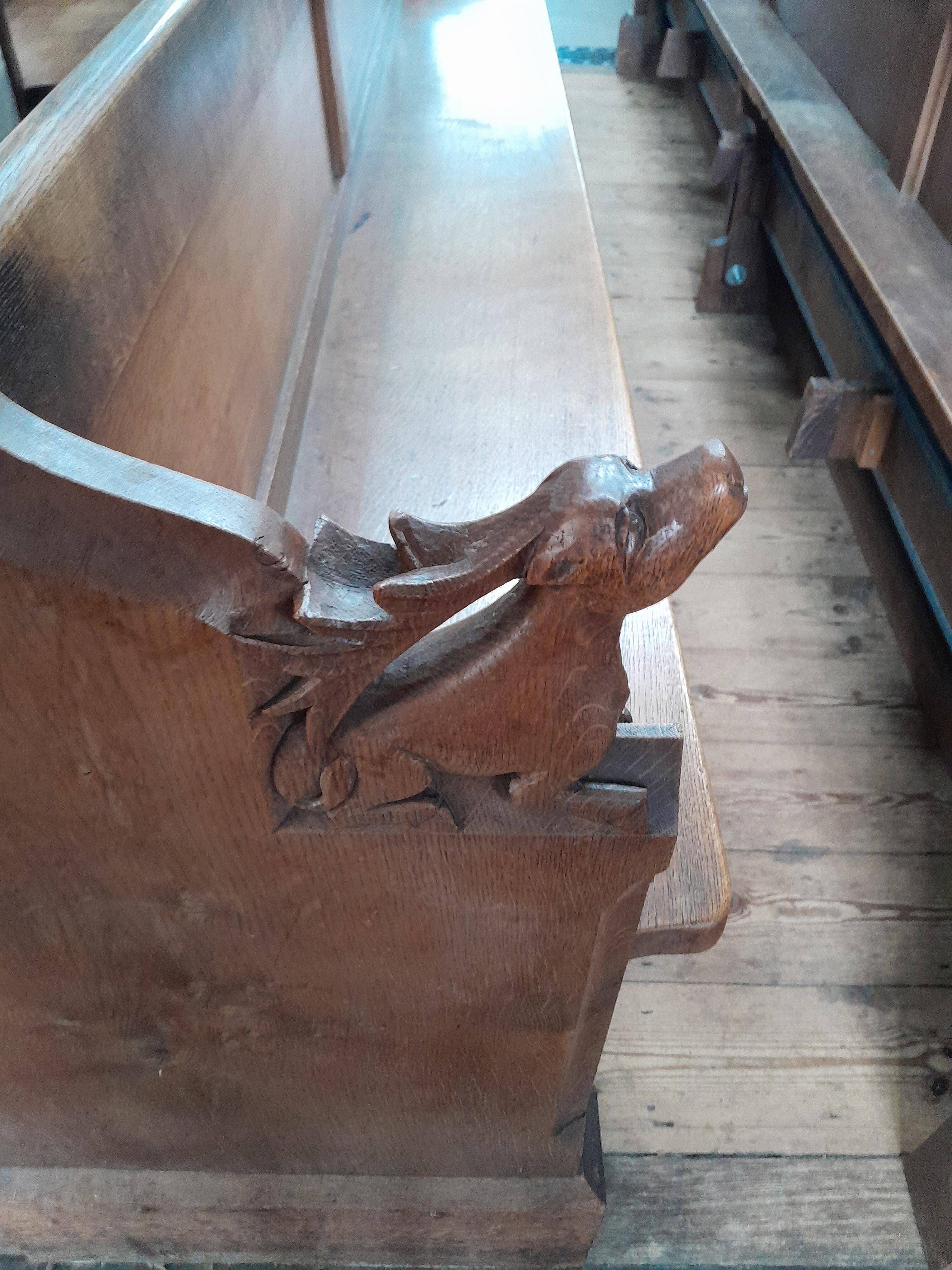
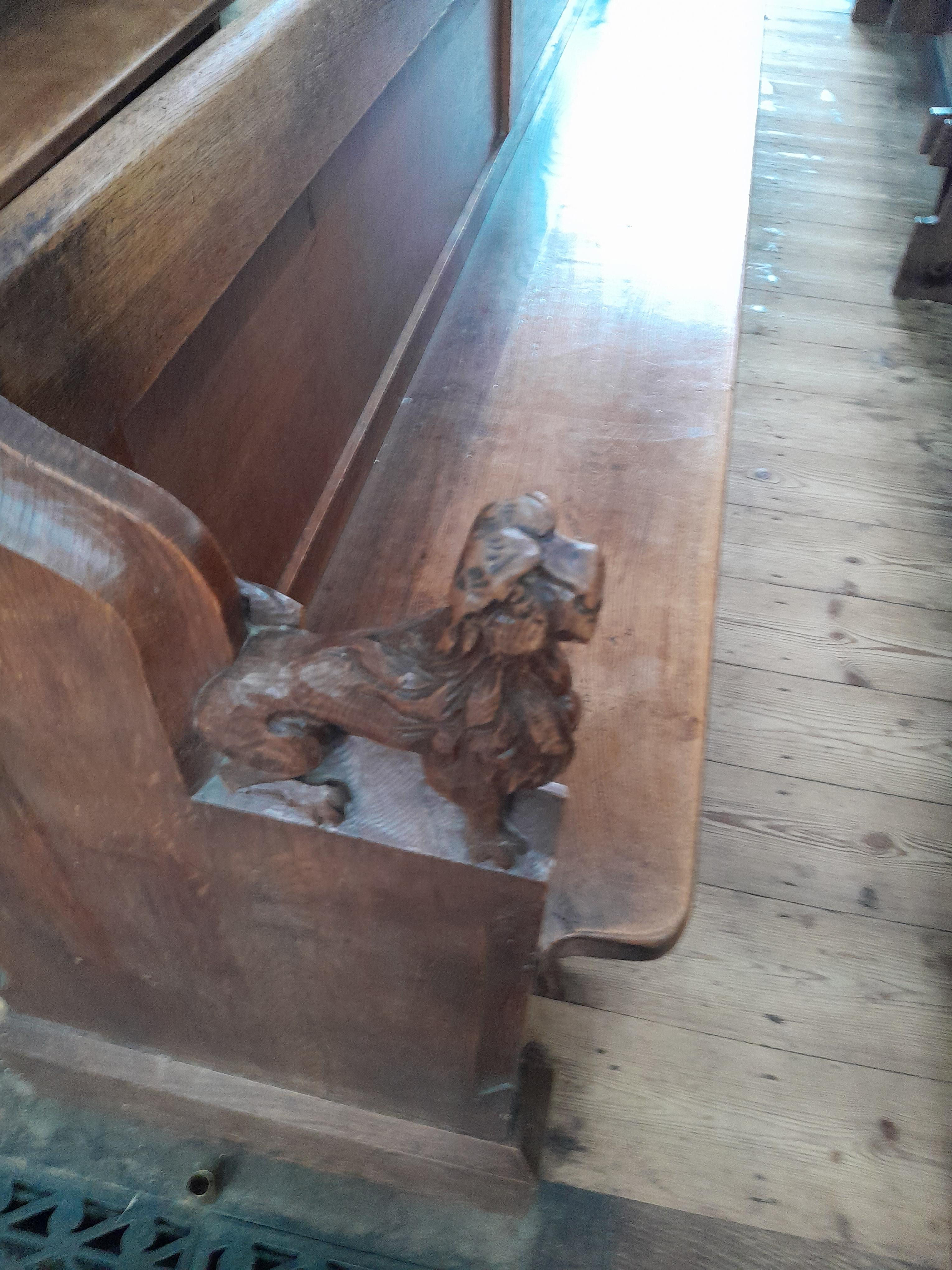
Some of the pew ends date back to 1430 (the rest are Victorian).




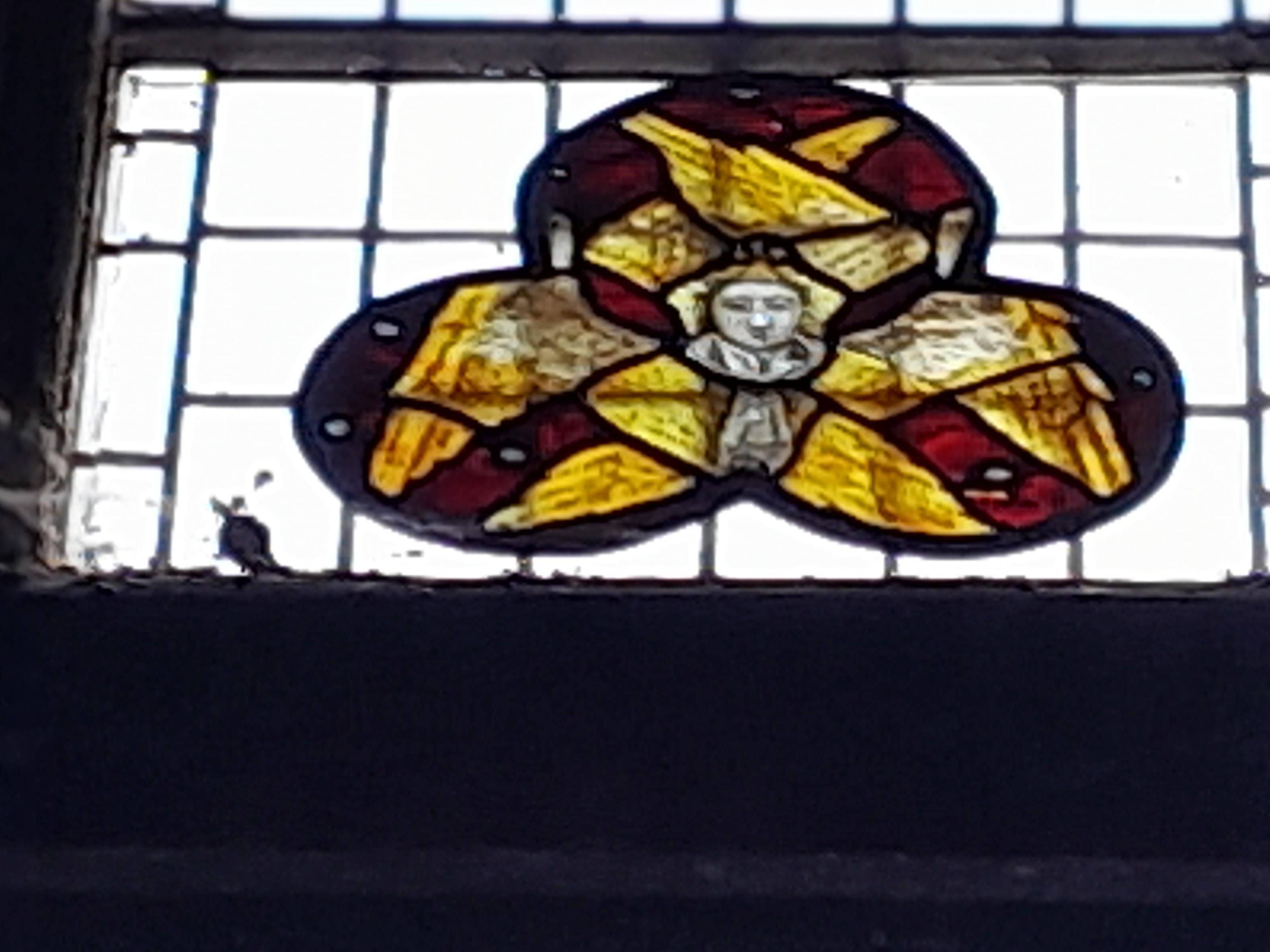
St Michael's church (listed Grade I) is on Trinity Street. It was built around 1327 partly as a chapel for Michaelhouse, an early college which later became part of Trinity College. There is a cafe called Michaelhouse, which runs various events and exhibitions. There is a small chapel to one side, with this muddled window. It also has a squint, with a view of the main altar.


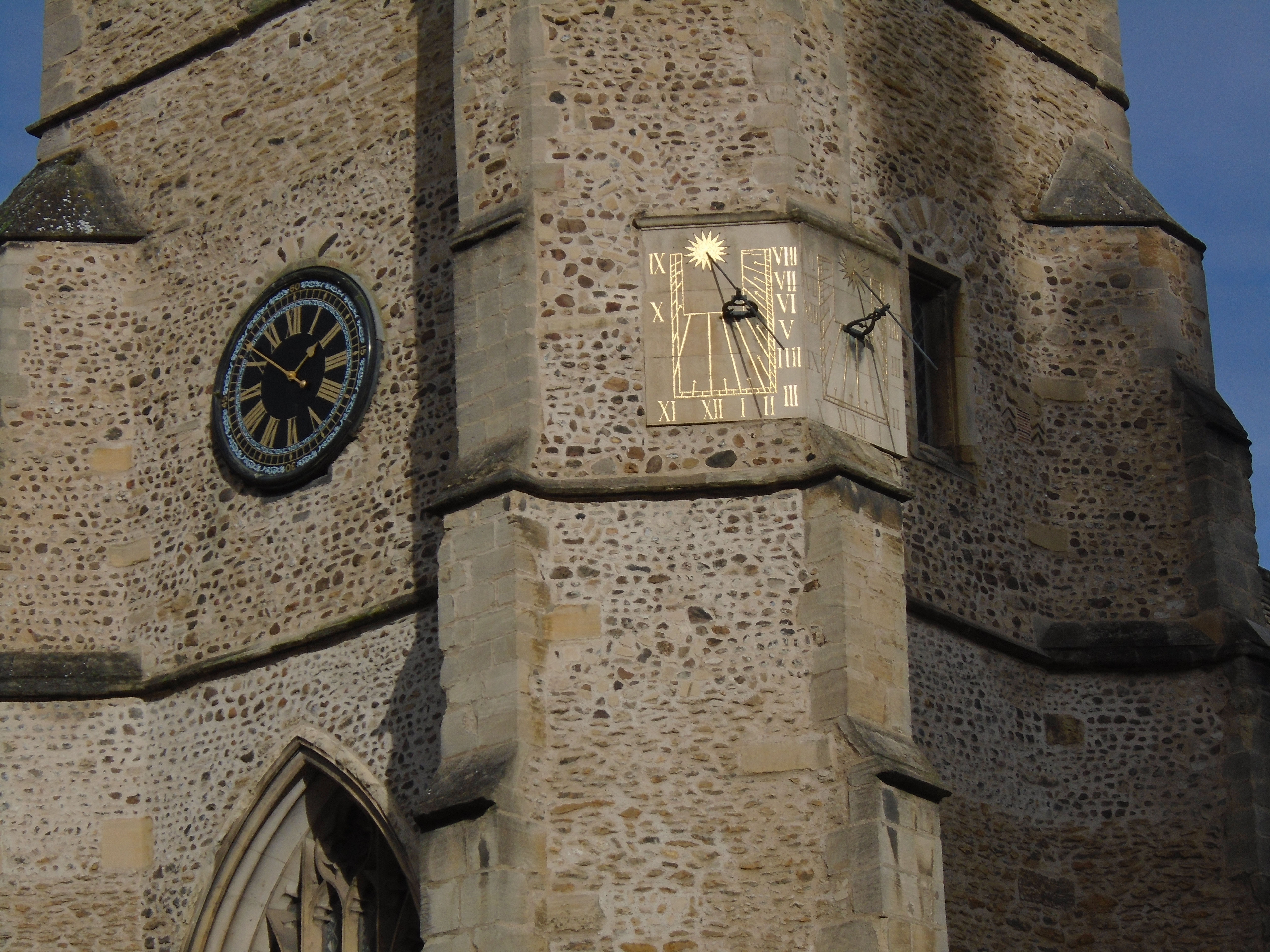
St Botolph's church (listed Grade I) is on Trumpington Street. The Church is dedicated to St Botolph, a seventh century abbot in East Anglia, who is the patron saint of travellers. The church was by the south gate of medieval Cambridge, through which travellers from London entered the town. The church was built in 1350, but there were Norman and Saxon churches on the site before. The tower, which is crowned with carved symbols of the four Evangelists, was added in the 15th century. There are sundials on it. The font and cover date from 1637.


The elaborate chancel was rebuilt in 1872 by the Victorian architect George Frederick Bodley and worked on by local artists Frederick Leach and G. Gray.


The font has a cover which can be lowered and raised.


The church has the only medieval rood screen remaining in a Cambridge parish church, but its paintings date from the late 19th-century restoration.


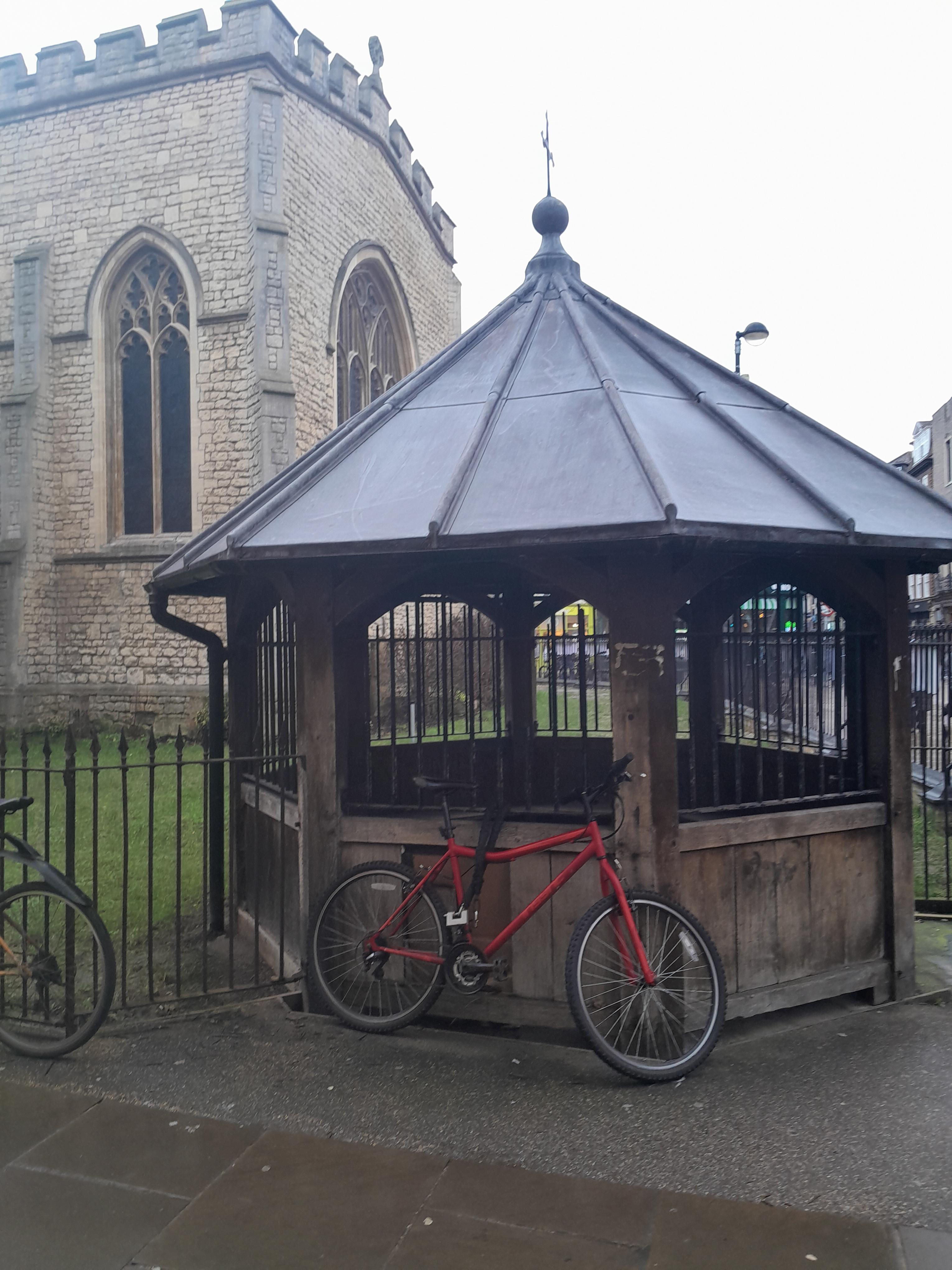
Holy Trinity church (listed Grade II*) is on Market Street. The oldest part of the church seems to be 14th century (from the listing description) but there were additions in the 15C and 16C, and, of course, 19C. The the Holy Trinity War Memorial is a timber octagonal shelter with a lead pointed roof, arched window openings and a wooden bench. It was built in 1922 and commemorates 45 members of Holy Trinity Church who died in World War I. It was restored in 2012. It is supposed to be a shelter, with seating inside, but is kept locked.


Great St Mary's church (listed Grade I) near Kings College Chapel, backing onto the Market place. It is called Great St Mary to distinguish it from Little St Mary on Trumpington Street. It is a late 15th century church with the remains of a 14th century chancel. It is the university church, and is considered to be the centre of Cambridge. At the bottom of the tower is a plaque about milestones, and outside there are some fun modern 3D maps. There is a peal of 12 bells, and the church clock strikes the 'Cambridge Quarters', which were copied for the 'Westminster chimes' of Big Ben. You can climb the tower, which gives you a good view of Cambridge, including a startling view of Kings College Chapel.
|
|
Clock on Great St Mary's tower |
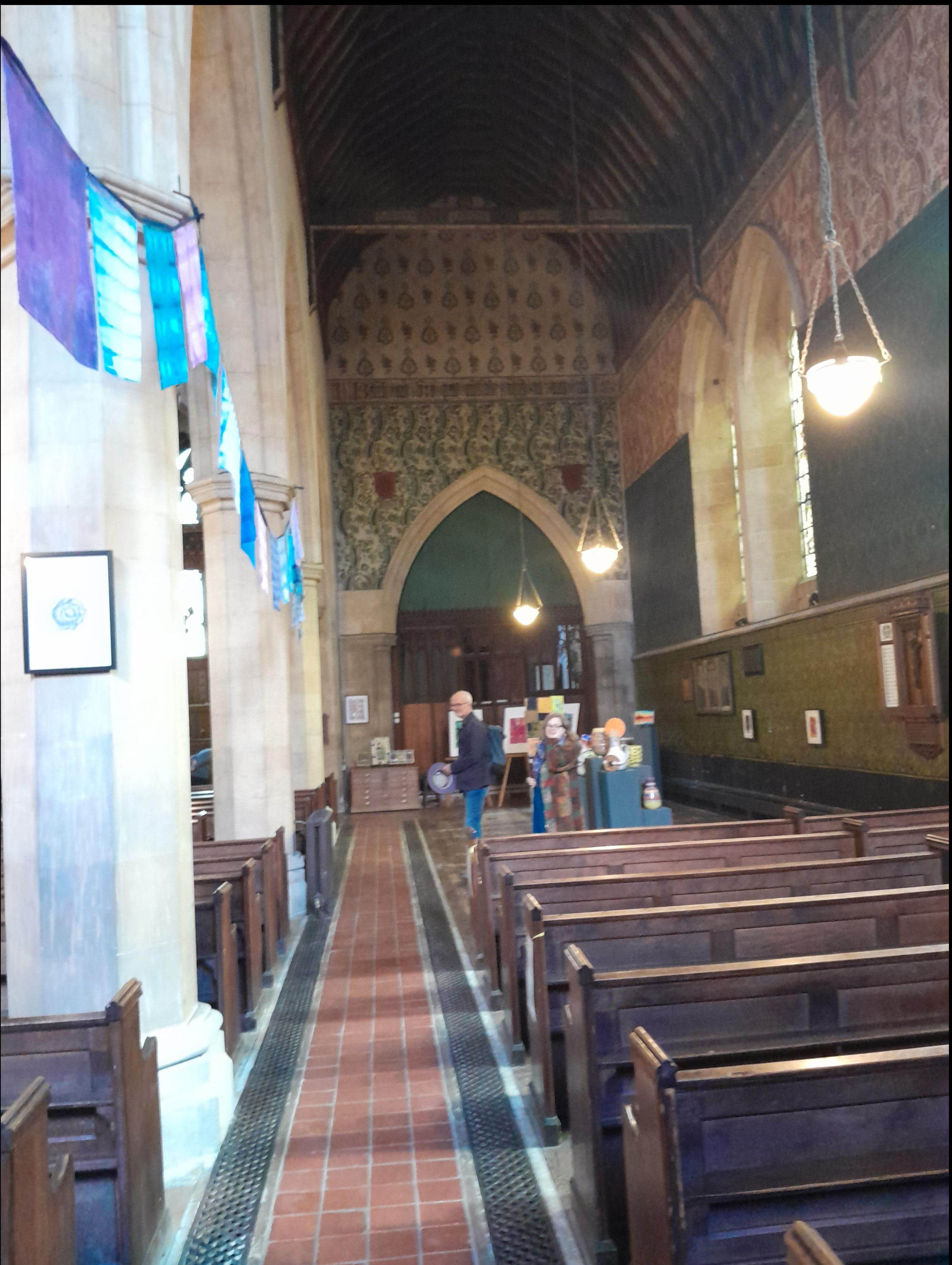
All Saints church (listed Grade II*) is in Jesus Lane. Its spire can be seen from Christs Pieces. It was built in 1864. The church is no longer a parish church, but is been under the care of the Churches Conservation Trust. Sometimes exhibitions are held in it, and it often seems to be open. Some of the painted wall and ceiling decorations are by the company of William Morris. The decorative work is by F R Leech and Sonds, a local firm. Click here for more on the church in this website.






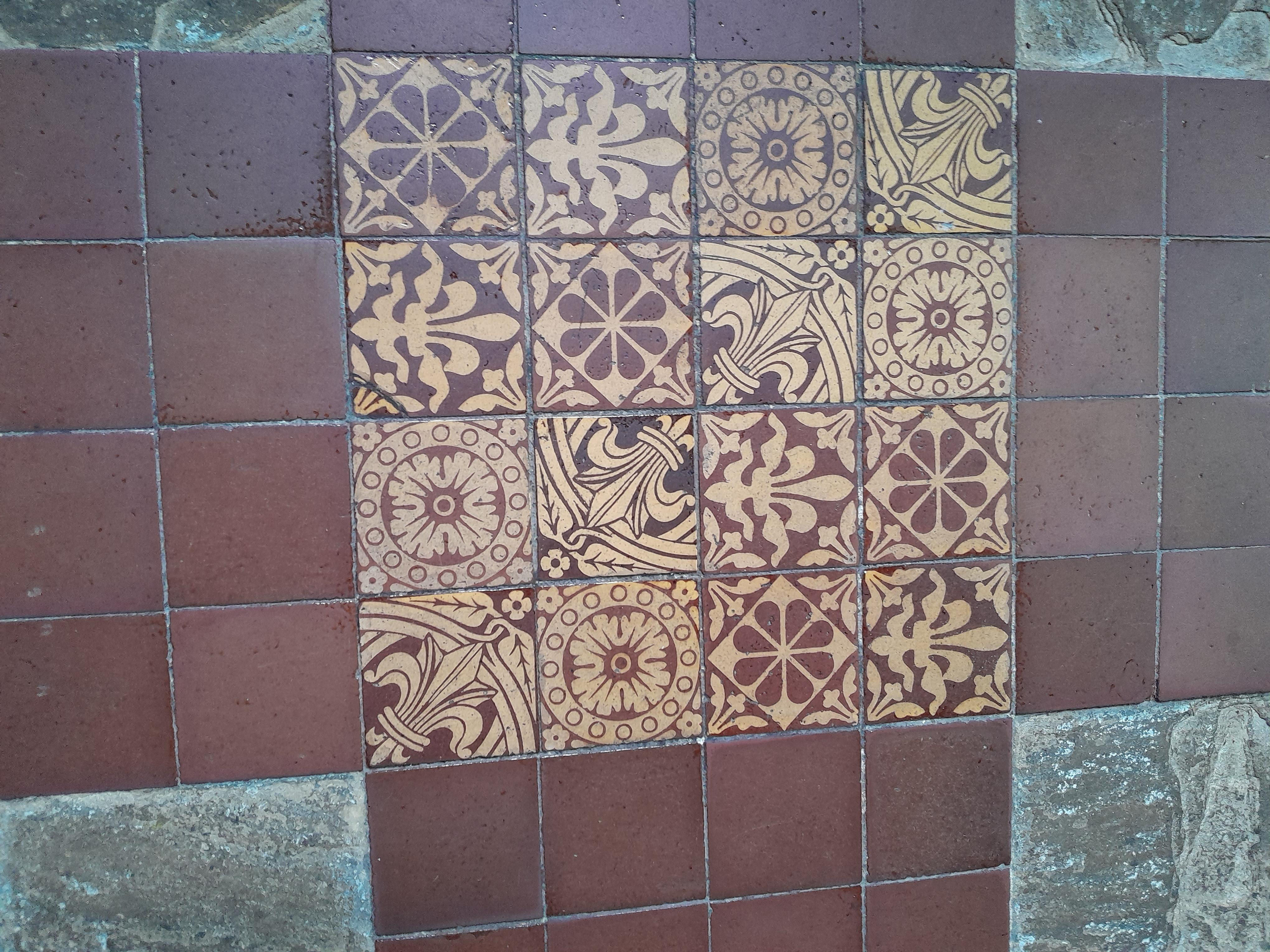


Great St AndrewGreat St Andrews church is near the Lion Yard and backs on At Andrews Street. It is listed Grade II. It was rebuilt in 1843. There are several 18th century monuments inside the church, including one in memory of Captain Cook. It is a parish church, as the congregation at the Round Church needed more room, so they moved here, and call themselves the Round Church at St Andrews.
|
St MatthewSt Matthew's church (listed Grade II) is in the east of Cambridge, in St Matthews Street. It was built in 1866 by R.R. Rowe. It has a Greek cross plan with an central octagon and 4 radiating arms. The preaching house interior was a reaction to Oxford Movement, with a wide central space with lantern.
|
St Giles's church (listed Grade II*) is in the north of Cambridge, on Castle Street. It was built in 1875, but it incoporated two much older arches from the previous church.


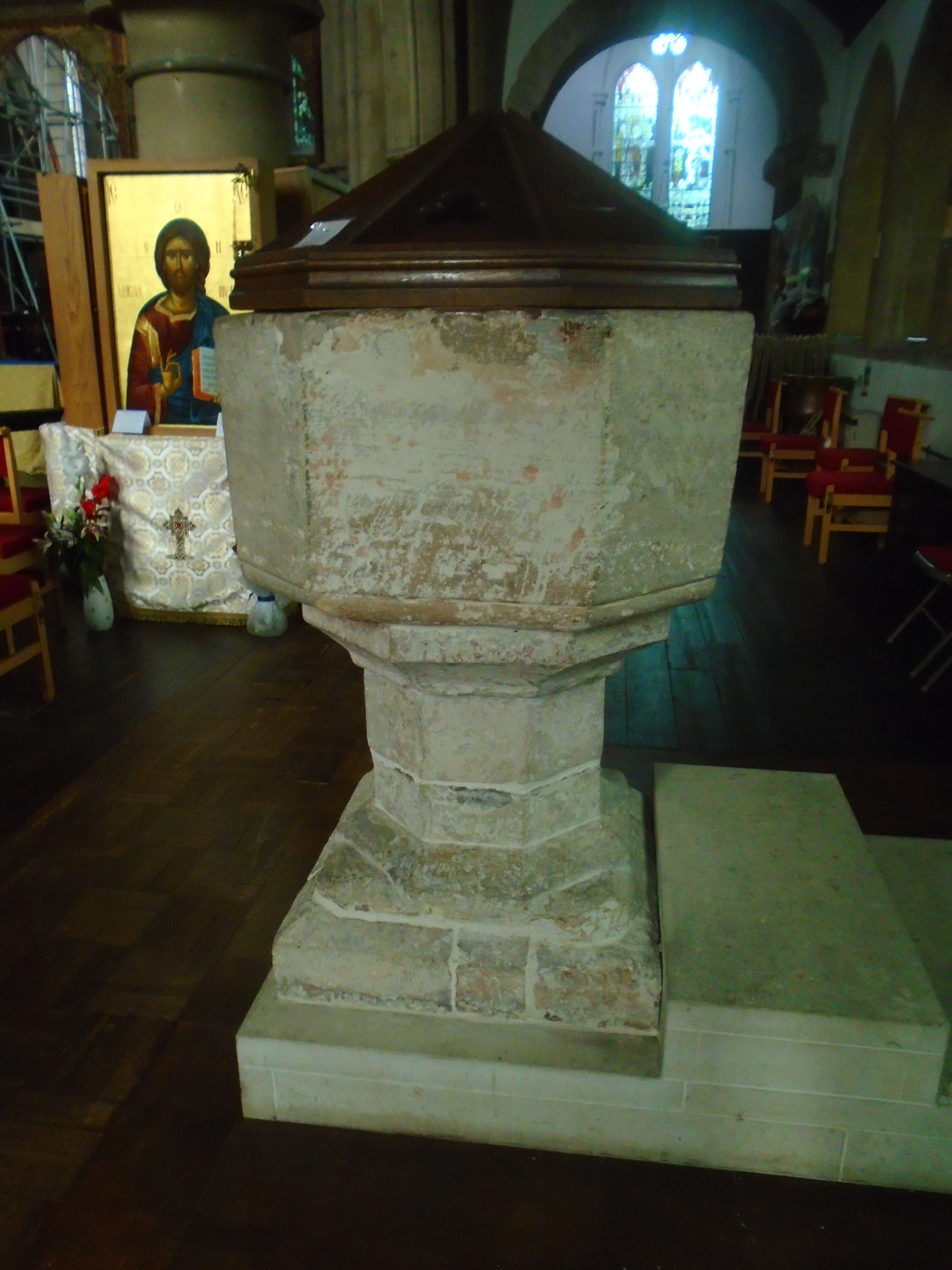

There is a sequence of Victorian stained glass windows featuring saints and kings, including Charles I and Henry VI (who started building Kings College Chapel).


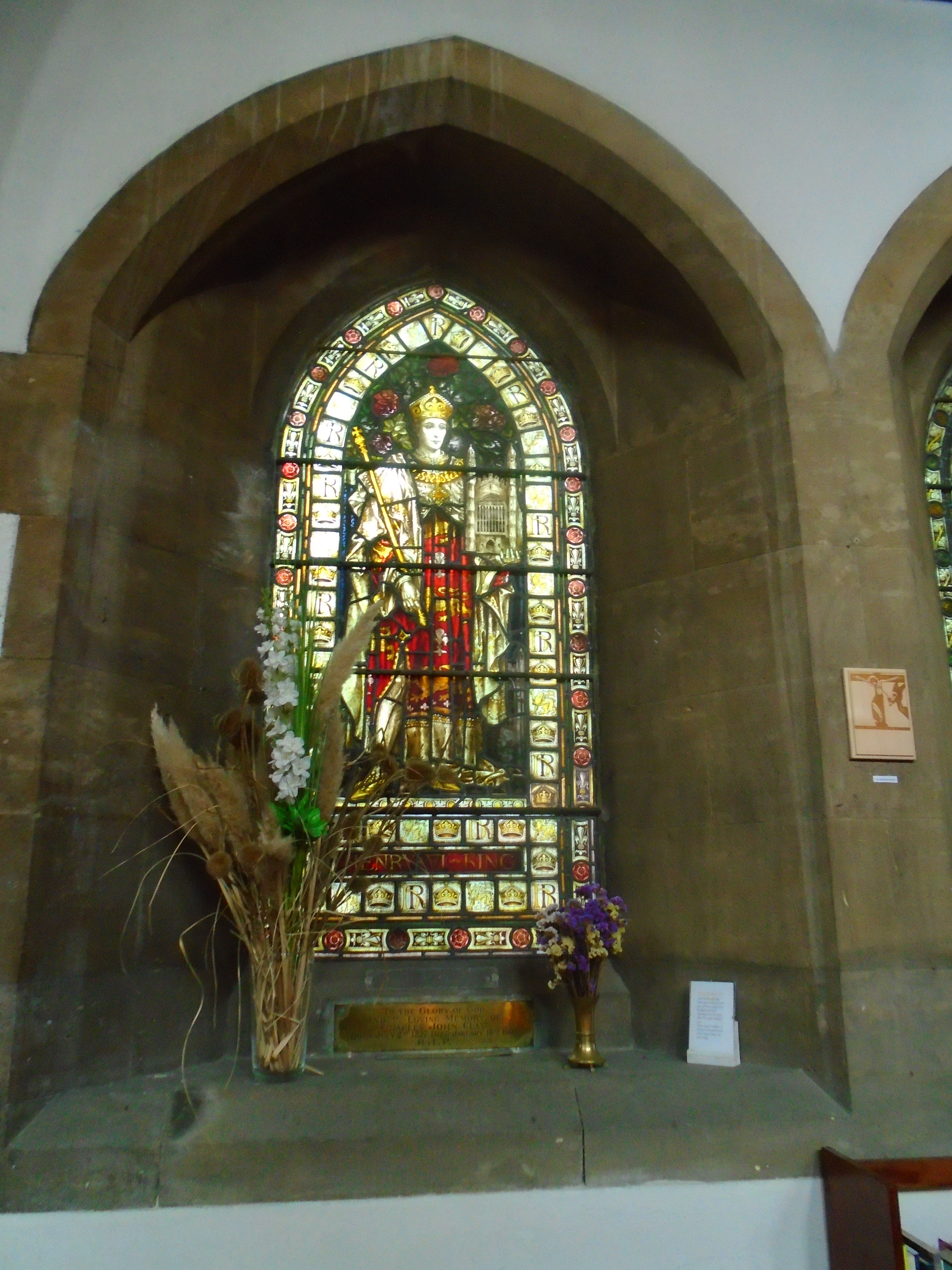


Our Lady and the English Martyrs (Roman Catholic church)The Roman Catholic Church (listed Grade II*) is at the junction of Hills Road and Lensfield Road, a notable road junction. It was built 1887-1890. The church's spire can be seen along Hills Road and Regent Street, as well as East Road and further. Click here for more on the church, including its history.
|
Unitarian churchThis Unitarian church is in Emmanuel Road. It was built in 1927. Click here for more on the church, including a little on its history. |

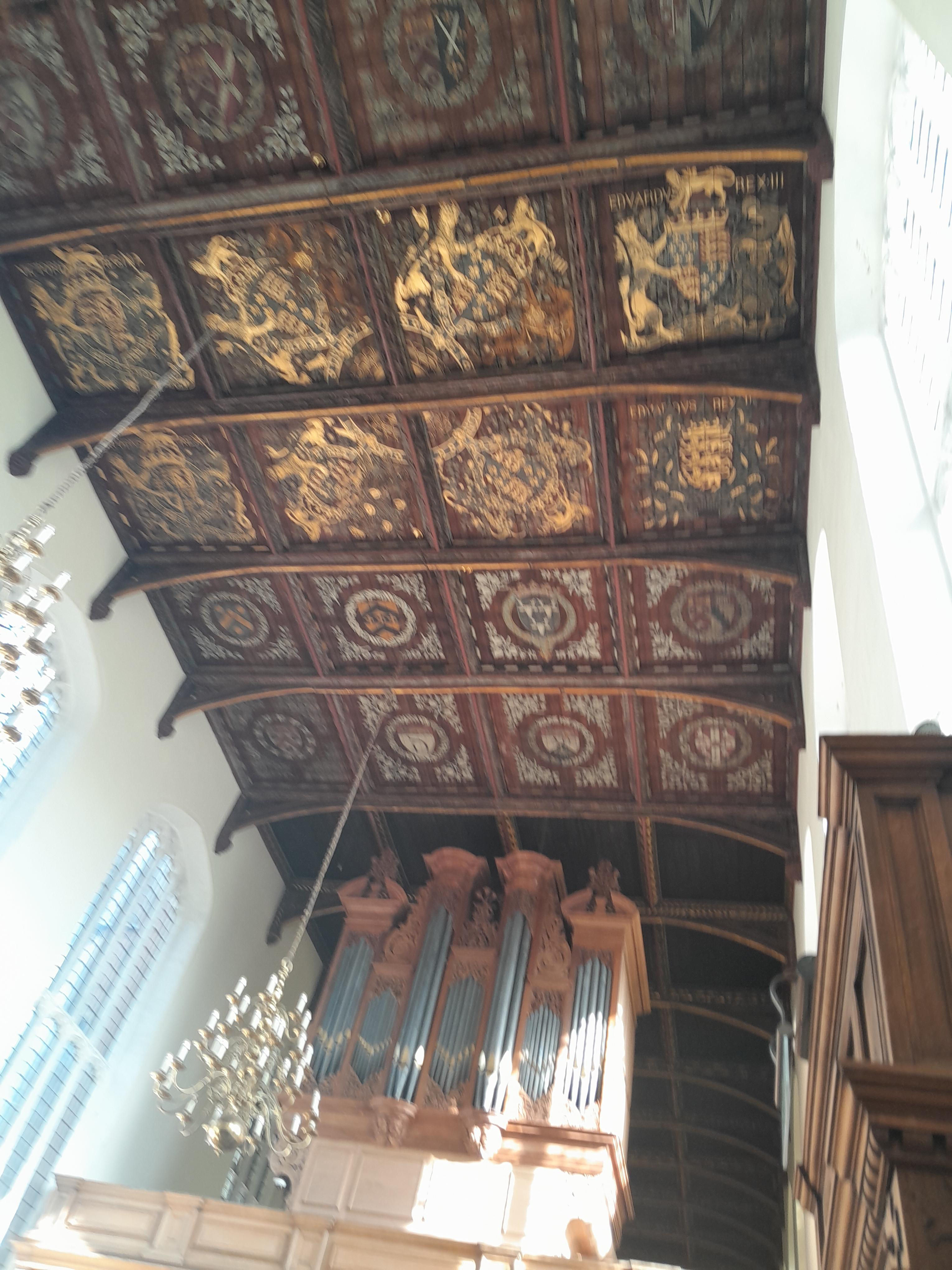

The chapel was begun in 1554–55 by order of Queen Mary and was completed in 1567 by her half-sister, Elizabeth I. The architectural style is Tudor-Gothic, with Perpendicular tracery and pinnacles. The roof is of an earlier style than the rest of the building, and may have been re-used from the chapel of King's Hall, the college which preceded Trinity on this site. Only the walls and roof are of Tudor date, but the walls were re-faced in ashlar in the 19th-century and present slate roof-covering is modern.


Wordsworth described this statue in The Prelude:
The antechapel where the statue stood
Of Newton with his prism and silent face,
The marble index of a mind for ever
Voyaging through strange seas of Thought, alone.
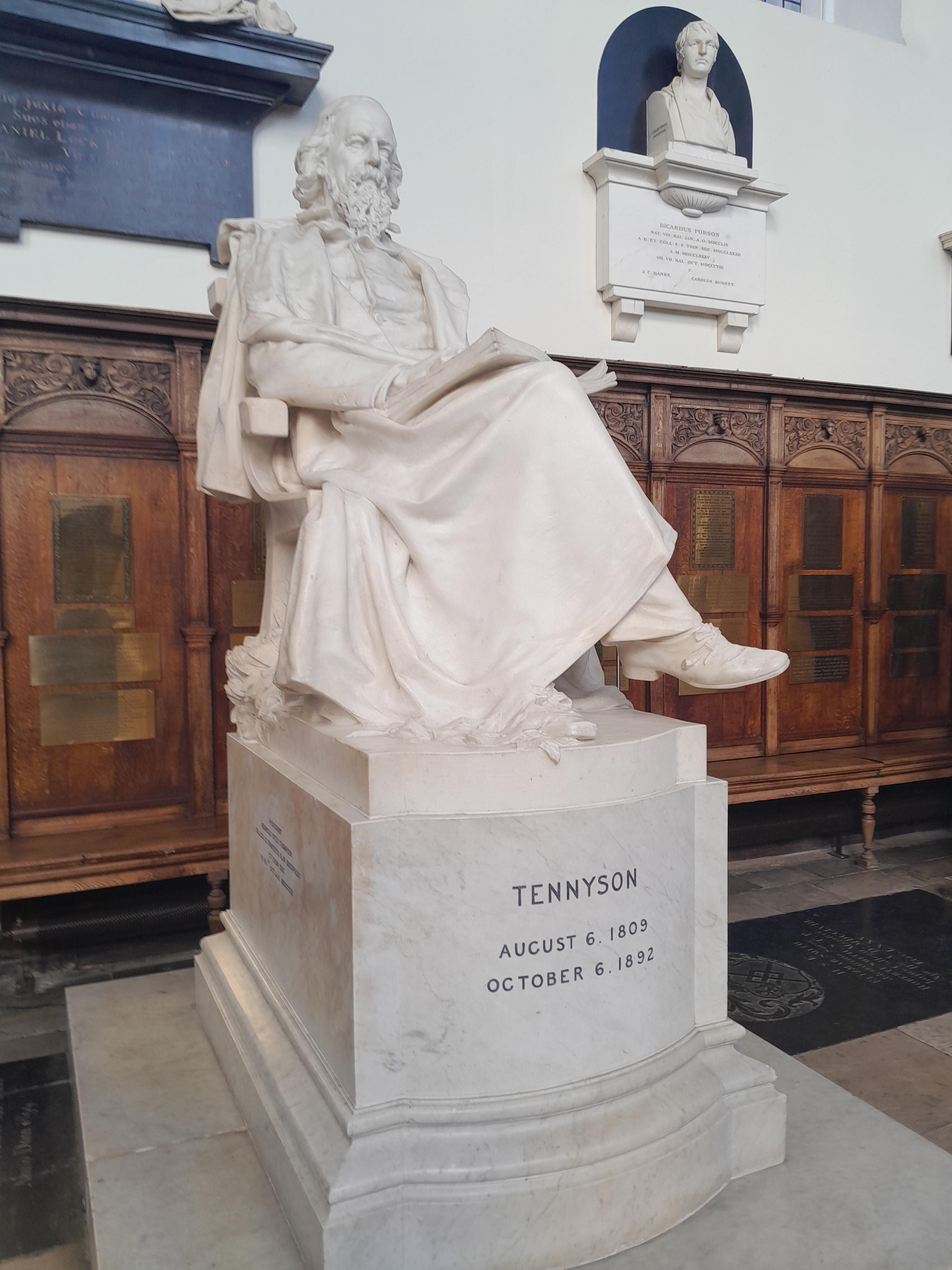
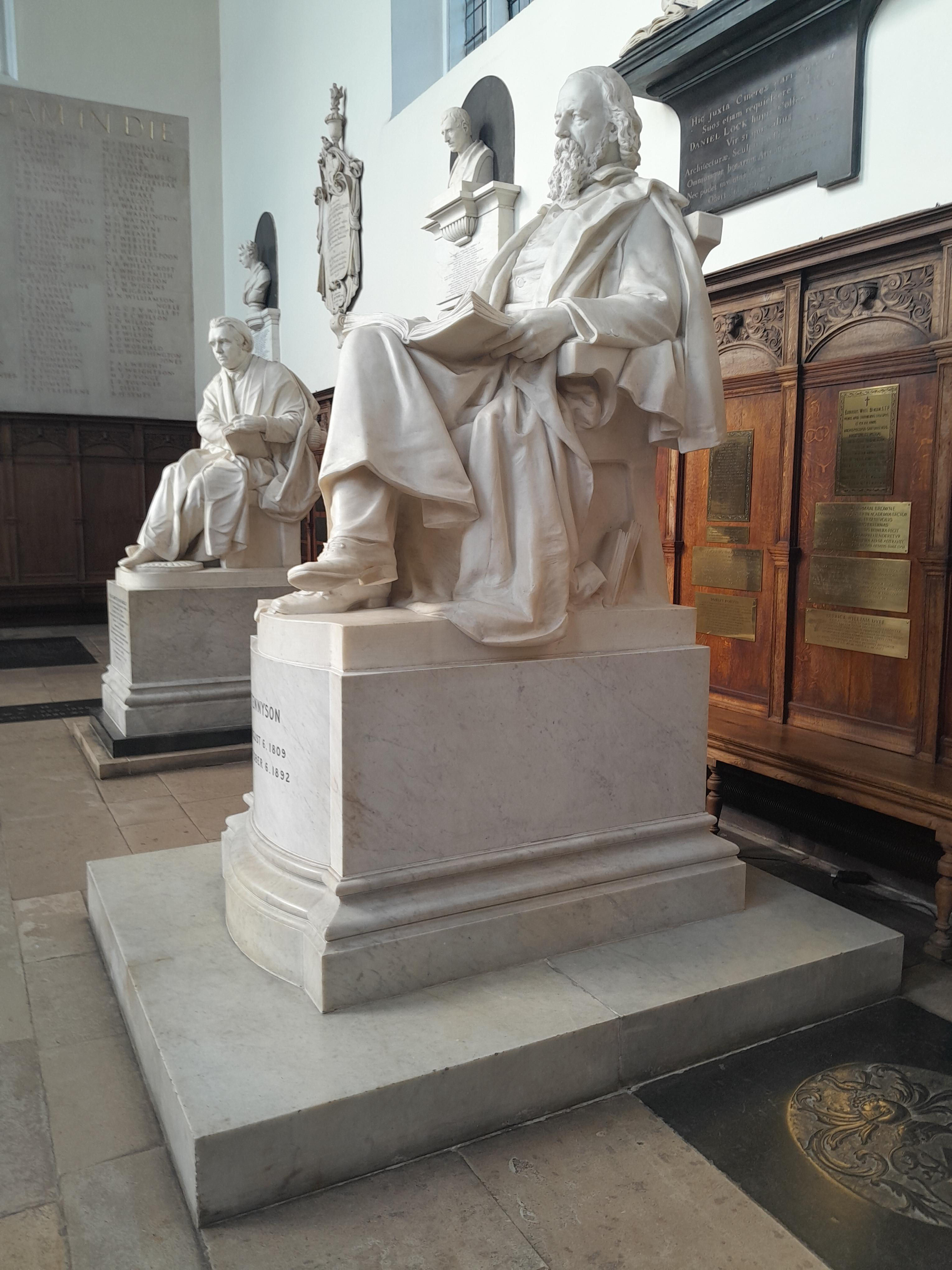

This monument not only shows his books but his pipe as well.
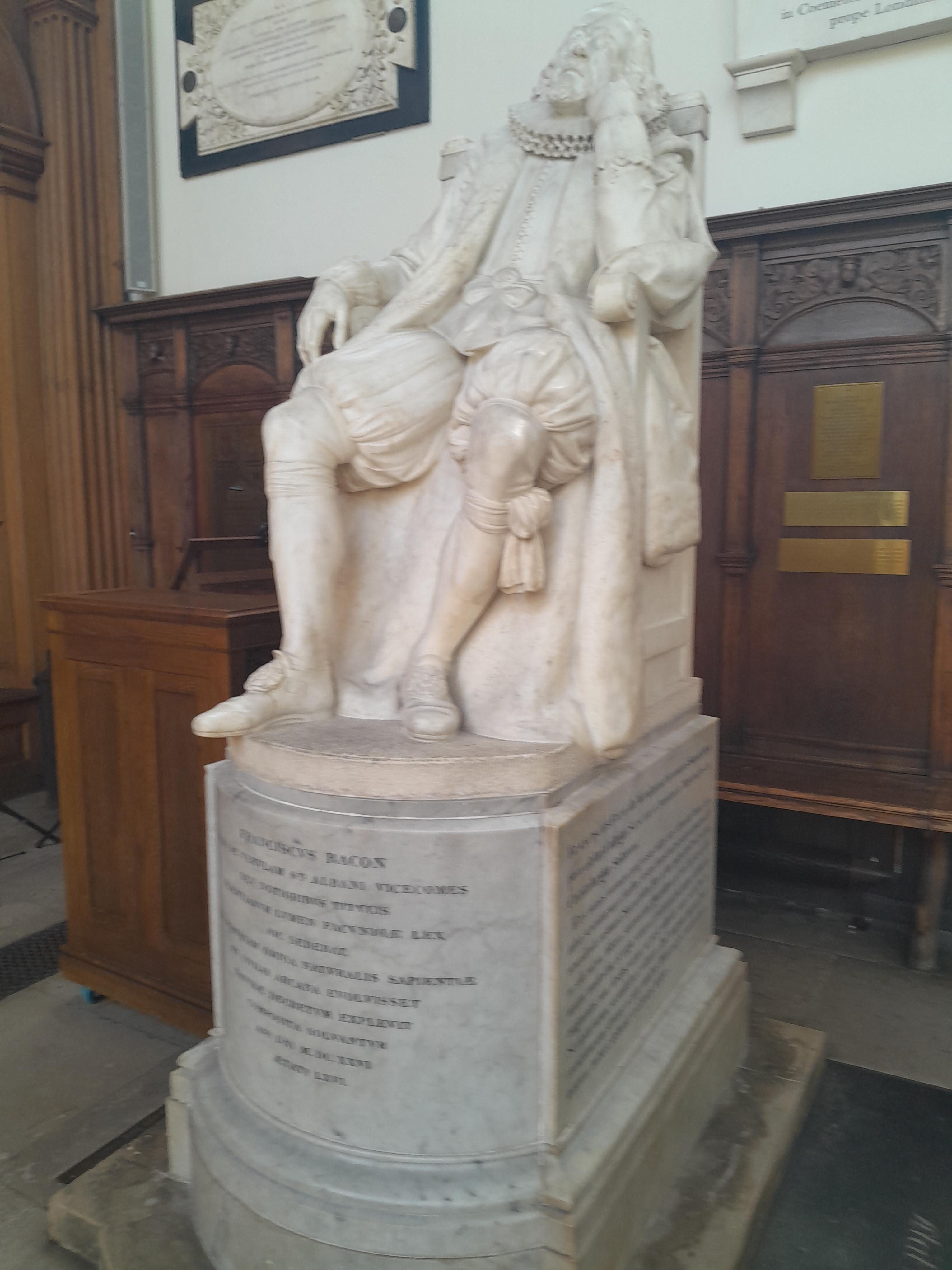

Francis Bacon was an English philosopher and statesman who served as Attorney General and Lord Chancellor of England under King James I. he died in 1626. I don't know why he's asleep!
Finally, I have tried to verify the dates and facts above as much as I could, but I may have made mistakes. If you spot any or want to correct me, please email me
© Jo Edkins 2010 - Return to Walks index